
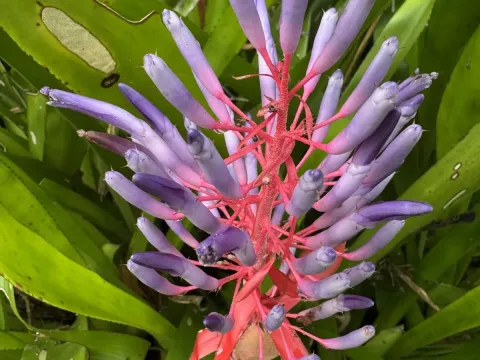
Portea
Portea Brongn. ex K. Koch
Portea is a genus of flowering plants belonging to the Bromeliaceae family. Originating from the Atlantic coastal forests of Brazil, these plants are known for their striking inflorescences and structural, leathery foliage that adds a tropical aesthetic to any collection.
What the section contains

Portea
In terms of light requirements, Portea thrives in bright, filtered light. While they can tolerate some morning sun, harsh afternoon light can scorch the leaves. Proper lighting is essential for maintaining the vibrant colors of the leaves and encouraging the plant to bloom.
The growing medium must be highly porous and well-draining. A typical mix consists of orchid bark, peat moss, and perlite. Because these plants are often epiphytic, they require a substrate that allows air circulation around their root systems to prevent root rot.
Watering should be done by filling the central tank (rosette) of the plant with fresh, dechlorinated water. It is important to flush this water out periodically to prevent the buildup of salts and stagnant water that could harbor bacteria or pests.
Environmental humidity is crucial for Portea. They perform best when humidity is maintained above 60%. During the active growing season, regular misting and placement in a well-ventilated room will mimic their natural tropical habitat effectively.
The most common pests affecting Portea are scale insects, mealybugs, and spider mites. These pests thrive in dry environments and often hide in the tight spaces between leaf bases, making them difficult to detect early.
Root rot and fungal leaf spot are common threats caused by improper watering practices. Over-watering, especially in cooler conditions or when the substrate is too dense, deprives roots of oxygen and promotes pathogen growth.
To treat pest infestations, gardeners should use systemic insecticides or neem oil, ensuring that the treatment reaches deep into the leaf crevices. Regular inspection of the plant's health is the most effective preventative measure.
Maintaining proper air circulation is essential to prevent mold and fungal outbreaks within the dense rosette. Placing a small fan in the growing area can significantly improve air movement, especially in stagnant indoor environments.
Finally, always ensure that the water in the rosette is fresh. If the water becomes cloudy or emits an odor, empty the rosette, rinse the plant carefully, and provide fresh water to maintain the health of the internal tissues.