
Pitcairnia elongata
Pitcairnia elongata
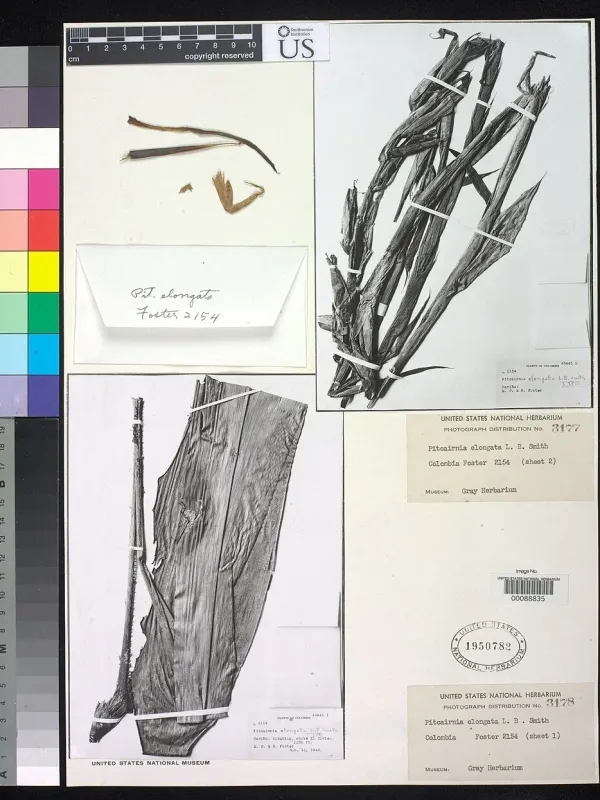
Description
Growing requirements
Pitcairnia elongata is a perennial herbaceous plant belonging to the Bromeliaceae family. It is native to the tropical forests of South America, where it typically grows as an epiphyte or lithophyte, clinging to rocky surfaces or tree branches in humid, sheltered environments.
The plant requires a strictly controlled tropical climate to thrive, with temperatures ideally kept between 18 and 26 degrees Celsius. Exposure to cold drafts or freezing temperatures can cause irreversible damage to the foliage and root system of the plant.
Regarding soil requirements, Pitcairnia elongata needs a highly porous and acidic substrate. A mixture of orchid bark, sphagnum moss, perlite, and a small amount of peat is ideal for maintaining the necessary moisture levels while providing excellent root aeration.
Lighting should be bright but filtered. In a controlled agricultural or greenhouse environment, shade cloth or diffused glass is essential to prevent direct sunlight from scorching the long, slender leaves that characterize this particular species.
Hydration management is key for this culture. It requires consistent humidity and regular misting to mimic its native habitat. Care must be taken not to allow water to stagnate in the central cup (rosette) of the plant for extended periods, as this may lead to necrosis.
Main diseases and pests
The primary threats to the health of Pitcairnia elongata are fungal pathogens, such as Phytophthora and Pythium, which cause root rot under conditions of poor drainage or excessive water retention in the soil mix.
Insect pests include spider mites and scale insects, which frequently thrive in greenhouses with insufficient ventilation. Integrated pest management, including regular inspection and the application of mild horticultural oils or systemic insecticides, is recommended to keep the plants healthy.