
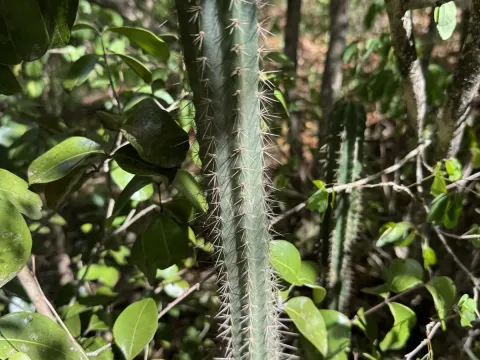
Pilosocereus
Pilosocereus
Propagation of Pilosocereus is primarily achieved through seed germination or stem cuttings. For seeds, a well-draining, sterile sandy substrate should be used, ensuring it is kept consistently moist but never waterlogged during the germination phase in spring.
What the section contains
 Pilosocereus albisummus
Pilosocereus albisummus
Pilosocereus albisummus
 Pilosocereus alensis
Pilosocereus alensis
Pilosocereus alensis
 Pilosocereus armatus
Pilosocereus armatus
Pilosocereus armatus
 Pilosocereus aureispinus
Pilosocereus aureispinus
Pilosocereus aureispinus
 Pilosocereus azulensis
Pilosocereus azulensis
Pilosocereus azulensis
 Pilosocereus chrysacanthus
Pilosocereus chrysacanthus
Pilosocereus chrysacanthus
 Pilosocereus chrysostele
Pilosocereus chrysostele
Pilosocereus chrysostele
 Pilosocereus collinsii
Pilosocereus diersianus
Pilosocereus diersianus
Pilosocereus collinsii
Pilosocereus collinsii
Pilosocereus diersianus
Pilosocereus diersianus
 Pilosocereus floccosus
Pilosocereus floccosus
Pilosocereus floccosus
 Pilosocereus fulvilanatus
Pilosocereus fulvilanatus
Pilosocereus fulvilanatus
 Pilosocereus glaucescens
Pilosocereus glaucescens
Pilosocereus glaucescens
 Pilosocereus glaucochrous
Pilosocereus glaucochrous
Pilosocereus glaucochrous
 Pilosocereus gounellei
Pilosocereus gounellei
Pilosocereus gounellei
 Pilosocereus lanuginosus
Pilosocereus lanuginosus
Pilosocereus lanuginosus
 Pilosocereus leucocephalus
Pilosocereus leucocephalus
Pilosocereus leucocephalus
 Pilosocereus magnificus
Pilosocereus oligolepis
Pilosocereus oligolepis
Pilosocereus magnificus
Pilosocereus magnificus
Pilosocereus oligolepis
Pilosocereus oligolepis
 Pilosocereus pachycladus
Pilosocereus pachycladus
Pilosocereus pachycladus
 Pilosocereus piauhyensis
Pilosocereus piauhyensis
Pilosocereus piauhyensis
 Pilosocereus polygonus
Pilosocereus polygonus
Pilosocereus polygonus
 Pilosocereus purpusii
Pilosocereus purpusii
Pilosocereus purpusii
 Pilosocereus royenii
Pilosocereus royenii
Pilosocereus royenii
 Pilosocereus tuberculatus
Pilosocereus tuberculatus
Pilosocereus tuberculatus
 Pilosocereus vilaboensis
Pilosocereus vilaboensis
Pilosocereus vilaboensis
Pilosocereus
Temperature control is crucial during the sowing process; maintaining a constant temperature between +22 and +25 degrees Celsius promotes optimal growth. Seeds should be sown on the surface and lightly pressed into the soil to ensure proper contact without being buried too deep.
Cuttings are obtained from mature healthy plants by carefully removing side shoots using a clean, sharp knife. The cuttings must be allowed to callous in a dry, shaded area for at least a week before any attempt at planting is made.
Once calloused, the cuttings are placed into dry, porous soil. Initial watering should be avoided for several days to encourage root formation rather than decay, gradually increasing moisture once the roots have established themselves in the medium.
Young plants, whether from seeds or cuttings, are highly sensitive to environmental fluctuations. Protecting them from cold drafts and direct intense sunlight during the first few weeks is essential for their long-term viability and structural integrity.
Pilosocereus is a genus in the Cactaceae family, natively found in the tropical and subtropical regions of the Americas, including Brazil and Mexico. These plants thrive in environments that offer high levels of sunlight and effective drainage.
Light requirements are stringent; to maintain the characteristic dense hair (trichomes) and upright growth habit, the plant requires significant exposure to bright, direct light throughout the day. Inadequate light results in etiolation and structural weakness.
Soil composition must be loose and gritty, typically consisting of a blend of organic potting soil mixed with perlite, pumice, or gravel. This ensures that water passes through quickly, preventing the moisture retention that can lead to root rot.
Temperature management follows a seasonal pattern: summer temperatures between +20 and +30 degrees Celsius are ideal, while a winter rest period at temperatures around +12 to +15 degrees Celsius is critical for maintaining plant health and future flowering.
Watering should be practiced with caution, strictly following the 'soak and dry' method. During the winter dormancy phase, water should be almost entirely withheld to mimic the dry season of their natural habitat, preventing metabolic exhaustion.
Pilosocereus is frequently attacked by mealybugs and spider mites, which find refuge within the cactus’s dense surface hairs. Early detection is difficult, making monthly inspections of the stem surface a necessary part of the maintenance routine.
Chemical control involving systemic insecticides or specialized acaricides is required for infestations. Applications should be thorough to penetrate the hair layer and eliminate hidden pests that could otherwise cause significant tissue damage.
Fungal diseases are the most common cause of failure in Pilosocereus cultivation. They are triggered by improper watering, specifically when wet substrate comes into contact with the stem under low-temperature conditions, leading to rapid rot.
Preventive measures include the use of inorganic top-dressings like decorative gravel around the base of the plant. This keeps the stem neck dry and prevents moisture from accumulating on the plant's epidermis, reducing the risk of bacterial infection.
In cases where rot has progressed, surgical removal of the infected tissue is necessary. After excision, the remaining healthy part must be treated with fungicidal powders and allowed to callous completely before being replanted in fresh, dry soil.