
Pilosocereus polygonus
Pilosocereus polygonus
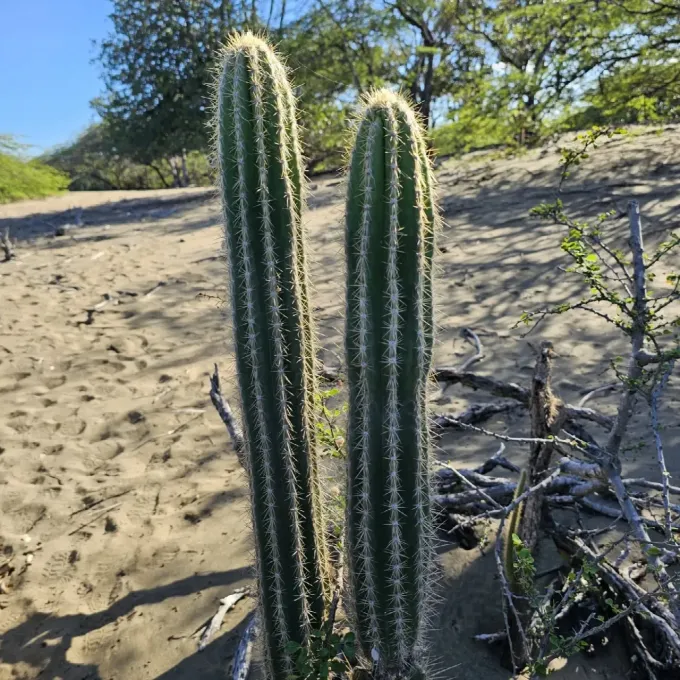
Description
Growing requirements
Pilosocereus polygonus is a prominent member of the Cactaceae family, known for its columnar, tree-like growth habit and characteristic ribbed stem structure.
This species is native to the Caribbean region, where it thrives in arid and semi-arid environments characterized by high light intensity and sandy soils.
Cultivation requires a highly porous and well-draining soil mix, typically consisting of pumice, coarse sand, and a minimal amount of organic compost.
The plant requires full sun to partial shade for optimal growth. Maintaining consistent, high-intensity light levels is essential to preserve the plant's structural integrity.
Temperature management is crucial; the plant should be protected from frost and kept in a warm environment with excellent air circulation to prevent excessive humidity.
Main diseases and pests
Common health issues include stem rot and root rot, primarily caused by water-logged conditions and lack of proper soil aeration during colder months.
Pests such as mealybugs and spider mites are frequent invaders. They tend to cluster in the crevices between the ribs, making manual removal difficult.
Integrated pest management, including the use of neem oil or systemic insecticides, is recommended to keep the cactus population healthy and productive.
Preventative measures should focus on maintaining a dry crown during periods of low light and ensuring the substrate is completely dry before subsequent watering.
Monitoring for signs of discoloration or soft spots on the epidermis is necessary for the early detection and management of potential fungal or bacterial infections.