
Pilosocereus royenii
Pilosocereus royenii
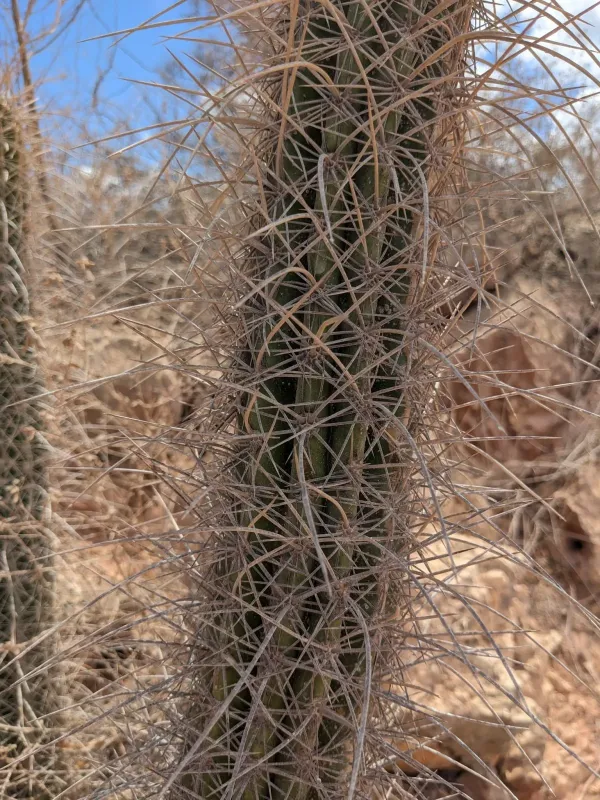
Description
Sowing dates
Propagation of Pilosocereus royenii in commercial or collection environments is primarily achieved through seeds or stem cuttings. Seeds are sown in a light, well-draining substrate consisting of a sand and perlite mixture during the active growing season in spring.
Temperature control during germination should be maintained within the range of +22…+26°C. High humidity is a mandatory condition during the seedling stage, typically achieved by covering the sowing containers with plastic film or glass.
Cuttings are taken during the summer months, following a pre-drying period of several days to allow the callus to form. This prevents tissue rot and promotes rapid root system development when placed in contact with the rooting medium.
Young plants require gradual acclimatization to direct sunlight. Seedlings should be pricked out once they reach a size sufficient for safe transplanting without causing damage to the delicate root structures.
Monitoring substrate moisture after transplanting is a critical factor for the survival of young specimens, as water stagnation will inevitably lead to the death of the cactus.
Growing requirements
Pilosocereus royenii belongs to the Cactaceae family and is a typical representative of the xerophytic flora of the Caribbean. This crop thrives in well-lit areas with intense solar radiation.
For optimal growth, the plants require loose, mineral-rich soils with low organic content and excellent aeration. High drainage levels are essential to prevent water accumulation near the root crown.
The ideal temperature for vegetation ranges from +20°C to +35°C. The plant is extremely sensitive to freezing temperatures and requires protective measures during winter in non-tropical climates.
Irrigation should be moderate during the growing season and virtually suspended during the dormant phase. Over-watering is the primary cause of root rot, which is a major threat to the health of the culture.
In its natural habitat, this cactus often grows in limestone-rich soils, so adding small amounts of dolomite flour or gravel to the substrate is beneficial for maintaining structural stability.
Main diseases and pests
Major phytosanitary issues involve infestations by mealybugs and spider mites. These pests extract sap from young stems, weakening the plant's immunity and creating entry points for secondary pathogens.
Fungal diseases, such as Fusarium or Phytophthora wilt, typically develop due to improper watering regimes or poor air circulation. Symptoms include dark stem lesions and tissue softening.
Preventive measures include regular inspection of plants and the application of broad-spectrum insecticides at the first sign of infestation. Maintaining proper substrate moisture is key to avoiding these issues.
Insufficient solar exposure leads to etiolation, an unhealthy stretching of the stem that compromises structural integrity and makes the cactus susceptible to mechanical breakage.
If rot is detected, affected areas must be immediately excised down to healthy tissue, and the wound should be treated with a copper-based fungicide or charcoal powder to prevent further spread.