
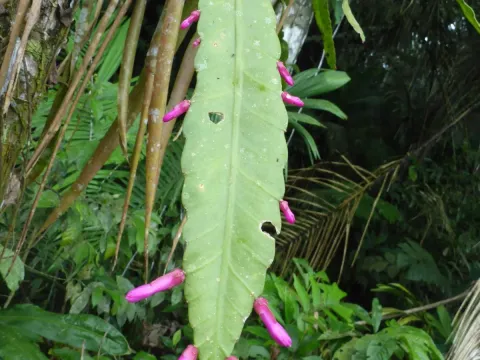
Pseudorhipsalis
Pseudorhipsalis
Pseudorhipsalis is a genus of epiphytic cacti belonging to the Cactaceae family. Native to the tropical forests of Central and South America, these plants typically grow as epiphytes in tree canopies or as lithophytes on rock formations, adapted to high humidity and dappled shade environments.
What the section contains


Pseudorhipsalis
Botanically, these plants feature slender, flattened or ribbed stems that often become woody with age. They are distinct for their lack of prominent spines, often replaced by soft hair or bristles in the areoles. Their growth habit is usually pendant or sprawling, making them ideal for hanging baskets.
Environmental requirements for cultivation include bright but indirect lighting. Intense midday sun will bleach the stems and lead to permanent scarring. These plants thrive in temperate conditions, preferably between 18°C and 25°C, and are sensitive to frost and cold drafts.
The substrate must be porous and well-draining to mimic the epiphytic natural environment. A mix containing peat moss, pine bark, perlite, and coarse sand provides the necessary aeration and moisture-holding capacity without causing waterlogging around the roots.
Watering frequency should be balanced: the soil should remain slightly moist during the growing season but never soggy. High atmospheric humidity is beneficial, and regular misting can compensate for dry indoor air conditions in temperate climates.
Root rot is the most significant threat to Pseudorhipsalis, primarily caused by overwatering or poor drainage. Once established in the root zone, the pathogen can quickly compromise the plant's vascular system, leading to stem collapse.
Mealybugs are common pests that tend to cluster in the joints and crevices of the stems. These insects feed on sap and excrete honeydew, which often attracts secondary fungal infections like sooty mold, further weakening the plant's health.
Spider mites can become a major issue during the dry winter months. These microscopic pests thrive in low-humidity environments and cause severe damage by piercing the plant's epidermis, resulting in stippled, discolored patches on the stems.
Scale insects represent another challenge, attaching themselves firmly to the stems and creating a waxy shield that protects them from external contact. Their feeding habits cause localized damage and can lead to chlorosis and stunted growth.
Effective management includes regular monitoring for early signs of infestation and maintaining optimal growing conditions. If necessary, horticultural oils or specialized systemic treatments should be applied to manage pest populations safely and effectively.