
Pilosocereus pachycladus
Pilosocereus pachycladus
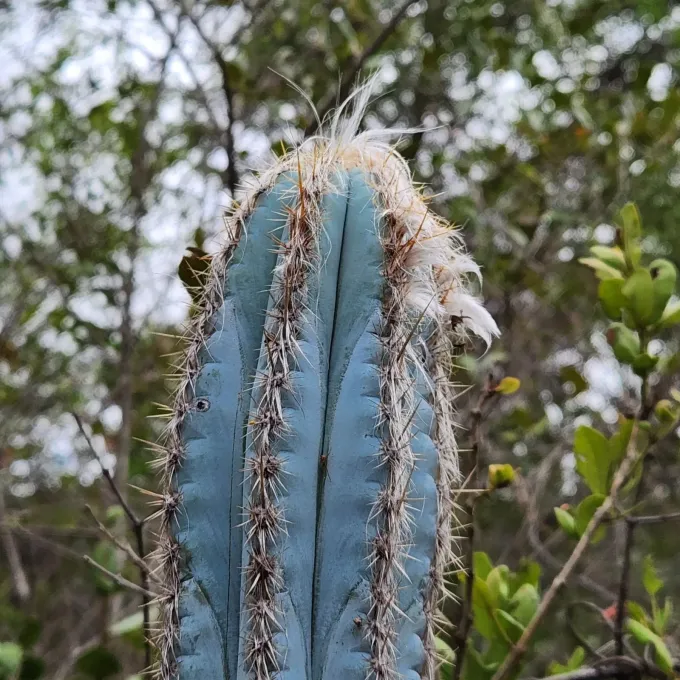
Description
Growing requirements
Pilosocereus pachycladus belongs to the Cactaceae family. This tree-like cactus originates from the arid regions of Eastern Brazil, where it thrives in rocky, well-draining substrates under intense sunlight.
The cultivation of this species requires high levels of irradiance. Abundant sunlight is essential not only for metabolic processes but also to maintain the striking, powdery blue color of the stems, which is highly valued.
Soil requirements focus on extreme porosity and drainage. A standard succulent mix incorporating gravel, coarse sand, and perlite is recommended to prevent moisture retention, which is fatal for this species.
Regarding climate, the plant demands warm temperatures throughout the year. It has no tolerance for frost and requires a dry, cool winter dormancy period with temperatures strictly above 12 degrees Celsius.
Agronomic management includes a controlled irrigation schedule. During the growing season, water should be applied only when the substrate is entirely dry, ensuring the root ball does not sit in stagnant water.
Main diseases and pests
Root rot, induced by excessive soil moisture and poor drainage, represents the primary threat to Pilosocereus pachycladus. Once established, it is difficult to treat, often necessitating complete plant removal.
Mealybugs are the most common insect pests, often found nesting within the dense, woolly areoles. These pests suck plant sap, causing stunted growth and providing entry points for viral or fungal infections.
Spider mites can become a problem in environments with low humidity. They damage the epidermis, causing unsightly brown corky patches that detract from the plant's aesthetic and overall health.
Scale insects present a secondary threat, as they attach to the cactus stem and feed on its fluids. Consistent monitoring is necessary to detect these pests before they form large, uncontrollable colonies.
Integrated pest management strategies should emphasize preventive measures, such as proper spacing for air circulation and ensuring the growing environment remains free of debris and excess humidity.