
Pilosocereus gounellei
Pilosocereus gounellei
Description
Growing requirements
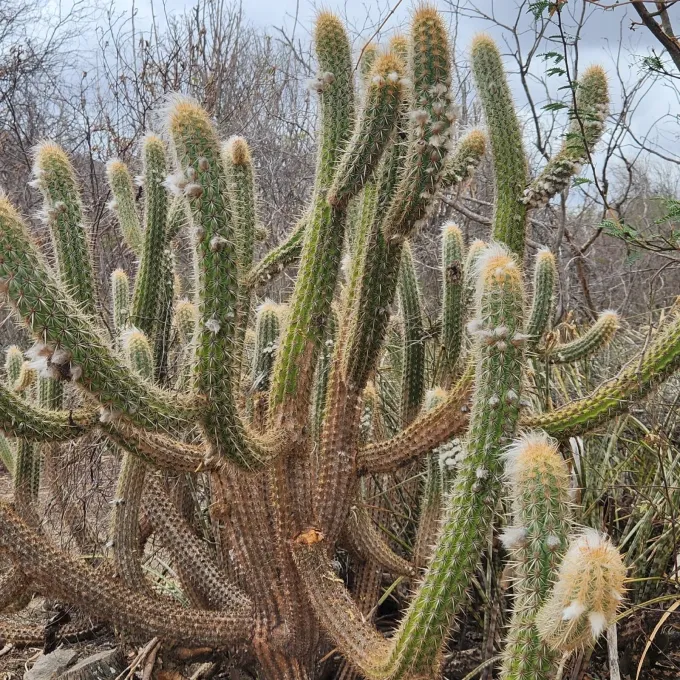
Pilosocereus gounellei is a perennial succulent shrub belonging to the Cactaceae family, native to the arid Caatinga region of Brazil. The plant is botanically recognized for its shrub-like growth habit, with multiple stems branching from the base and covered in distinctive hair-like structures.
This species is highly adapted to extreme environmental conditions, characterized by high solar radiation and low annual rainfall. Its physiological structure allows it to maintain hydraulic balance during extended droughts, making it a subject of interest for sustainable agriculture in arid zones.
Successful cultivation requires well-draining, sandy or rocky soil substrates. Proper water management is essential; the soil must prevent any risk of water stagnation, which is the primary cause of root rot and plant decay in these semi-arid plant species.
Environmental requirements include a stable, high-temperature regime and maximum sun exposure. Pilosocereus gounellei is not suitable for regions with high humidity or frequent frost, as its tissue structure is optimized for hot and arid atmospheric conditions.
In terms of хозяйственного usage, this cactus serves as an emergency fodder crop in desertification-prone areas. Once spines are removed, the internal tissue provides moisture and nutrients for livestock, acting as a buffer against forage shortages during extreme dry seasons.
Main diseases and pests
The primary agricultural threats involve fungal pathogens that trigger stem rot. These infections typically emerge when soil drainage is insufficient or when the plant is exposed to excessive humidity, leading to tissue necrosis and plant collapse.
Pest management focuses primarily on mealybugs and scale insects. These organisms thrive on succulent tissues and can significantly reduce the vitality of the plant if left unchecked. Integrated management practices involving periodic inspection and proper spacing are essential for maintaining crop health.