
Pilosocereus lanuginosus
Pilosocereus lanuginosus
Description
Growing requirements
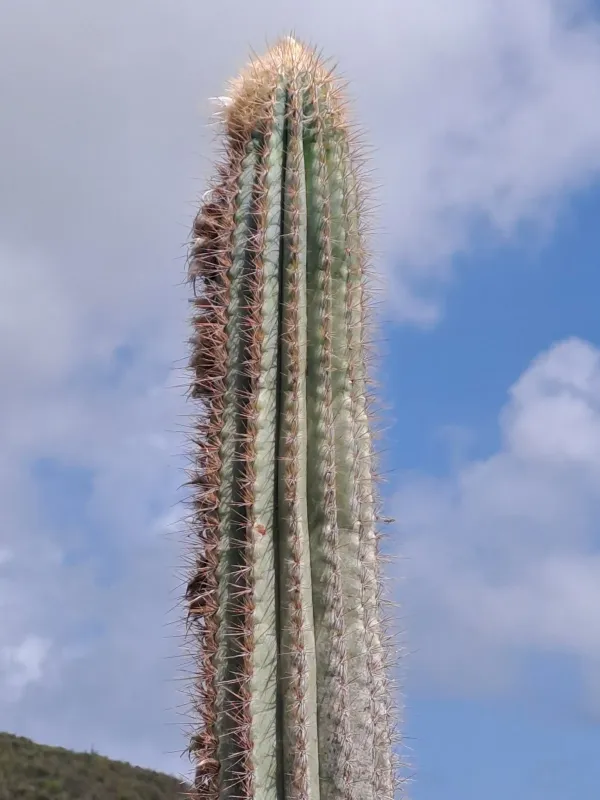
Pilosocereus lanuginosus is a prominent member of the Cactaceae family, known for its distinct columnar growth habit. In its native habitat, this cactus can develop into a large, tree-like structure, often reaching several meters in height with branching stems that display prominent ribs.
The species is indigenous to the arid regions of Northern South America, particularly Venezuela and various Caribbean islands. These areas are characterized by intense sunlight and well-defined wet and dry seasons, which dictate the plant's natural growth cycle and dormant phases.
The botanical identity of this plant is highlighted by its dense, woolly trichomes appearing in the areoles, especially near the flowering regions. These specialized structures serve as an adaptation to intense sunlight, providing a protective layer for the plant's delicate reproductive organs.
Cultivation requires highly permeable, mineral-based substrate mixes that prevent water retention. A coarse texture with ample drainage is essential, as the roots are highly susceptible to rot if subjected to prolonged moisture in an anaerobic soil environment.
Management practices for this cactus involve maximizing solar exposure, which is vital for maintaining the structural integrity and health of the stem. During the active growing season, controlled watering is necessary, while the winter months should be strictly dry to allow the plant to enter deep dormancy.
Main diseases and pests
The most significant threats to the health of Pilosocereus lanuginosus are fungal pathogens, specifically those causing root and stem rot. These infections are almost exclusively associated with improper watering practices and poor soil drainage, necessitating careful moisture management.
Pests such as mealybugs and spider mites represent common challenges, as they often hide within the dense woolly covering of the areoles. Regular observation and the application of appropriate contact or systemic treatments are required to manage these infestations without damaging the plant's delicate exterior.