

Head smut of maize and sorghum
Sporisorium reilianum
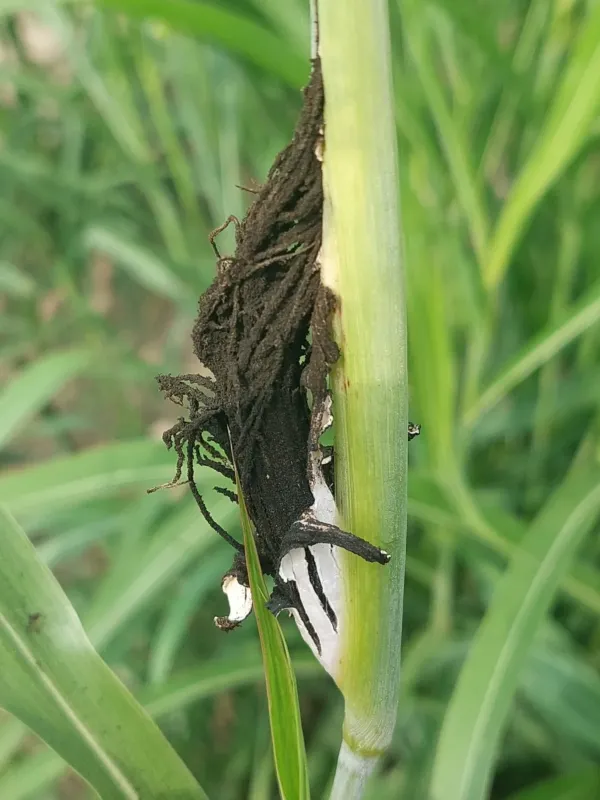
Description
Symptoms
The first visual symptoms appear at the time of flowering or silking. Normal floral organs are replaced by large, dark, spore-filled galls or deformed structures that are characteristic of this smut.
In maize, the tassels may be completely or partially replaced by black, powdery teliospores. Often, these structures are covered by a thin membrane that eventually ruptures to release the dark spores into the air.
Maize ears can also become infected, resulting in the transformation of the entire ear into a mass of spores. In many cases, the husks remain intact, concealing the infection until harvest time.
In sorghum, the symptoms are equally destructive. The entire panicle is transformed into a single, large smut gall, leaving only the vascular tissues behind once the powdery spores have been dispersed by wind.
Infected plants may exhibit stunted growth, reduced height, or excessive tillering. Since the reproductive organs are entirely consumed by the pathogen, the plant becomes sterile and produces no yield.
Pathogen
The causative agent of the disease is the fungus Sporisorium reilianum, which belongs to the class Basidiomycetes. This pathogen is highly specialized, primarily affecting maize (corn) and sorghum crops.
The fungus survives in the soil as teliospores, which are extremely resilient and can remain viable for several years. Infection can also occur via contaminated seed lots that have been exposed to spores during the harvest process.
The disease cycle begins when teliospores in the soil germinate and produce basidiospores. These spores fuse to form an infectious mycelium that penetrates the young seedlings of the host plant.
Once inside the plant, the fungus develops systemically throughout the host tissue. The infection remains latent and largely asymptomatic during the vegetative stage, as the mycelium grows intercellularly without destroying the host's normal development.
As the plant reaches the reproductive stage, the fungus migrates to the floral organs. Here, it actively colonizes the tissues of ears and tassels, converting them into masses of black teliospores.
Conditions for development
Infection is most favorable when soil temperatures range from +20°C to +25°C. Cold soil conditions that delay seedling emergence increase the window of vulnerability, allowing the fungus more time to penetrate the young plant.
Dry soil conditions are particularly conducive to the development of Sporisorium reilianum. Slow seedling growth caused by moisture stress makes the plant more susceptible to successful fungal colonization.
High inoculum levels in the soil, often resulting from continuous cropping of maize or sorghum, are the primary drivers of disease outbreaks. The more spores present in the soil, the higher the risk of infection.
Poor agricultural practices, such as excessive planting densities and failure to rotate crops, contribute to the rapid buildup of the pathogen in the field. Additionally, equipment can transport spores across vast distances between fields.
Wind-borne spores are easily disseminated throughout the growing season. This creates a recurring problem where infected fields become a source of inoculum for subsequent years, making the disease increasingly difficult to manage.
Why it matters
The primary economic impact of head smut is the total loss of yield on infected plants. Because the fungus consumes the floral organs, no grain is produced, leading to direct reductions in harvestable volume.
Beyond individual plant loss, widespread infection significantly reduces the overall productivity of the field. This loss is proportional to the incidence of the disease, which can be devastating in severe cases.
The presence of spores on harvested grain can degrade the quality of the crop. Contaminated seed lots are unsuitable for trade or replanting, necessitating expensive cleaning or disposal processes.
Systemic infection stresses the host plant, leaving it more vulnerable to secondary pathogens and environmental stressors. This further diminishes the crop's ability to thrive and reach its full yield potential.
The financial burden is compounded by the costs of disease management, including the purchase of high-quality fungicide treatments and the implementation of long-term crop rotation schemes.
Protection
- Planting resistant or tolerant hybrids, which is the most sustainable and effective management strategy.
- Implementing a robust crop rotation plan, avoiding the cultivation of susceptible hosts for at least 3-4 years.
- Systemic seed treatment with appropriate fungicides to protect seedlings during the critical early growth phases.
- Ensuring optimal planting dates to promote rapid, uniform emergence and early establishment of the crop.
- Rogueing and destroying infected plants before the smut galls rupture to prevent the release of spores.
Systemic fungicides, particularly those containing triazoles, are effective at inhibiting the fungus during early development. Consistent application rates are necessary to ensure the required level of protection.
Sanitation of farm equipment is crucial for preventing the inter-field movement of spores. Thorough cleaning after working in infested areas helps keep healthy fields free of the pathogen.
Improving general soil health and fertility supports rapid crop growth, reducing the period during which the plant is most susceptible to infection by the soil-borne mycelium.
In brief
2
Affects crops
Biology
Pathogens and affected parts
Pathogens
Affected plant parts
ear
Content graph
Affects crops · 2
Reference
Connections · Head smut of maize and sorghum
Most often together:
Marketplace
Products · 592



Community
Discussion
No discussions yet — be the first.