


SKU #32752
·
54 views
Maize Porumbeni 375
Corn
Public Institution Institute of PhytotechnologyUser rating
0 votes0% positive reviews
No ratings yet — be the first.
FAO
90–1240
Ripening
90-100 days, 100-110 days, 110-120 days
Hybrid Type
Simple Hybrid
Kernel Type
Dent
Store offers · 5 from 3 stores
Prices are updated on loadLoading offers…
Available at: Sai2007 · TD Everest · Ukragropartnyor
Aggregator catalog: prices are collected automatically from store websites, normalized by AI and converted at the current exchange rate. Before ordering, confirm the price and availability on the store's website. This block is not indexed by search engines — the data is loaded after the page opens.
About product

Porumbeni 375 maize is an early-maturing simple interline hybrid with a FAO range from 300 to 380, providing a vegetation period of 90 to 118 days depending on growing conditions. This hybrid was developed at the "Porumbeni" Plant Institute in Moldova and adapted for cultivation in various regions of Ukraine, as well as in EU countries, Belarus, and Moldova. The plant is tall, reaching heights of…
FAO
90–1240
Ripening
90-100 days, 100-110 days, 110-120 days
Hybrid Type
Simple Hybrid
Kernel Type
Dent
Description
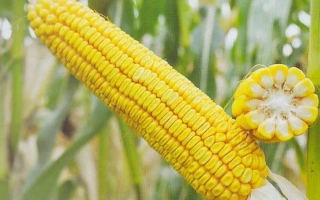
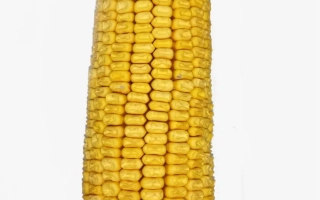
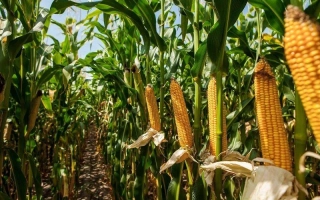
Porumbeni 375 maize is an early-maturing simple interline hybrid with a FAO range from 300 to 380, providing a vegetation period of 90 to 118 days depending on growing conditions. This hybrid was developed at the "Porumbeni" Plant Institute in Moldova and adapted for cultivation in various regions of Ukraine, as well as in EU countries, Belarus, and Moldova. The plant is tall, reaching heights of 220 to 265 cm, with 16-18 leaves. The ear is weakly conical, 21-23 cm long, with 14-18 rows of dent yellow kernels, and 1000-kernel weight varies from 250 to 320 grams. The ear stalk is red, which is a characteristic feature of the hybrid.
Porumbeni 375 is distinguished by high yield and stable productivity under various growing conditions. Grain yield in steppe zones reaches 12-17 t/ha, and with adequate moisture and irrigation, yields can increase to 15-17 t/ha. The hybrid is recommended for grain, silage, and grain-stalk mixture production, and is characterized by a high ear proportion in silage mass. Grain extraction from the ear is 89-91%, and the grain loses moisture moderately quickly during ripening, which is important for timely harvest.
The hybrid exhibits high resistance to major diseases and pests, including stalk rot, stem rot, and lodging, and demonstrates good heat and drought tolerance. The plants have strong stems, ensuring resistance to lodging. Optimal plant density depends on conditions: in dry regions 55-60 thousand/ha, with adequate moisture 60-75 thousand/ha, and under irrigation up to 85-95 thousand/ha. For maximum yield, mineral fertilizers are recommended. Initial plant development is rated as good, promoting successful rooting and growth.
Porumbeni 375 is distinguished by high yield and stable productivity under various growing conditions. Grain yield in steppe zones reaches 12-17 t/ha, and with adequate moisture and irrigation, yields can increase to 15-17 t/ha. The hybrid is recommended for grain, silage, and grain-stalk mixture production, and is characterized by a high ear proportion in silage mass. Grain extraction from the ear is 89-91%, and the grain loses moisture moderately quickly during ripening, which is important for timely harvest.
The hybrid exhibits high resistance to major diseases and pests, including stalk rot, stem rot, and lodging, and demonstrates good heat and drought tolerance. The plants have strong stems, ensuring resistance to lodging. Optimal plant density depends on conditions: in dry regions 55-60 thousand/ha, with adequate moisture 60-75 thousand/ha, and under irrigation up to 85-95 thousand/ha. For maximum yield, mineral fertilizers are recommended. Initial plant development is rated as good, promoting successful rooting and growth.
Crop & resistance
Crop
Disease resistance
Specifications hover over for a hint about the specification
|
FAO
FAO
Corn hybrids are classified by maturity groups and by the FAO number. All corn hybrids are distributed according to the FAO scale. Under Central European conditions, a difference of 10 FAO units between hybrids results in a 1-2 day difference in their maturity. The higher the FAO... |
90–1240 |
|---|---|
| Ripening | 90-100 days, 100-110 days, 110-120 days |
| Hybrid Type | |
|
Kernel Type
Kernel Type
Dent corn (Zea mays indentata) — Large, elongated, flat kernels. The endosperm is horny on the sides of the kernel, mealy in the center and at the top. A depression forms at the top of the kernel upon ripening. Dent corn is the most widely cultivated group among others. Plants ty... |
|
|
Use Direction
Use Direction
Dual-purpose hybrids: for silage and grain in all growing regions. These are "stay-green" type hybrids, meaning the plants remain green for a longer period. However, this does not affect the sugar, cellulose, and hemicellulose content, nor the degree of lignification of the plant... |
|
|
Recommended Density
Recommended Density
Optimal productivity is achieved at a planting density of 4000-5500 plants/ha. Possible planting scheme: 300-500x40-80 cm. |
55-60 thousand pcs/ha, 60-65 thousand pcs/ha, 65-70 thousand pcs/ha, 70-75 thousand pcs/ha, 80-85 thousand pcs/ha |
| Registration year | 2020 |
| Catalog | Catalog → Corn |
| Manufacturer | Public Institution Institute of Phytotechnology |
| Country | Republic of Moldova |
Not yet комментариев. Be the first!
Alternatives
Maize seeds · similar varieties







See also
Often considered together with this variety




Recently viewed
Products you’ve viewed on this site
Reviews · 0