
Head smut of maize
Sporisorium reilianum
Description
How to identify
The causative agent of the disease is the fungus Sporisorium reilianum (formerly Sphacelotheca reiliana), which belongs to the order Ustilaginales. This pathogen is a soil-borne and seed-borne fungus specifically targeting maize and sorghum crops.
The life cycle begins with teliospores residing in the soil or carried on the seed. Infection occurs during the seedling stage, specifically when the plant is in the "spike" phase, as the fungus penetrates the meristematic tissue.
Once inside, the mycelium spreads systemically through the plant's tissues, growing alongside the apical meristem. It remains hidden throughout the vegetative growth period, showing no visible symptoms until the plant prepares to form reproductive structures.
As an obligate parasite, Sporisorium reilianum relies entirely on the host plant for its metabolic needs. It manipulates the plant's physiological processes, diverting nutrients away from grain production to favor the development of fungal spores.
Environmental factors such as soil temperature and moisture levels are crucial. Favorable conditions for infection usually involve temperatures between 20°C and 25°C and moderate soil moisture during the germination period of the corn seeds.
What it damages
Head smut causes significant yield losses by replacing the maize ear and tassel with masses of fungal spores. In severe cases, entire ears are lost, leading to a total reduction in grain yield for the affected plants.
Plants infected with the pathogen often exhibit stunted growth, reduced height, and excessive tillering. This disruption of normal physiological development lowers the overall biomass and harvest quality of the entire crop.
The pathogen significantly increases the inoculum load in the field. Once the spores are released into the soil, they can remain viable for several years, posing a long-term risk to subsequent maize plantings on the same plot.
Economic damage is exacerbated by the reduction of forage quality. Silage made from heavily infected plants may be unsuitable or less nutritious for livestock, potentially causing health issues due to the high concentration of fungal spores.
Beyond the direct loss of kernels, the infection can also impair the plant's ability to resist secondary stressors, such as drought or secondary fungal pathogens, making the crop overall weaker and less productive.
Signs of infestation
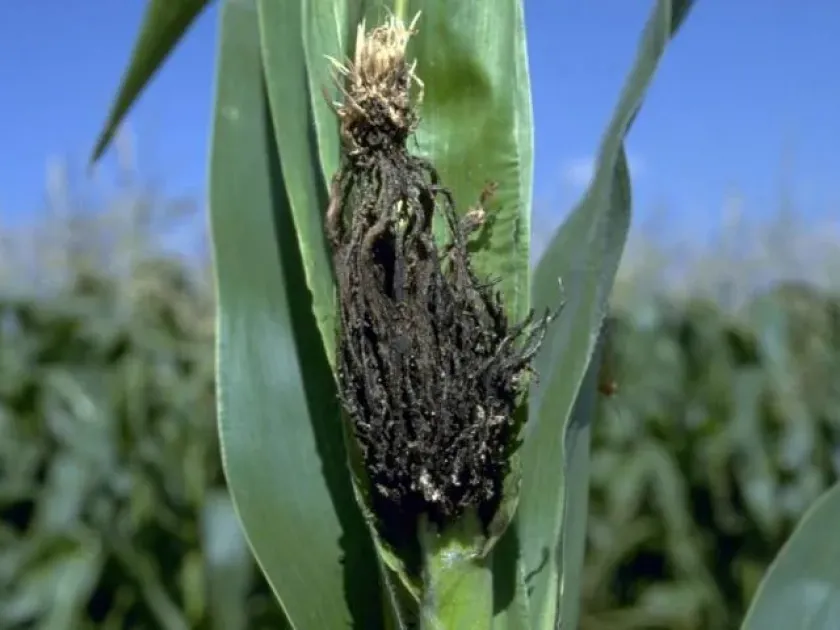
The most distinctive signs of head smut occur during the anthesis stage. The tassel and the ears are transformed into large, dark, sooty galls containing millions of black teliospores, often rupturing the surrounding plant tissue.
Affected ears often show abnormal development, where the cob is replaced by a black powdery mass wrapped in leaf sheaths. These galls break open as the plant matures, allowing the wind to spread the spores across the field.
Some plants may show vegetative abnormalities, including proliferation of leaves or the formation of multiple, poorly developed ears. This "witches' broom" effect is a classic indicator of systemic Sporisorium reilianum infection.
Symptoms are rarely visible before the flowering stage, as the fungus exists only as mycelium within the stem. The sudden appearance of spore-filled organs on an otherwise maturing plant is a telltale sign of the disease.
Field scouting during the late vegetative and early reproductive stages is essential. Any plant showing deformed ears or tassels should be treated as a source of potential contamination and monitored for further spread.
Control measures
The use of resistant maize hybrids is the primary strategy for managing head smut. Breeding programs have successfully developed varieties that offer strong protection against Sporisorium reilianum.
Crop rotation is a fundamental cultural practice. By avoiding corn in the same field for at least three to four years, farmers can significantly reduce the concentration of viable spores in the soil, preventing repeat infections.
Seed treatment with systemic fungicides is a standard and highly effective preventive measure. These chemicals protect the vulnerable seedling during the critical window when the fungal pathogen is most likely to penetrate.
Proper field management, including avoiding soil compaction and ensuring optimal planting dates, helps crops establish quickly. Faster growth allows the plant to outrun the fungal penetration window, increasing the chances of survival.
- Use of genetically resistant maize hybrids.
- Implementation of extended crop rotation cycles.
- Application of systemic seed-applied fungicides.
- Promotion of rapid seedling emergence through ideal planting depth and temperature.
- Sanitation and removal of severely infected plant residues.
Causes diseases · 1
Discussion
No discussions yet — be the first.