
Head smut of sorghum
Sporisorium holci-sorghi
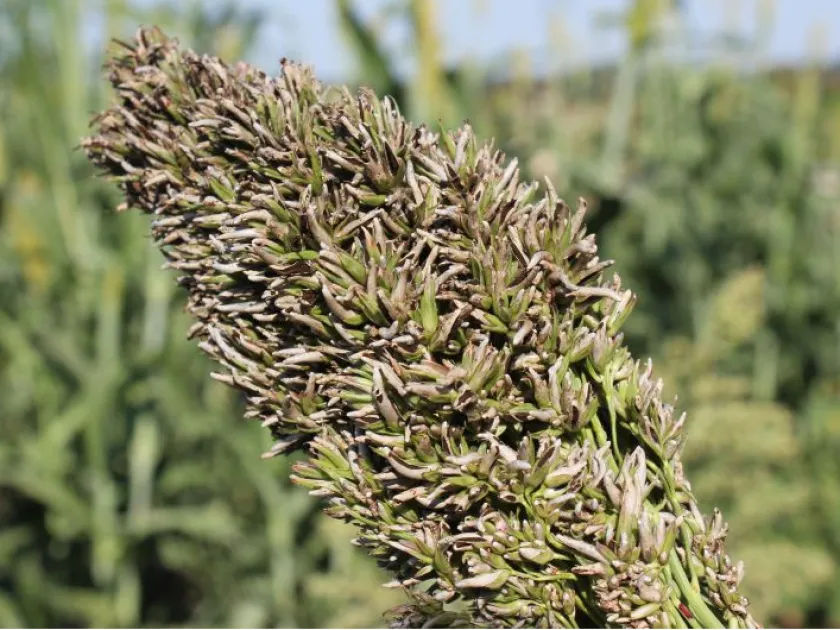
Description
How to identify
Head smut is caused by the fungus Sporisorium holci-sorghi (formerly Sphacelotheca reiliana). It is a soil-borne and seed-borne basidiomycete pathogen that specifically targets sorghum and its relatives.
The fungus survives as teliospores in the soil for several years. These spores are highly resistant to environmental stress, allowing the pathogen to persist in fields even in the absence of a host crop.
The infection process is systemic. The pathogen penetrates the host at the seedling stage, specifically during the germination of the seed, when the fungus invades the meristematic tissues of the young plant.
Once inside, the fungal mycelium grows within the host tissues, following the development of the plant without causing any visible damage until the reproductive stage begins.
At the time of heading, the fungus replaces the floral structures with large spore-filled sori, effectively sterilizing the plant and ensuring the next generation of inoculum is produced.
What it damages
The primary damage caused by head smut is the complete loss of grain production in infected plants. The inflorescence is transformed into a gall, making the plant entirely unproductive.
In addition to grain loss, the disease reduces the quality of forage sorghum, as the smutted heads are less palatable and may contain fungal metabolites that are undesirable in animal feed.
High levels of soil infestation can result in significant yield losses, potentially exceeding 50% in fields with susceptible hybrids and poor crop rotation practices.
The pathogen disrupts the plant's normal physiological development, leading to stunted growth and reduced vigor in affected individuals, which makes the crop less resilient to stress.
Economic impact is significant due to both the direct loss of harvestable grain and the long-term contamination of the soil, which complicates future cultivation of sorghum in the same area.
When it appears
The infection window is narrow and limited to the seedling emergence phase. Soil conditions at planting are critical in determining the severity of the outbreak.
Optimal conditions for infection include soil temperatures between 18°C and 25°C and adequate soil moisture. These conditions stimulate spore germination and root penetration.
Visible symptoms appear only late in the season, during the flowering or heading phase. By this time, the internal damage has already been finalized by the systemic mycelium.
Spore dissemination occurs primarily during the harvest and post-harvest periods. The sori rupture, releasing masses of spores that are carried by wind, machinery, and water to clean fields.
The disease cycle is completed when these spores reach the soil and enter a dormant state, waiting for the next planting season to begin the infection cycle anew.
Signs of infestation
The most characteristic sign of head smut is the modification of the inflorescence. The panicle is replaced by a large, irregular gall covered by a white or greyish membrane.
As the plant matures, the membrane ruptures to release a dense, dark brown to black mass of spores, leaving behind the vascular strands of the panicle as a dry, stringy skeleton.
While often limited to the panicle, in some cases, the smut may manifest in other parts of the plant, including abnormal tillering or leaf malformations, though this is less common.
Infected plants may exhibit slight dwarfing or a general lack of uniformity compared to healthy neighbors, although these signs are often subtle until the heading stage.
Field diagnosis is easiest during the flowering stage, where the black powdery masses of spores stand out clearly against the green fields of healthy sorghum.
Control measures
The use of resistant hybrids is the most effective and sustainable method for controlling head smut in commercial sorghum production.
Seed treatment with systemic fungicides is mandatory in areas where the disease is prevalent. This protects the seedling during the critical germination phase from soil-borne inoculum.
Crop rotation is an essential cultural practice. A rotation period of at least 3 years away from sorghum is recommended to allow the spore population in the soil to decline naturally.
Deep tillage can help bury spores deeper into the soil profile, reducing the contact between emerging seedlings and the pathogen inoculum concentrated in the upper layers.
Adjusting planting dates to avoid soil temperatures optimal for fungal germination can reduce infection rates, although this must be balanced with the crop's overall development requirements.
Causes diseases · 1
Discussion
No discussions yet — be the first.