

Description
Symptoms
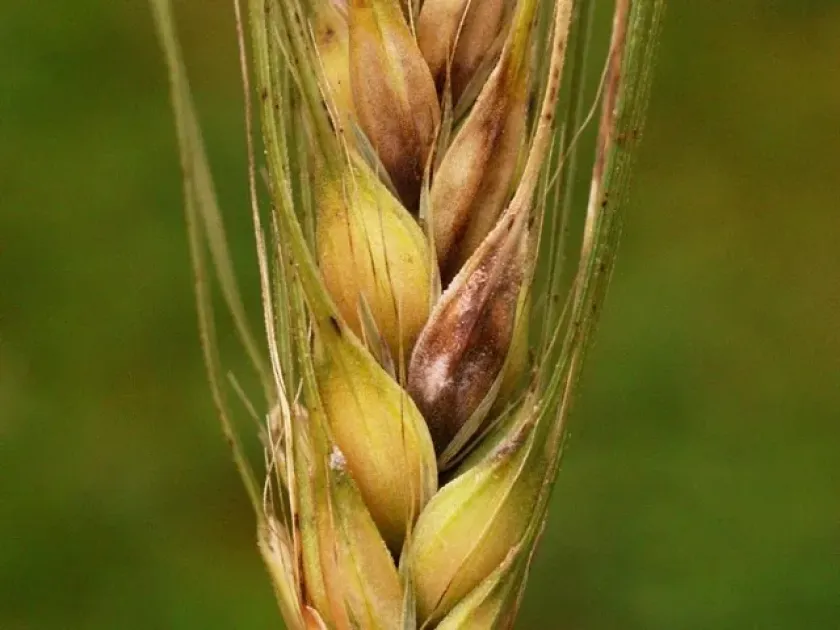
The most distinct symptoms of covered smut become visible during the heading stage. Unlike loose smut, the affected ears are characterized by a rigid, firm structure due to the intact membrane.
Each individual kernel is replaced by a so-called smut ball, which is a mass of dark brown to black teliospores. These balls retain the approximate shape and size of a normal barley grain.
The membrane surrounding the smut ball is very durable and does not rupture easily in the field, which distinguishes this disease from others where the spores are blown away by the wind.
Infected plants may exhibit stunted growth or be slightly distorted, although in many cases, they look relatively normal until the grain heads appear. The awns are usually preserved.
During the mechanical harvesting process, the membrane of the smut balls may be damaged, causing the spores to release and contaminate the healthy grain, thereby ensuring the spread of the pathogen.
Pathogen
The causative agent of covered smut is the basidiomycete fungus Ustilago hordei. This obligate parasite specifically targets barley and, to a lesser extent, oats, causing significant disruptions to the plant's reproductive organs.
The fungus is primarily seed-borne. Teliospores persist on the surface of the seeds or underneath the glumes during harvest, waiting for the subsequent planting cycle to infect the next generation of plants.
The infection process begins during seed germination. The fungal spores germinate and form infectious hyphae that penetrate the coleoptile of the emerging seedling before it emerges from the soil surface.
Once inside, the mycelium grows systemically through the plant tissues. The fungus follows the growing point of the stem, remaining largely invisible until the plant begins to produce its head.
In the final stage of development, the fungal mycelium replaces the floral tissues in the spikelets, converting them into a hard, compact mass of spores covered by a thin, persistent membrane.
Conditions for development
The primary factor influencing the development of covered smut is the presence of inoculum on the seed surface at the time of planting. The disease cycle is heavily dependent on seed health.
Soil conditions during the period of seedling emergence are critical. The fungus thrives and infects the plant most effectively when soil temperatures are in the range of 15–20 degrees Celsius with moderate moisture.
Delayed emergence due to deep planting or poor soil conditions extends the period of susceptibility for the seedling, allowing the fungus more time to successfully invade the host tissue.
Continuous cropping of barley on the same field can increase the soil-borne inoculum pressure, although seed-borne infection remains the primary driver of the disease in most agricultural systems.
Environmental conditions during the flowering stage are less important for the infection process compared to loose smut, as covered smut does not rely on airborne spores to infect the floral parts.
Why it matters
The economic harm of covered smut is primarily reflected in the direct loss of grain yield, as every infected spikelet produces zero usable grain, with the kernel replaced entirely by fungal spores.
Beyond yield reduction, the quality of the harvested batch is severely compromised. The presence of smut spores creates a dusty, dark mass that makes the grain unsuitable for malting or food use.
The contamination of healthy grain batches increases the cost of processing, as extensive cleaning and dehulling are required to remove spores before the grain can be sold on the market.
If left unmanaged, the percentage of infected heads in a field can increase annually, leading to a progressive decline in crop productivity and significant economic losses for the farmer.
Affected grain is also unsuitable for use as seeds for the next season, necessitating the purchase of clean, certified seeds or the application of rigorous chemical treatment.
Protection
The management of covered smut is highly effective when preventative measures are applied correctly, with seed treatment serving as the cornerstone of control strategies.
- Application of systemic fungicides as seed treatments (e.g., triazoles or carboxin) to eliminate spores on the seed surface and within the glumes.
- Adoption of crop rotation practices to minimize the buildup of fungal spores in the soil and break the disease cycle.
- Utilization of certified, disease-free seed stocks to prevent the initial introduction of the pathogen into the field.
- Selection of resistant barley cultivars that have been bred specifically to withstand smut infections in the local environment.
- Optimizing planting depth to encourage rapid seedling emergence, thereby shortening the vulnerable developmental window for the infection.
Content graph
Connections · Covered smut
Most often together:
Marketplace
Products · 158


Community
Discussion
No discussions yet — be the first.