

Reference · Diseases
Leaf spots (fungal)
Symptoms of leaf spot diseases are diverse and vary depending on the pathogen, but the common feature is the appearance of localized areas of dead tissue (necrosis) on the leaf blade.
164
items
What the section contains
 Pleospora leaf spot
Pleospora herbarum
Pleospora leaf spot
Pleospora herbarum
 Potato anthracnose
Colletotrichum coccodes
Potato leaf spot (Cercospora)
Mycovellosiella concors
Pseudocercospora leaf spot of sweet potato
Pseudocercospora timorensis
Potato anthracnose
Colletotrichum coccodes
Potato leaf spot (Cercospora)
Mycovellosiella concors
Pseudocercospora leaf spot of sweet potato
Pseudocercospora timorensis
 Purple blotch of raspberry
Septocyta ruborum
Purple blotch of raspberry
Septocyta ruborum
 Ramularia leaf spot of beans
Ramularia phaseoli
Ramularia leaf spot of beans
Ramularia phaseoli
 Raspberry cylindrosporiosis
Cylindrosporium rubi
Raspberry cylindrosporiosis
Cylindrosporium rubi
 Raspberry yellow
 spot agent
Raspberry yellow
Raspberry yellow spot agent
 Red leaf spot
Exobasidium rostrupii
Red sheath spot
Mycovellosiella vaginae
Rice leaf sheath spot
Calonectria morganii
Red leaf spot
Exobasidium rostrupii
Red sheath spot
Mycovellosiella vaginae
Rice leaf sheath spot
Calonectria morganii
 Rostrate leaf spot of corn
Richardson
Rostrate leaf spot of corn
Richardson
 Selenophoma leaf spot
Selenophoma
Selenophoma leaf spot
Selenophoma
 Septoria leaf blotch
Mycosphaerella graminicola
Septoria leaf blotch
Mycosphaerella graminicola
 Septoria leaf blotch and glume blotch
Parastagonospora nodorum
Septoria leaf blotch and glume blotch
Parastagonospora nodorum
 Septoria leaf blotch of oat
Stagonospora avenae
Septoria leaf blotch of oat
Stagonospora avenae
 Septoria leaf spot of raspberry
Mycosphaerella rubi
Septoria leaf spot of raspberry
Mycosphaerella rubi
 Sharp Eyespot
Ceratobasidium cereale
Sheath spot of rice
Ceratobasidium setariae
Sharp Eyespot
Ceratobasidium cereale
Sheath spot of rice
Ceratobasidium setariae
 Sooty blotch
Peltaster fructicola
Sooty blotch
Peltaster fructicola
 Sooty mold
Akaropeltopsis
Sooty mold
Akaropeltopsis
 Spot anthracnose
Sphaceloma
Spot anthracnose
Sphaceloma
 Stemphylium leaf spot
Stemphylium botryosum
Stemphylium leaf spot
Stemphylium botryosum
 Stigmina leaf spot
Stigmina spp.
Stigmina leaf spot
Stigmina spp.
 Strawberry brown spot
Mycosphaerella louisianae
Sugarcane leaf spot
Deightoniella papuana
Strawberry brown spot
Mycosphaerella louisianae
Sugarcane leaf spot
Deightoniella papuana
 Tan spot of wheat
Pyrenophora tritici-repentis
Tan spot of wheat
Pyrenophora tritici-repentis
 Tar spot of corn
Coniothyrium phyllachorae
Tar spot of corn
Coniothyrium phyllachorae
 Tar spot of maple
Rhytisma acerinum
Tar spot of maple
Rhytisma acerinum
 Tar spot of maple
Rhytisma punctatum
Tar spot of maple
Rhytisma punctatum
 Tomato stemphylium leaf spot
Stemphylium lycopersici
Tomato stemphylium leaf spot
Stemphylium lycopersici
 Tropical banana leaf spot
Ramichloridium musae
Tropical banana leaf spot
Ramichloridium musae
 Ulocladium leaf spot
Ulocladium cucurbitae
Ulocladium leaf spot
Ulocladium cucurbitae
 Valdensia leaf blight
Valdensia heterodoxa
Valdensia leaf blight
Valdensia heterodoxa
 Venturia leaf spot
Venturia macularis
Venturia leaf spot
Venturia macularis
 Walnut microstroma leaf spot
Microstroma juglandis
Watermelon net blotch
Leandria momordicae
Walnut microstroma leaf spot
Microstroma juglandis
Watermelon net blotch
Leandria momordicae
 White leaf spot of oilseed rape
Pseudocercosporella capsellae
White leaf spot of oilseed rape
Pseudocercosporella capsellae
 Yeast spot
Eremothecium gossypii
Yellow leaf spot
Pleospora spp.
Yeast spot
Eremothecium gossypii
Yellow leaf spot
Pleospora spp.
 Yellow leaf spot of alfalfa
Leptotrochila medicaginis
Yellow leaf spot of sugarcane
Mycovellosiella koepkei
Yellow leaf spot of alfalfa
Leptotrochila medicaginis
Yellow leaf spot of sugarcane
Mycovellosiella koepkei
 Zonal leaf spot
Cristulariella moricola
Zonal leaf spot
Cristulariella moricola
 Zonal leaf spot of pelargonium
Pelargonium zonate
Zonal leaf spot of pelargonium
Pelargonium zonate
Marketplace
Products in this section · 12
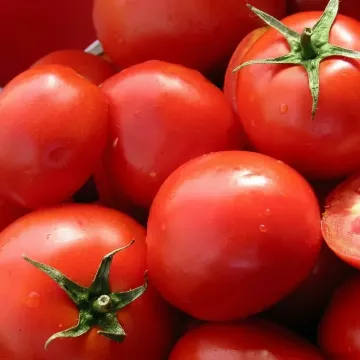
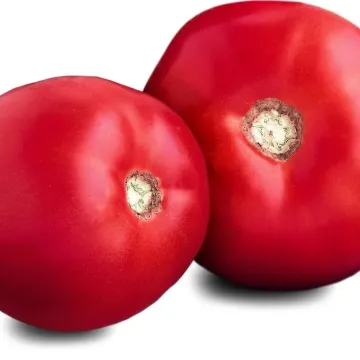
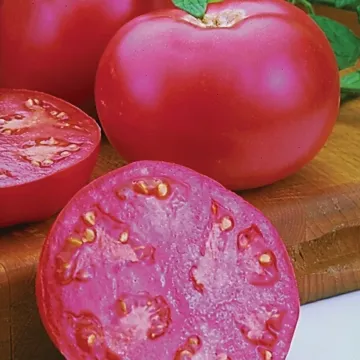
Pink Lady F1 / Pink Girl F1
Seminis Vegetable Seeds
Tomato
19
8
·
12K
5 offers
11.22 €per 1000 seeds
Buy


Leaf spots (fungal)
Spots vary in shape from circular to angular, often delimited by leaf veins, and in color, ranging from light beige and grey to dark brown, almost black, or with a reddish halo.
Often, in the center of the spots, pathogen sporulation develops, which can be seen upon close inspection as black dots (pycnidia) or velvety coatings of different colors.
As the disease progresses, spots tend to increase in size and coalesce, leading to the destruction of significant leaf surface areas.
The final stage of infection is premature yellowing, drying, and leaf drop, which critically reduces the overall photosynthetic capacity of the plant.
Leaf spots are a collective group of infectious diseases most commonly caused by pathogenic fungi from various classes, including Ascomycetes and Deuteromycetes.
Bacteria can also act as causal agents (bacterial leaf spots), causing water-soaked or oily lesions, which require different diagnostic and management approaches.
In rare cases, specific leaf spots are induced by viruses, where the spots often take the form of chlorotic mosaics or necrotic rings.
Pathogens persist in the soil, on crop residues, in seeds, and some species can overwinter as mycelium on perennial plant parts.
During the growing season, the infection spreads via spores (conidia) transported by wind, rain splashes, or insect vectors.
The key factor for the development of most leaf spots is high humidity and the presence of free water on leaf surfaces for extended periods.
Optimal temperature ranges for the germination of spores of most fungal pathogens are between +18 and +25 degrees Celsius.
Densely planted crops, poor ventilation within the agro-ecosystem, and excessive nitrogen fertilization, which reduces tissue resistance, create ideal conditions for epiphytotics.
Poor crop rotation practices, where susceptible crops are grown in the same field too frequently, contribute to the accumulation of inoculum in the soil.
Weakened plants due to nutrient deficiencies or pest damage have significantly higher susceptibility to pathogen entry through stomata or micro-wounds.
The primary damage is a sharp reduction in green surface area, which blocks photosynthesis and disrupts the carbohydrate metabolism of the plant.
The disruption of physiological processes leads to stunted growth, reduced plant immunity, and an overall decrease in yield for the current season.
Affected crops show reduced quality, loss of market value for vegetables and fruits, and lower seed weight and viability.
Severe infestations can trigger premature shoot death and total plant loss, especially under stress-inducing weather conditions.
Economic losses arise not only from reduced yields but also from high costs associated with chemical control applications and field sanitation.
Protection strategies are based on cultural methods, including crop rotation and spatial isolation from fields with related crops.
Important steps include deep plowing of crop residues in the autumn and using only healthy, certified seeds for planting.
The use of modern fungicides (both contact and systemic) allows for the suppression of disease spread in the early stages, supported by phytosanitary monitoring.
- Utilizing disease-resistant cultivars and hybrids;
- Timely elimination of weeds that serve as pathogen reservoirs;
- Optimizing plant density to improve aeration;
- Balanced application of mineral fertilizers, especially potassium and phosphorus.
In cases of widespread infection, preventive fungicide applications must be conducted according to the local regulations and label requirements for specific products.