
Description
Symptoms
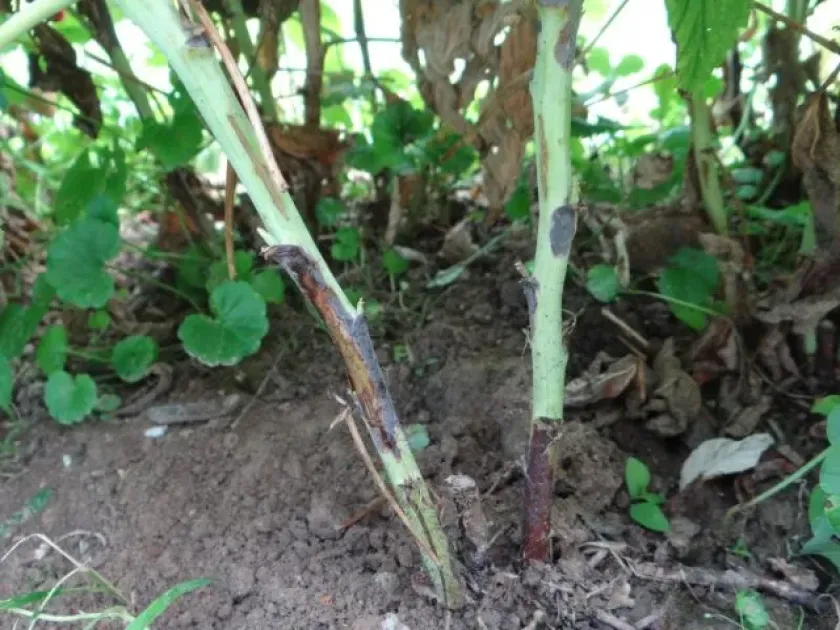
The initial symptoms of purple blotch appear on the young, current-year canes as irregular, reddish-purple spots that usually originate around the leaf nodes.
These lesions gradually expand and may merge, eventually encircling the cane and turning into large, dark-brown or black necrotic patches on the stem surface.
As the disease progresses, the epidermis of the affected canes begins to crack, and small black fruiting bodies called pycnidia become visible within the lesions.
During winter, the damaged canes often take on a silvery-gray appearance, and buds on the infected areas frequently fail to sprout or die prematurely.
In cases of severe infection, leaves may exhibit brown necrotic spots with dark margins, which often lead to premature yellowing and leaf drop.
Pathogen
The disease is caused by the fungus Septocyta ruborum, historically known as Didymella applanata, which primarily affects plants within the Rubus genus.
The pathogen overwinters as mycelium and pycnidia within the infected raspberry canes, remaining viable until the next growing season starts.
During the spring, the fungus produces spores (conidia and ascospores) that are disseminated to new growth through wind and splashing raindrops.
The fungus enters the host tissue through natural openings such as stomata or wounds caused by insect feeding, pruning, or environmental factors.
Disease development is continuous throughout the growing season, provided that environmental conditions remain favorable for fungal growth and sporulation.
Conditions for development
High humidity and frequent rainfall are the most critical environmental factors that promote the development and spread of purple blotch.
Dense planting schemes that prevent proper air circulation trap moisture, creating an ideal microclimate for the fungus to infect healthy raspberry canes.
Poor agricultural practices, including the failure to prune dense thickets, significantly increase the risk of an epidemic within the raspberry field.
Excessive application of nitrogen fertilizers promotes vigorous, succulent growth of new canes, making them more susceptible to fungal penetration.
Mechanical damage to canes, whether from pests like cane borers or winter frost injuries, creates entry points that facilitate rapid infection by the fungus.
Why it matters
Purple blotch is a destructive disease that can lead to the loss of 50% to 80% of cane productivity if left unmanaged during the growing season.
By damaging the vascular tissues of the canes, the disease disrupts the flow of nutrients to the buds, which drastically reduces fruit set and yield potential.
Infected canes become brittle and are prone to breaking under the weight of the fruit or due to strong winds, leading to total loss of the harvest on those stems.
The disease weakens the overall vigor of the plant, making it less cold-hardy and more susceptible to winter dieback, eventually shortening the lifespan of the plantation.
Ultimately, the accumulation of inoculum in the field ruins fruit quality and marketability, eventually necessitating the removal of the entire patch.
Protection
The primary control strategy involves selecting disease-resistant varieties and ensuring that only certified, healthy planting material is used in the garden.
Timely sanitation, including the removal and destruction of infected canes immediately after harvest, is essential to minimize the primary source of inoculum.
Maintaining proper spacing and thinning out excess suckers improves airflow, which helps keep the canes dry and less hospitable to the fungal pathogen.
Fungicide applications, particularly copper-based sprays during the early spring and pre-bloom stages, can effectively reduce the incidence of the disease.
- Proper irrigation management to prevent soil and foliage moisture.
- Integrated pest management to control insects that wound canes.
- Balanced fertilization to improve the plant's natural resistance.
Pathogens and affected parts
Affects crops · 1
Discussion
No discussions yet — be the first.