
Potato anthracnose
Colletotrichum coccodes
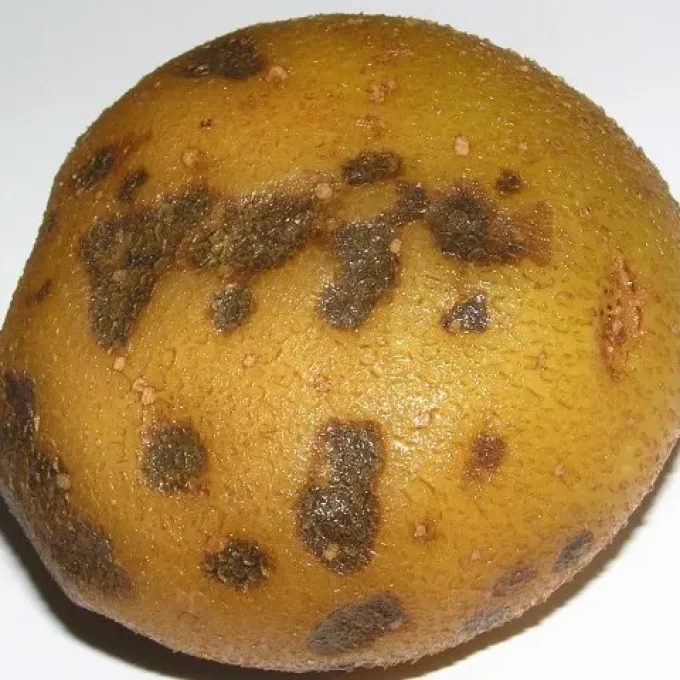
Description
Symptoms
The first symptoms of anthracnose often appear on the stems as chlorotic, irregular spots that eventually darken to a tan or brown color. Under high humidity, tiny black dots, which are the fungal sclerotia, become visible on the lesion surfaces.
Infected plants exhibit premature yellowing and wilting of the foliage, often starting from the lower leaves and progressing upwards. This wilting is most pronounced during the warmest hours of the day.
Below the surface, the roots and stolons show signs of browning and decay. The root cortex can slough off, severely impairing the plant's ability to absorb water and essential nutrients from the soil.
Tuber infections manifest as dark, slightly depressed spots on the skin. While these spots may appear superficial initially, they can penetrate deeper into the flesh, causing it to become dark and spongy.
During storage, infected tubers are highly susceptible to secondary bacterial soft rots, which can lead to a complete breakdown of stored produce if not managed correctly.
Pathogen
The causal agent of potato anthracnose is the fungus Colletotrichum coccodes. It is a soil-borne pathogen known for its ability to survive in the soil for several years by forming resilient survival structures called microsclerotia.
The fungus is highly versatile and can infect a wide range of host plants, particularly within the Solanaceae family, including tomatoes and peppers, which complicates crop rotation strategies.
Infection spreads through conidia produced in acervuli, which are easily disseminated by splashing water, irrigation, and contaminated farming tools. The fungus typically enters the plant through wounds or natural openings in stems and roots.
Once inside the host, the pathogen colonizes the vascular system and cortical tissues. By secreting specific enzymes, it breaks down plant cells, leading to the characteristic wilting and necrosis observed in infected potato crops.
The biological cycle of Colletotrichum coccodes is closely linked to soil moisture levels, making it particularly persistent in areas with poor drainage and warm climatic conditions.
Conditions for development
Potato anthracnose thrives in warm and moist conditions. Temperatures between +20°C and +28°C, combined with high soil moisture, significantly accelerate the development of the fungus.
Poor soil structure and compacted ground often create environments where moisture stays trapped, facilitating the growth of the pathogen and the infection of the plant's root system.
Stressful conditions, such as drought followed by heavy rainfall, weaken the plant's natural defenses, making it much easier for Colletotrichum coccodes to colonize the host tissue.
Improper crop rotation is a major risk factor. If host crops are planted in the same field too frequently, the population of microsclerotia in the soil reaches levels that make effective control very difficult.
High nitrogen levels without sufficient potassium can also lead to succulent growth that is more susceptible to fungal penetration, especially when combined with mechanical damage from field equipment.
Why it matters
The primary economic impact of potato anthracnose is a significant reduction in tuber yield due to early senescence of the plant canopy. The crop fails to reach its full potential, leading to financial losses for the farmer.
The quality of harvested tubers is severely compromised. Infected tubers are aesthetically unappealing due to surface lesions, which makes them unsuitable for fresh market sales.
Storage rot is another major issue. Infected tubers stored in bulk can trigger widespread rotting, resulting in the loss of large quantities of healthy potatoes in the same storage unit.
Using infected tubers as seed potatoes perpetuates the disease cycle. It leads to poor stand establishment, reduced crop vigor, and ensures that the pathogen remains in the soil for future seasons.
The costs associated with managing the disease, including fungicide applications and soil sanitation practices, add to the overall burden on the agricultural operation.
Protection
Effective management begins with the use of certified, disease-free seed tubers. Avoiding the introduction of contaminated material is the most efficient way to prevent a field-wide infection.
Implementing a strict crop rotation schedule is essential. A break of at least 3 to 4 years from host crops allows the concentration of soil-borne sclerotia to decrease naturally.
Thorough sanitation after harvest is necessary to prevent the accumulation of fungal inoculum. Removing and destroying infected plant debris reduces the amount of pathogen surviving until the next planting.
- Apply systemic fungicides as seed treatments before planting.
- Ensure balanced fertilization, with an emphasis on potassium to strengthen cell walls.
- Control pests that cause root and stem damage to prevent entry points for the fungus.
- Optimize storage conditions, ensuring low temperatures and proper ventilation.
Foliar application of fungicides during the growing season, specifically when symptoms are first spotted, can help suppress the spread of conidia and protect the crop until maturation.
Discussion
No discussions yet — be the first.