
Description
Symptoms
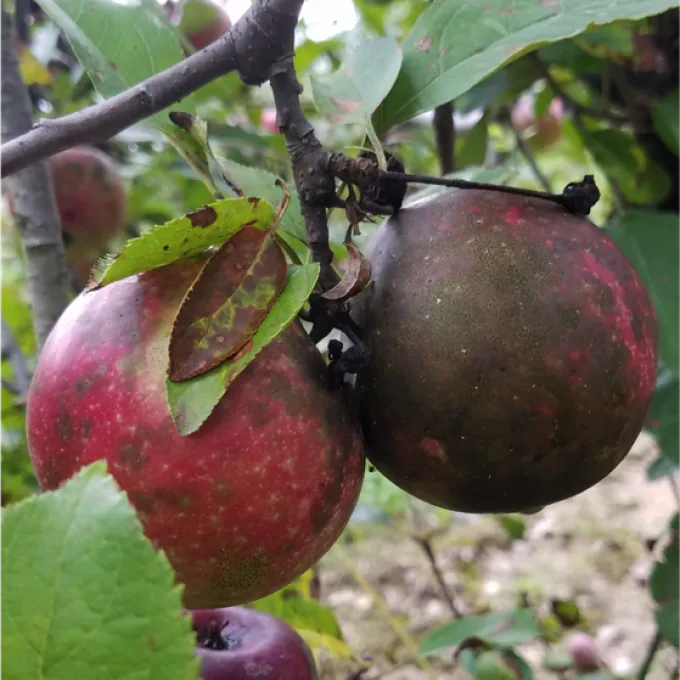
The primary symptom is the appearance of dark, sooty, or olive-colored smudges on the surface of the fruit skin, which may resemble stains or smudges.
These blemishes often start as tiny spots and gradually expand, eventually coalescing into large, irregular blotches that cover significant portions of the apple.
A key identifying feature is that the sooty layer can usually be removed or significantly reduced by rubbing or washing, revealing the healthy skin beneath.
On light-colored apple varieties, the dark blotches are particularly noticeable, while on darker varieties, they may appear less distinct but are still present.
The spots do not have definite margins, which helps distinguish them from other fungal pathogens like apple scab or necrotic spots.
Pathogen
Sooty blotch is a fungal disease caused by a complex of fungi, with Peltaster fructicola being one of the primary pathogens responsible for the condition.
The fungus develops on the outer surface of the apple cuticle, forming a dark network of mycelium without invading the underlying fruit tissue.
It reproduces through small, dark pycnidia that release spores, which are then disseminated throughout the orchard by wind and splashing rainwater.
The pathogen is capable of surviving the winter on twigs, debris, and fallen leaves, acting as a persistent source of inoculum for the following season.
This fungus is strictly a superficial parasite, meaning it creates cosmetic damage rather than destroying the structural integrity of the fruit.
Conditions for development
Sooty blotch thrives in environments with high relative humidity, frequent rainfall, and extended periods of dew during late summer and autumn.
Temperatures ranging between 18°C and 25°C, combined with constant surface moisture, provide optimal conditions for the colonization of the fruit skin.
Poor air circulation within the tree canopy, often caused by dense foliage, prevents the fruit from drying quickly after rain, favoring fungal growth.
Orchards located in low-lying areas or near wooded borders are more prone to infections due to stagnant air and higher moisture retention.
Years with consistent wet weather during the pre-harvest period typically see the highest incidence and severity of the disease.
Why it matters
The main impact of sooty blotch is the reduction in fruit grade, as the presence of unsightly blemishes makes the apples less attractive to consumers.
Although the fungus is superficial, the discoloration can lead to increased transpiration, potentially resulting in fruit shriveling during long-term storage.
Commercial growers face financial losses when heavily affected fruit is downgraded, failing to meet the quality standards required for premium fresh markets.
Sorting and cleaning costs increase significantly when the disease is prevalent, which can make harvesting operations less efficient.
While the fruit remains edible and safe, the lack of aesthetic appeal makes it difficult to market high-quality fresh produce.
Protection
Management focuses on improving air circulation through regular pruning and training to ensure that fruit surfaces dry quickly after rainfall.
Fungicide applications used to control apple scab often have a secondary effect in suppressing the development of sooty blotch during the summer months.
Sanitation practices, such as removing old leaves and wild fruit trees from the orchard perimeter, help reduce the overall spore load in the environment.
- Strategic pruning to open the canopy for better air movement.
- Applying fungicides during periods of high humidity.
- Thinning fruit to prevent cluster formation, where moisture often traps.
Proactive orchard management, including weed control beneath trees to lower humidity, can also help decrease the disease pressure.
Pathogens and affected parts
Affects crops · 1
Discussion
No discussions yet — be the first.