
Venturia leaf spot
Venturia macularis
Description
Symptoms
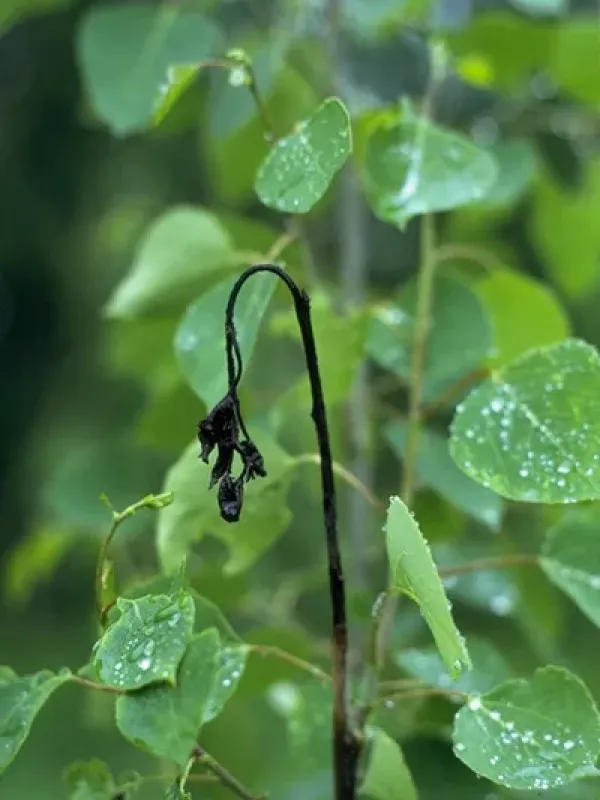
Initial symptoms are characterized by the appearance of dark, almost black spots on the young leaves and shoots, which expand rapidly as the disease progresses.
Infected shoots often curl and twist, taking on a distinctive shepherd's crook shape due to the localized necrotic damage preventing uniform growth.
Under humid conditions, an olive-green or dark velvety layer of spores appears on the surface of the lesions, indicating active sporulation of the fungus.
As the infection advances, the affected tissues wither and die. This often leads to premature leaf drop, resulting in thin, unsightly tree crowns by mid-summer.
Repeated yearly infections can lead to dieback of the crown, significantly impacting the overall architectural form and structural health of the tree.
Pathogen
The disease is caused by the ascomycete fungus Venturia macularis, which has an anamorph stage known as Pollaccia radiosa. This pathogen is a specialist parasite that primarily targets the young leaves and succulent shoots of poplar trees.
The fungus overwinters as mycelium within infected twigs or as fruiting bodies on fallen leaves. This survival strategy ensures that the pathogen remains present in the environment even through harsh winters.
During the spring, the fungus produces conidia or ascospores, which are spread by wind and rain splashes to new growth. This marks the beginning of the infection cycle for the season.
The development of the pathogen is intrinsically linked to the phenology of the poplar tree, specifically targeting the period of rapid bud burst and shoot expansion when tissues are most susceptible.
This fungus exhibits high environmental adaptability, allowing it to thrive across a range of climatic zones where poplar host species are cultivated.
Conditions for development
The primary factor facilitating disease spread is high humidity and frequent rainfall during the spring, which creates an environment conducive to spore germination.
Optimal temperatures for the fungus range between 15°C and 20°C, a period that typically aligns with the critical window of host tissue growth.
Dense plantations, such as those found in nurseries, create stagnant microclimates with poor air circulation, preventing leaves from drying out and promoting rapid fungal colonization.
Tree stress, caused by drought, poor soil fertility, or insect infestation, reduces the host's innate resistance, making it much more susceptible to successful pathogen infection.
The failure to remove leaf litter and pruned debris provides a ready-made source of inoculum, ensuring that the disease returns to the same location every year.
Why it matters
In nursery settings, this disease is particularly devastating, as it can cause extensive damage to young seedlings, leading to reduced growth or even total mortality.
Premature defoliation compromises the tree's photosynthetic capacity, causing long-term depletion of energy reserves and reduced cold hardiness during the winter months.
The recurring death of shoot tips causes significant deformity in the main trunk and branches, reducing the economic value of the timber produced.
The aesthetic decline of infected poplars makes them unsuitable for use in urban parks and residential landscapes where ornamental quality is paramount.
Systemic weakness caused by chronic infection leaves trees susceptible to secondary pests and pathogens, ultimately shortening their life expectancy in forest ecosystems.
Protection
Sanitation is the most important control measure; this involves the prompt collection and destruction of all fallen leaves and infected twigs to remove the source of inoculum.
Pruning out infected branches during the dormant season can help reduce the amount of pathogen present at the start of the next growing season.
In nurseries, ensuring adequate spacing between trees promotes better airflow and drier leaf surfaces, which physically inhibits fungal development.
Fungicidal applications, including copper-based products or systemic fungicides, can be utilized when disease pressure is high, especially during the spring growth flush.
The use of resistant clones or species of poplar is the most effective long-term management strategy, significantly reducing the reliance on chemical treatments.
Discussion
No discussions yet — be the first.