
Description
Symptoms
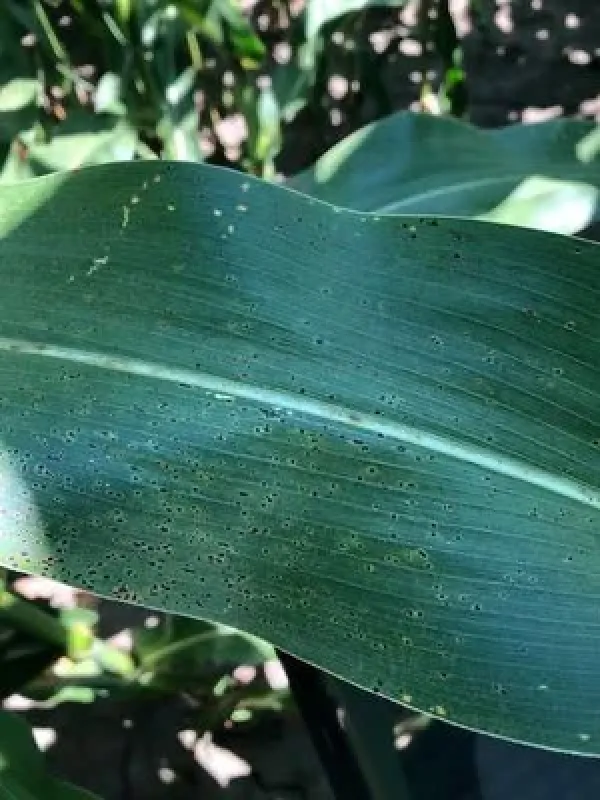
The most distinctive symptom is the appearance of small, raised black spots that look like dots of tar or soot. These spots are scattered across both leaf surfaces.
Early infections might appear as lighter brown or tan spots, but as the fungus matures and produces spores, the lesions darken significantly and become firm and slightly elevated.
Each lesion is often surrounded by a chlorotic halo—a yellowish ring of dying tissue that signals the loss of photosynthetic function in the leaf cells.
Under favorable weather conditions, these spots can coalesce, covering large areas of the leaf, which leads to premature senescence and tissue death starting from the lower leaves.
Under magnification, these spots reveal numerous pycnidia (fruiting bodies), which confirm the fungal nature of the disease and distinguish it from other types of leaf spots.
Pathogen
The causative agent of tar spot in maize is the fungus Coniothyrium phyllachorae. This obligate parasite specifically targets maize tissues, leading to characteristic lesions on the leaves.
The disease is classified as a fungal leaf spot. The pathogen is known for its ability to persist on crop debris, making infected field residues a significant source of inoculum for subsequent seasons.
The life cycle involves the dispersal of spores via wind and rain splashes, which efficiently move the pathogen from infected residues to healthy host tissues during the growing season.
The fungus penetrates the epidermis through stomata or directly through the cuticle. Once inside, the mycelium colonizes the plant tissue, extracting nutrients and disrupting cellular integrity.
The formation of black, hard structures called stromata allows the fungus to survive and produce spores, facilitating the secondary spread of the disease within the crop canopy.
Conditions for development
Tar spot development is strongly favored by moderate temperatures, typically ranging from 18 to 23 degrees Celsius, and high relative humidity levels.
Extended periods of rainfall, heavy dew, and persistent foggy conditions create an ideal environment for spore germination and successful infection of maize foliage.
Dense crop stands that limit airflow can exacerbate the disease by maintaining high moisture levels within the canopy, providing a stable environment for the fungus.
Poor agricultural practices, such as monoculture and reduced tillage, allow the pathogen to survive on the soil surface, leading to higher disease pressure in the next year.
Periods of wet weather during the early growth stages of the corn are critical, as they trigger initial infections that can develop into severe epidemics later in the season.
Why it matters
The primary impact of tar spot is the premature loss of leaf surface area, which significantly reduces the plant's capacity for photosynthesis during grain fill.
Reduced photosynthetic activity leads to poor grain filling, lighter kernel weights, and overall lower crop yields, impacting the farmer's profit margins.
Severe infection accelerates the senescence of the entire plant, which may cause lodging and stem weakness, complicating the harvesting process and increasing field losses.
Weakened plants are more susceptible to secondary opportunistic pathogens, such as stalk rots, which further degrade the quality and standability of the maize crop.
In high-pressure years, if left unmanaged, tar spot can cause substantial economic losses across wide geographic regions where maize is heavily cultivated.
Protection
Selecting and planting resistant or tolerant corn hybrids is the most sustainable and effective way to minimize the impact of tar spot on corn yield.
Implementing crop rotation, where corn is not planted in the same field for consecutive years, helps to reduce the survival of the pathogen in crop debris.
Practicing deep tillage helps to bury infected crop residues, which accelerates the decomposition process and reduces the amount of viable inoculum available for infection.
Applying foliar fungicides during critical stages of plant development can effectively limit the progression of the disease if applied at the first sign of infection.
- Use certified disease-free seed.
- Maintain appropriate plant density for airflow.
- Monitor fields regularly during humid weather.
- Control weeds that might act as alternate hosts.
- Ensure balanced fertility to support overall plant vigor.
Pathogens and affected parts
Affects crops · 1
Discussion
No discussions yet — be the first.