
Description
Symptoms
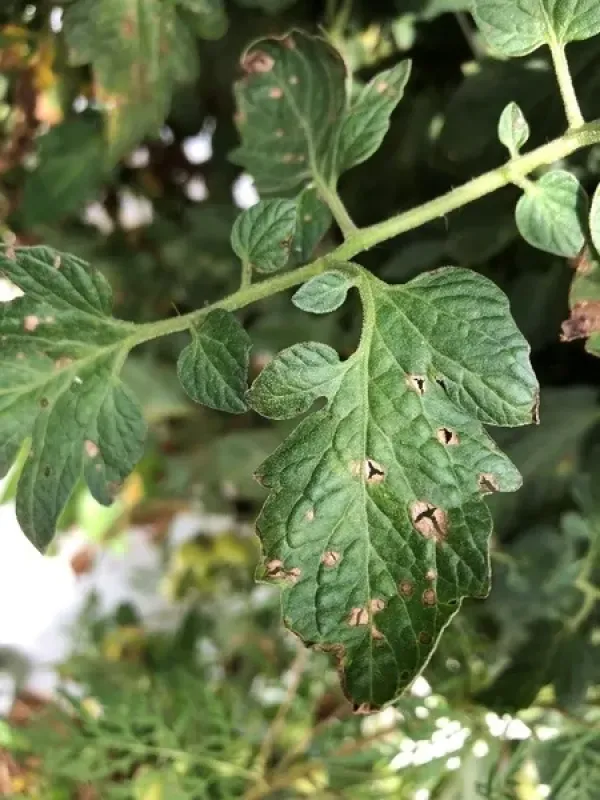
The first symptoms typically appear on older, lower leaves as small, circular, dark-brown or black spots with distinct margins.
As the disease progresses, these spots expand and may become angular in shape. A characteristic feature is a chlorotic (yellow) halo that often surrounds the necrotic lesion.
Under conditions of high humidity, the centers of these spots may exhibit a dark, velvety appearance, which corresponds to the fungal conidiophores and conidia.
Severe infection leads to widespread chlorosis and necrosis of the foliage, resulting in the premature senescence and dropping of leaves from the plant.
While leaf infection is the most common manifestation, in some instances, fruit can be affected, showing small, sunken, dark lesions that compromise marketability.
Pathogen
The disease is caused by the fungus Stemphylium lycopersici, which is classified as an imperfect fungus. It is a highly persistent pathogen capable of overwintering in soil and crop debris.
The fungus produces conidia that serve as the primary inoculum for the disease. These spores are easily disseminated by wind currents, rain splash, and irrigation water, facilitating widespread field infection.
Stemphylium lycopersici has a broad host range, primarily targeting solanaceous crops like peppers, eggplants, and tomatoes. It is also known to affect the papaya plant, causing significant foliage damage.
Once the spores land on susceptible tissue, they germinate under appropriate conditions and penetrate the leaf surface, leading to the formation of intercellular mycelium.
The pathogen utilizes specialized toxins that induce necrotic lesions in host tissues, effectively killing cells and establishing the fungus within the plant structure for further sporulation.
Conditions for development
The development of Stemphylium leaf spot is favored by warm, humid environments. Temperatures between 20°C and 25°C are ideal for rapid fungal growth.
High moisture levels, whether from continuous rainfall, heavy dew, or overhead irrigation, are strictly necessary for the spores to germinate and colonize the leaf tissue.
Poor ventilation within greenhouses or overly dense planting patterns prevents leaf surfaces from drying quickly, creating a high-risk environment for infection.
Nutrient stress and physiological imbalances in the tomato plants can reduce their natural resistance, making them more prone to successful fungal colonization.
Prolonged periods of overcast weather combined with humidity contribute significantly to the rapid spread of the disease across a plantation.
Why it matters
The primary damage caused by this disease is the massive loss of foliage, which reduces the plant's capacity for photosynthesis and stunts overall growth.
Defoliation exposes fruit to direct sunlight, frequently resulting in sunscald, which drastically reduces the quality and market value of the tomato crop.
Reduced photosynthetic efficiency leads to smaller fruit sizes and lower sugar content, negatively impacting the flavor and nutritional quality of the harvest.
In cases of early-season infection, the disease can cause significant seedling mortality, requiring replanting and increasing labor costs for growers.
In papaya cultivation, this fungal disease acts as a limiting factor, leading to severe leaf blight that reduces tree vigor and subsequent fruit output.
Protection
Implementing a long-term crop rotation strategy is essential; avoiding solanaceous crops for at least three years helps break the fungal life cycle.
Sanitation practices, such as removing and destroying crop debris immediately after harvest, significantly lower the inoculum load in the field.
Utilizing resistant or tolerant tomato varieties is the most sustainable approach to mitigating the impact of the disease and reducing reliance on chemicals.
Fungicide applications, specifically those targeting leaf-spotting fungi (e.g., strobilurins or triazoles), can be effective if applied as soon as the first symptoms are detected.
- Maintain proper spacing between plants.
- Ensure good ventilation in greenhouses.
- Use certified disease-free seeds.
- Manage weeds to remove alternative hosts.
- Avoid overhead irrigation whenever possible.
Pathogens and affected parts
Affects crops · 1
Discussion
No discussions yet — be the first.