
Description
Symptoms
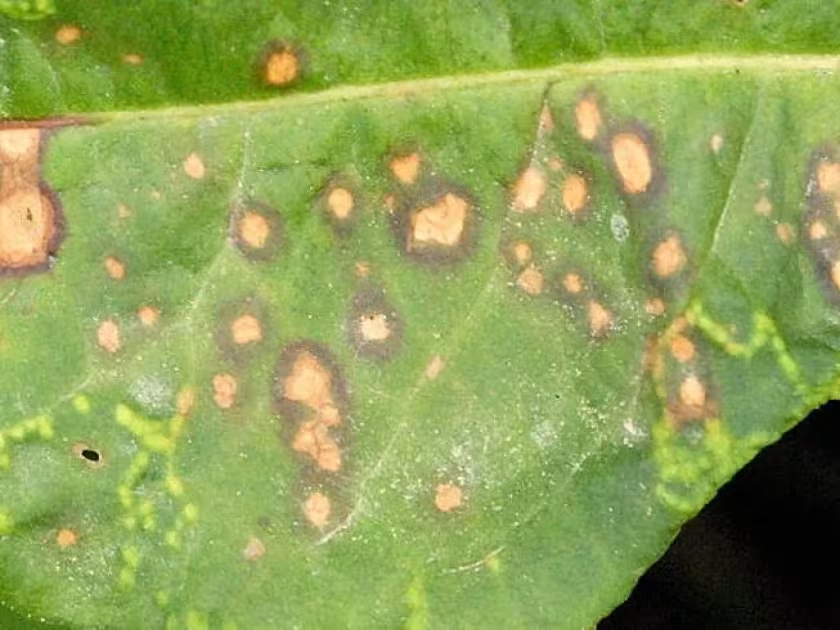
The primary symptom is the appearance of irregular, light-colored spots on the leaves, petioles, and occasionally stems of the bean plants.
As the disease progresses, these spots become covered with a characteristic powdery white or greyish coating, consisting of masses of conidia, which gives the disease its common name.
Affected leaf tissues eventually turn necrotic and brown. Under severe infestation, the leaves may wither prematurely and drop from the plant entirely.
Symptoms typically manifest on the lower leaves first, gradually moving upward toward the upper canopy as the humidity and fungal growth conditions remain favorable.
- Light-colored irregular leaf spots.
- Powdery fungal growth on lesions.
- Premature yellowing and browning.
- Early leaf abscission.
Pathogen
The disease is caused by the imperfect fungus Ramularia phaseoli. This pathogen belongs to the Deuteromycetes class and is specifically known for affecting legume crops, particularly the common bean.
The fungus develops within the plant tissues, forming conidial sporulation structures. The mycelium penetrates the intercellular spaces of the leaf epidermis and parenchyma to obtain nutrients.
The pathogen can survive in soil and on crop debris as mycelium or chlamydospores, making it a persistent threat in fields where susceptible crops are grown repeatedly.
Primary infection occurs during the growing season when conidia are dispersed by wind, rain splashes, or insects onto healthy leaf surfaces, initiating the colonization process.
The biological nature of this fungus allows it to adapt effectively to different environments, necessitating a robust management strategy for commercial bean cultivation.
Conditions for development
The development of Ramularia phaseoli is highly dependent on humidity levels. Prolonged periods of high air humidity and frequent rainfall create the ideal environment for infection.
The optimal temperature range for conidial germination and fungal spread is between +18 and +24 degrees Celsius. In these temperatures, the disease cycle accelerates significantly.
Dense planting patterns reduce air circulation, trapping moisture on the leaf surface for longer periods, which significantly promotes the germination of fungal spores.
Low light levels and heavy shading within the canopy prevent the leaves from drying quickly, providing the pathogen with extended windows for successful host colonization.
Plants that are nutrient-deficient or suffering from environmental stress are often more susceptible to infection, as their natural defenses are compromised.
Why it matters
The main economic damage is caused by the significant loss of photosynthetic leaf area, which limits the energy available for pod and seed development.
Plants affected by the disease mature prematurely, resulting in smaller, underdeveloped seeds and a lower total yield compared to healthy crops.
The quality of the harvested produce is severely degraded, making it less marketable and potentially unsuitable for seed saving due to the presence of latent pathogens.
In cases of severe epidemics, crop yield losses can reach up to 50% if weather conditions favor the rapid spread of the fungus throughout the growing season.
Weakened plants are also more prone to secondary infections by other opportunistic pathogens, leading to a rapid decline in overall field productivity.
Protection
A strict crop rotation schedule is essential, ensuring that beans are not replanted in the same field for at least three to four years to break the infection cycle.
Sanitation practices, such as the complete removal and destruction of crop residues after harvest, are crucial to reducing the fungal inoculum load for the next season.
Selecting and planting resistant or tolerant bean cultivars is the most sustainable and efficient strategy for mitigating the impact of Ramularia leaf spot.
When necessary, fungicides containing copper or specific systemic compounds like triazoles can be used as a preventative or curative measure according to label instructions.
Optimizing plant spacing and managing weed growth are important agronomic practices that improve canopy ventilation and help keep leaf surfaces dry.
Pathogens and affected parts
Affects crops · 1
Discussion
No discussions yet — be the first.