
Description
Symptoms
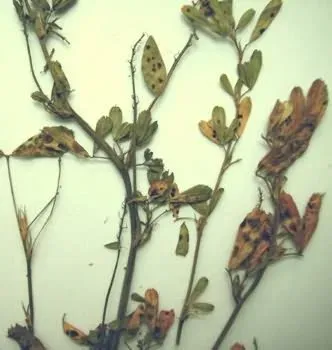
Symptoms appear as small, circular to irregular yellow spots on the upper leaf surface, which may darken to brown as the disease progresses.
As the infection matures, small, shiny black fruiting bodies (apothecia) develop in the center of the spots, serving as a diagnostic feature.
Heavy infection causes premature yellowing of the foliage, leading to widespread leaf drop and significantly reducing the leaf-to-stem ratio.
The disease typically manifests on the lower leaves first, slowly creeping upward through the canopy as the humidity remains high.
In addition to spots, affected leaves may show slight wrinkling and marginal necrosis, drastically reducing the overall quality of the forage.
Pathogen
The causal agent of this disease is the ascomycete fungus Leptotrochila medicaginis, formerly known as Pseudopeziza jonesii.
This pathogen specifically infects alfalfa (Medicago sativa), causing characteristic lesions on the leaves which can lead to severe defoliation.
The fungus survives the winter primarily as apothecia on infected fallen leaves left on the field surface after harvesting or grazing.
During the spring, ascospores are discharged from these fruiting bodies and spread via wind and rain splashes to infect new alfalfa growth.
The life cycle of the pathogen involves multiple infection events throughout the growing season whenever environmental conditions remain favorable.
Conditions for development
Cool, moist weather conditions with frequent rainfall are ideal for the development and spread of yellow leaf spot in alfalfa fields.
High relative humidity and persistent dew provide the necessary surface moisture for fungal spores to germinate and penetrate the leaf tissue.
Dense alfalfa stands inhibit airflow, maintaining a humid microclimate within the canopy that accelerates the rate of secondary infections.
Extended periods of overcast days with moderate temperatures often trigger rapid disease outbreaks across large areas of the field.
Poor drainage in fields can also contribute to higher moisture levels near the soil surface, favoring the persistence of the pathogen.
Why it matters
The primary impact of yellow leaf spot is the reduction of total yield due to severe leaf loss, which constitutes the most nutritious part of the plant.
A decrease in the photosynthetic area of the leaves leads to weaker plant vigor and reduced regrowth capacity after cutting.
Forage quality is significantly impaired, as the loss of leaves results in a higher proportion of stems, which are lower in protein and digestibility.
Persistent infections throughout the season weaken the plant's root system, negatively impacting its winter survival and longevity in the field.
Economic losses are cumulative, manifesting as both lower hay quality and decreased tonnage per harvest throughout the season.
Protection
Early harvesting is the most effective cultural practice to reduce the impact of the disease and prevent further spread of spores.
Proper field management, including the removal or burial of crop debris, helps reduce the overwintering inoculum of Leptotrochila medicaginis.
Selecting and planting resistant alfalfa varieties is the most sustainable long-term strategy for managing yellow leaf spot in commercial fields.
Maintaining adequate plant spacing and ensuring good field drainage helps keep the canopy dry, which discourages fungal development.
While fungicides are available, they are rarely used due to economic constraints; thus, focus remains on integrated pest management and resistant cultivars.
Pathogens and affected parts
Affects crops · 1
Discussion
No discussions yet — be the first.