
Description
Symptoms
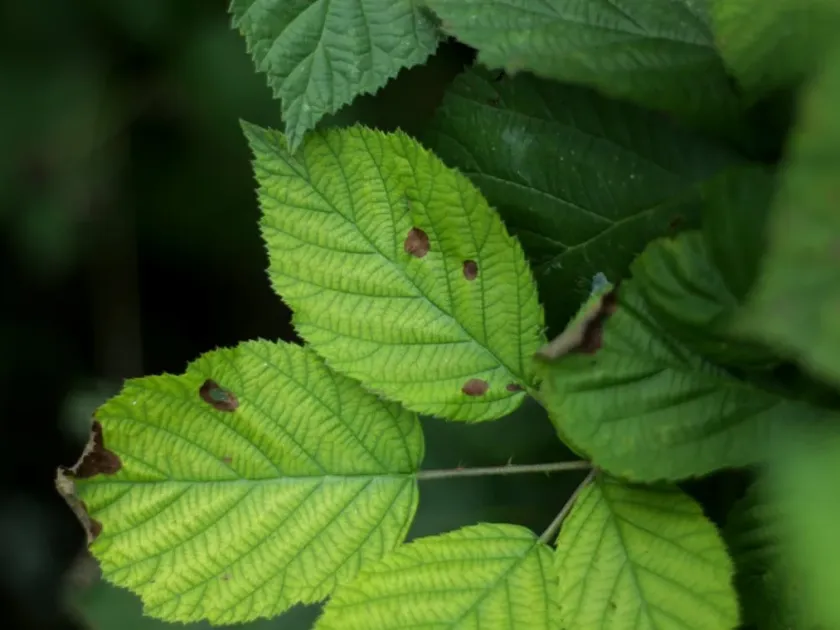
Initial symptoms manifest as small, round, or slightly angular spots on the leaves, which gradually turn light brown, often surrounded by a darker, more defined border.
As the infection progresses, the centers of these spots tend to lighten in color, and a whitish or creamy mycelial growth becomes visible, representing the conidial sporulation.
In cases of severe infestation, individual spots coalesce to cover large portions of the leaf surface, ultimately causing the leaves to yellow prematurely and drop off the plant.
The disease also affects petioles and fruit stalks, resulting in elongated lesions that impair the transport of water and nutrients to the developing berries and terminal buds.
Heavy leaf drop significantly weakens the plant, making it more susceptible to environmental stresses and reducing the overall vigor of the raspberry bush.
Pathogen
The causative agent of this disease is the imperfect fungus Cylindrosporium rubi, a pathogen belonging to the class Deuteromycetes that specifically targets plants of the Rosaceae family.
The pathogen completes its life cycle by producing conidia within specialized fruiting bodies known as acervuli, which develop beneath the epidermal layer of the leaves or petioles.
The fungus survives the winter dormant phase as mycelium within fallen leaves and stem tissues, serving as a primary source of infection once conditions improve in the spring.
Conidia are disseminated passively, mainly through rain splashes, irrigation water, and wind currents, which transport the spores to healthy plant tissues throughout the growing season.
The biological activity of the fungus is strictly dependent on moisture levels, meaning that the disease thrives in environments characterized by high relative humidity and frequent rainfall.
Conditions for development
Prolonged wet weather, high humidity, and moderate temperatures ranging from 18 to 25 degrees Celsius create the perfect microclimate for spore germination and infection.
Plantations with dense foliage and poor spacing suffer the most, as these conditions prevent air circulation and allow dew to persist on the leaves for longer periods.
Excessive overhead irrigation, especially during the peak of summer, can artificially extend the period of leaf wetness and facilitate the spread of the fungal pathogen.
Lack of sanitation in the garden, such as failing to remove infected plant debris, ensures that the infection load remains high from one growing season to the next.
Variations in rainfall patterns often dictate the severity of the outbreak, with cool, wet summers typically leading to more aggressive and widespread disease development.
Why it matters
The primary damage caused by cylindrosporiosis is the significant reduction of photosynthetic capacity due to massive leaf loss, hindering the plant's ability to produce energy.
Plants affected by this fungus fail to store sufficient carbohydrates, which reduces their winter hardiness and leads to lower survival rates during the cold season.
Fruit development is negatively impacted, resulting in smaller, underdeveloped berries with poor flavor profiles, which significantly lowers the commercial value of the harvest.
Chronic infestations over several years often lead to the degradation of the entire plantation, necessitating early replanting and causing significant financial losses.
Growers often face increased input costs for fungicide applications and labor required for intensive sanitation efforts to manage the disease effectively.
Protection
Strategic planting, which involves maintaining proper spacing between rows and individual bushes, is essential to improve airflow and reduce the humidity around the plants.
Rigorous sanitation practices, including the collection and burning of all fallen leaves and infected canes after the harvest, are critical to eliminating wintering inoculum.
Regular pruning of older or overcrowded canes helps in removing potential disease reservoirs and allows for better penetration of protective fungicide sprays.
The application of approved contact or systemic fungicides, particularly before flowering or immediately after harvest, can effectively curtail the spread of the disease.
Prioritizing the cultivation of disease-resistant raspberry varieties and providing balanced nutrition are the best long-term strategies for sustainable disease management.
Pathogens and affected parts
Affects crops · 1
Discussion
No discussions yet — be the first.