
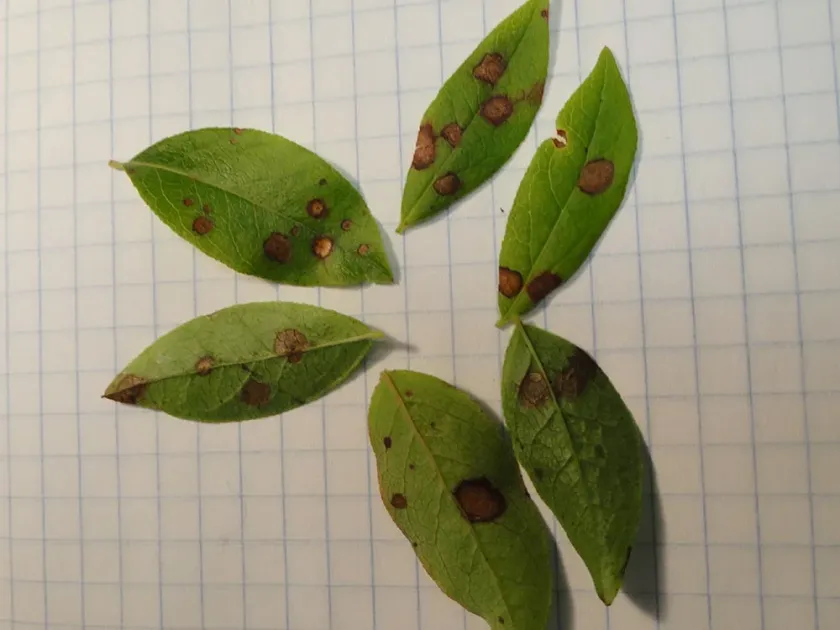
Description
Symptoms
The primary symptom of Valdensia leaf blight is the appearance of brown, rapidly spreading necrotic spots on the cranberry leaves, eventually leading to tissue collapse.
Infected leaves quickly curl, wither, and drop prematurely, which often leads to significant defoliation and visible damage to the canopy of the cranberry plants.
Under humid conditions, one may observe a fine, white, web-like mycelium growing on the surface of the affected leaf tissues, indicating active fungal growth.
The infection often targets the terminal shoots, which stunts growth and prevents the plant from developing healthy foliage during the growing season.
As the disease progresses, necrotic patches enlarge and coalesce, potentially resulting in the total loss of photosynthetic surface area across the planting.
Pathogen
The causative agent of this disease is the fungus Valdensia heterodoxa, an aggressive pathogen known to specifically attack cranberry and related bog plants.
The fungus survives the off-season in the form of micro-sclerotia found in the soil and on decaying plant debris, providing a persistent source of inoculum.
Dissemination of the pathogen primarily occurs via conidia, which are easily spread by rain splashes, wind currents, and mechanical movement within the bog area.
The biology of Valdensia heterodoxa is perfectly tuned to the moisture levels common in cranberry cultivation, making it a persistent challenge for producers.
The fungus exhibits high adaptability and infection efficiency, allowing it to colonize healthy tissue rapidly when the environmental conditions are suitable.
Conditions for development
Excessive humidity and prolonged wet periods are the most critical environmental factors that trigger the development and spread of Valdensia leaf blight.
Dense planting patterns that restrict airflow create a stagnant microclimate within the cranberry beds, which is highly conducive to fungal outbreaks.
Cool to moderate temperatures, typically experienced during spring and early autumn, provide the perfect range for the fungal spores to germinate and infect leaves.
Poor sanitation, such as leaving leaf litter and infected plant material on the site, increases the concentration of fungal spores and the risk of recurring infection.
Inconsistent irrigation practices that keep the foliage wet for extended durations dramatically accelerate the infection rate throughout the entire plantation.
Why it matters
Valdensia leaf blight poses a severe threat to commercial cranberry operations by drastically reducing the photosynthetic capacity of the plants during critical growth stages.
The resulting defoliation weakens the plants, making them less capable of producing fruit and potentially impacting the yield of the current and subsequent seasons.
Severe outbreaks can cause the death of young vines, which necessitates extensive replanting efforts and incurs significant financial losses for the grower.
Weakened plants become more susceptible to secondary infections by other opportunistic pathogens, which complicates the overall management of the field.
The combination of lost yield and the high cost of intensive fungicide applications represents a significant economic burden on cranberry agricultural enterprises.
Protection
Maintaining proper spacing between plants is essential to ensure adequate airflow and facilitate rapid drying of the foliage, which inhibits fungal development.
Rigorous sanitation measures, including the removal and destruction of infected leaves and plant debris, are fundamental to reducing the primary fungal load.
Timely application of authorized fungicides, particularly during the early stages of disease detection, can effectively curb the spread of Valdensia heterodoxa.
Regular field scouting is vital for early identification of disease patches, allowing for targeted control efforts rather than blanket treatment of the entire bog.
Promoting general plant health through balanced nutrition and optimized soil moisture management increases the natural resilience of cranberries to fungal stress.
Pathogens and affected parts
Affects crops · 1
Discussion
No discussions yet — be the first.