
Description
Symptoms
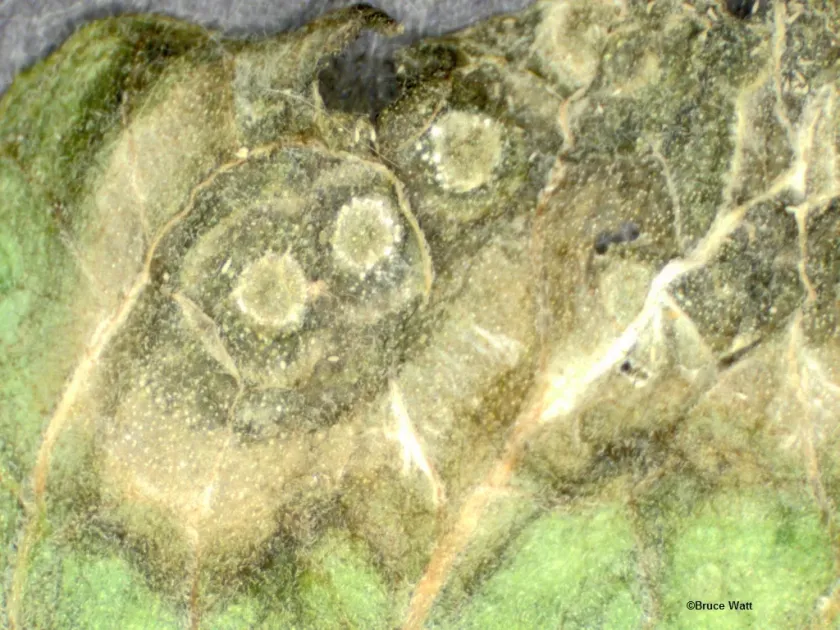
The primary symptom of zonal leaf spot is the appearance of small, circular spots on the leaf surface. As the disease progresses, these spots expand into characteristic concentric zones, displaying a range of colors from light tan to dark brown.
In advanced stages, these spots merge together, resulting in large, necrotic patches that cover most of the leaf blade. This leaf tissue eventually dies and turns brittle, leading to premature leaf drop which can significantly defoliate the plant.
On the underside of the leaves, particularly within the centers of the necrotic spots, tiny dark fruiting bodies of the fungus can be observed. These structures are the primary source of inoculum for further disease spread during the growing season.
Under high-humidity conditions, a faint greyish or whitish fuzz may be visible on the leaf surface, which consists of conidiophores and spores. This visual cue often indicates that the fungus is actively sporulating and spreading to adjacent leaves.
In crops like corn or black walnut, the visual impact is particularly striking, as large portions of the foliage are affected. This often leads to a stunted appearance of the plant and poor overall development of the crop as the season nears its end.
Pathogen
The causal agent of zonal leaf spot is the fungus Cristulariella moricola, a member of the Fungi Imperfecti group. This pathogen is known for its ability to produce sclerotial bodies, which allow the fungus to overwinter successfully in fallen leaves and other plant debris left in the field.
This disease affects a wide range of host plants, including apple trees, grapes, corn, peanuts, and black walnuts. The pathogen utilizes conidia to spread, which are easily transported by wind, rain splashes, and human activity within agricultural settings.
The biology of the pathogen is highly dependent on humidity levels. Upon landing on a leaf surface, spores germinate and penetrate the tissue, eventually colonizing the leaf and disrupting the plant's physiological functions, specifically photosynthesis.
One of the most challenging aspects of Cristulariella moricola is its persistence in the soil. The pathogen can survive for extended periods without a host, making it a recurring problem in fields that are not properly sanitized after harvest.
Fungal development is favored by mild temperatures and moisture. Once established, the fungus produces secondary spores, leading to rapid disease progression throughout the canopy of the affected crop if conditions remain favorable.
Conditions for development
High relative humidity is the most critical environmental factor for the development of zonal leaf spot. Prolonged periods of rainfall, heavy dew, or irrigation regimes that keep leaves wet for extended periods significantly increase infection rates.
The optimal temperature for Cristulariella moricola growth ranges between 20°C and 28°C. During these conditions, the fungus can complete its reproductive cycle in just a few days, leading to rapid infection of the entire field.
Dense, poorly ventilated plantings create a microclimate that prevents leaves from drying out. This prolonged moisture availability on the canopy allows the spores to germinate more easily and penetrate the healthy plant tissue.
Agricultural practices that leave crop debris on the soil surface create an ideal reservoir for the fungus. Failure to plow under or remove the remains of the previous season's crop ensures the presence of the pathogen for the next cycle.
Environmental stress, such as water deficit or nutrient imbalance, makes plants more susceptible to infection. Once the plant's defensive systems are weakened, the fungus can penetrate the host tissue more aggressively than it would in healthy specimens.
Why it matters
The primary damage caused by zonal leaf spot is the substantial reduction in the photosynthetic area of the plant. Without functional foliage, the plant cannot produce enough energy to support the development of fruits, seeds, or grains.
For fruit-bearing trees like apples or grapes, the disease forces premature defoliation, which limits the tree's ability to store energy for the winter. This often leads to increased susceptibility to winter injury and lower yields in the following season.
In field crops such as peanuts and corn, the quality of the harvest is severely compromised. The reduced accumulation of carbohydrates or oils in the seeds or grains results in lower market value and potential contamination risks.
Economic losses are compounded by the need for repeated fungicide applications. In years with high disease pressure, farmers may face yield losses ranging from 20% to 50% if the disease is not managed efficiently.
The long-term presence of the pathogen complicates crop rotation plans, as the soil remains infested. This necessitates strict sanitary measures and persistent management to prevent the pathogen from establishing a permanent foothold on the land.
Protection
Effective management begins with strict field sanitation. Farmers should focus on destroying crop residues through deep plowing or burning, where permitted, to eliminate the primary sources of fungal overwintering.
Fungicide applications are essential when the disease is detected early. Utilizing protective and systemic products, such as those containing copper or triazoles, is highly recommended to stop the spread of the infection and protect the remaining foliage.
Improving canopy aeration is a vital cultural practice. Pruning trees and ensuring proper row spacing in field crops allow for faster drying of the foliage after rain, which creates an unfavorable environment for fungal spores.
Maintaining a balanced fertility program strengthens the plant's structural integrity. Potassium, in particular, plays a role in cell wall development, making it harder for the pathogen to penetrate the leaf tissue.
- Regular scouting of the field to identify early infection sites.
- Selecting resistant varieties or hybrids whenever possible.
- Avoiding overhead irrigation that keeps leaves wet for long periods.
- Rotation with non-host crops to break the pathogen's life cycle.
Pathogens and affected parts
Affects crops · 6
Discussion
No discussions yet — be the first.