
Description
Symptoms
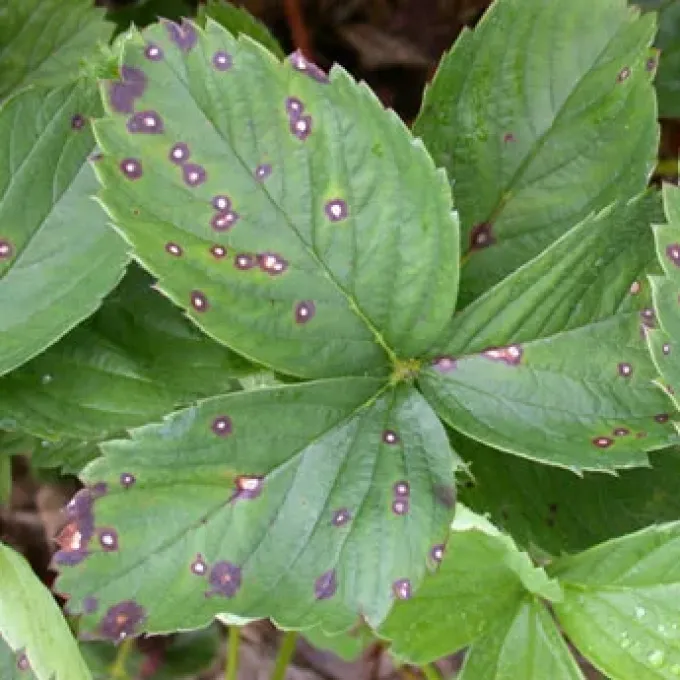
Initial symptoms manifest as small, circular, reddish-brown spots on the leaves. These spots gradually expand and may become irregular in shape as the disease progresses.
Older lesions often display a distinct pattern with a pale, grayish-white center and a dark purple or reddish-brown border, which is a hallmark of this particular fungal infection.
In humid conditions, a whitish or gray velvety layer of fungal conidiophores may appear on the underside of the leaves, corresponding to the visible spots on the upper side.
Petiole and runner infection can also occur, resulting in dark, elongated streaks that may weaken the structural integrity of the plant or interfere with nutrient transport.
Severe infestations lead to massive leaf senescence, where the foliage turns brown, dries out, and dies, leaving the plant stunted and significantly more vulnerable to secondary stressors.
Pathogen
The causal agent of strawberry brown spot is the fungus Mycosphaerella louisianae (anamorph: Ramularia tulasnei). This pathogen primarily targets the leaves, causing necrosis and reducing the plant's overall vitality.
The fungus reproduces through conidia, which are easily disseminated by wind, splashing rain, or agricultural machinery. It overwinters as mycelium and fruiting bodies within infected debris left on the field surface.
Biological survival of the pathogen is supported by the formation of perithecia, which allow the fungus to persist in soil for several seasons, posing a continuous threat to strawberry beds.
Infection occurs when spores land on leaf surfaces under favorable moisture conditions, germinating and penetrating the leaf tissues. Once inside, the fungus colonizes the cells, leading to characteristic lesion development.
The pathogen is relatively adaptable, and its spread is facilitated by high-density plantings where air circulation is restricted, providing a stable microclimate for fungal reproduction.
Conditions for development
The disease thrives in environments characterized by mild to warm temperatures and high humidity, specifically in regions with frequent rain showers or heavy morning dews.
Overhead irrigation is a significant risk factor, as it keeps foliage wet for extended periods, creating optimal conditions for spore germination and infection cycles.
Poorly ventilated plantings, particularly those with dense spacing or excessive weed growth, contribute to localized moisture retention that favors the rapid multiplication of the pathogen.
Temperature fluctuations, especially if accompanied by overcast weather, tend to slow down leaf drying, thereby increasing the susceptibility of the tissue to fungal invasion.
Low light levels in shaded garden areas can also contribute to thinner, more tender leaf tissues that are easier for the fungal mycelium to penetrate compared to sun-exposed leaves.
Why it matters
The primary impact of brown spot is the significant reduction of photosynthetic leaf area, which limits the plant's ability to produce sugars and store energy for future growth.
Reduced vigor and energy reserves negatively affect fruit development, resulting in lower yields and smaller, less marketable berries compared to healthy plants.
The plant's inability to store sufficient carbohydrates before winter increases the risk of plant loss due to frost damage or failure to thrive during the following spring season.
Chronic infections deplete the strawberry bed over time, necessitating premature renovation of the field and increasing the long-term costs of berry production for growers.
Furthermore, severely weakened plants exhibit diminished immunity, making them more prone to secondary attacks by other pests or pathogens that exploit the already struggling plant tissues.
Protection
Proactive management starts with strict sanitary practices, such as the removal and destruction of infected foliage after the harvest to reduce the overwintering fungal load.
Utilizing certified, pathogen-free nursery stock and planting resistant or tolerant cultivars are essential pillars in preventing the establishment of the disease.
Good cultural management involves maintaining adequate spacing between plants to ensure good air movement and choosing sites that receive full sunlight to facilitate quick drying of the foliage.
- Apply copper-based fungicides as a preventative measure.
- Use systemic fungicides at the onset of primary symptoms.
- Implement crop rotation to avoid planting strawberries on the same soil for multiple consecutive years.
Consistent monitoring and early intervention are critical; by catching the disease in its early stages, growers can prevent major outbreaks and ensure a productive strawberry harvest.
Pathogens and affected parts
Affects crops · 1
Discussion
No discussions yet — be the first.