
Description
Symptoms
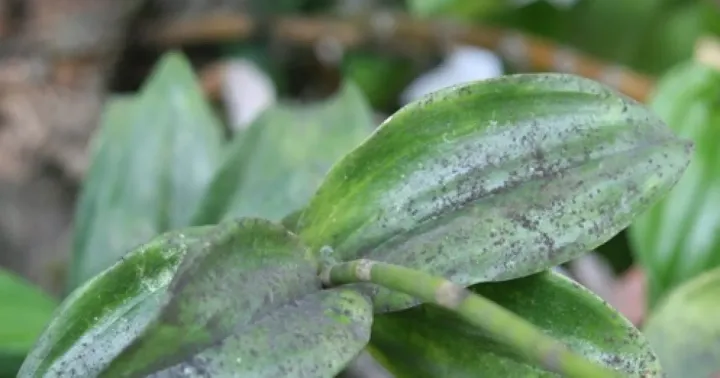
The most distinctive symptom is the presence of a velvety, black, or dark brown soot-like coating covering leaves, branches, or fruit surfaces. This layer can usually be wiped off manually.
Initially, the mold appears as small, scattered spots on the upper leaf surface. Over time, these spots expand and coalesce, potentially covering the entire leaf and blocking out essential light.
In addition to the dark mold, the presence of a sticky, shiny residue (honeydew) on the foliage is a primary diagnostic sign indicating that the plant is infested with sucking insects.
Heavily infested plants may show signs of stress, such as yellowing leaves, slowed growth, or premature leaf drop. The appearance of the fruit also suffers, often resulting in significant quality reduction.
In orchids, the presence of sooty mold on the foliage is particularly detrimental, as it hides the beauty of the plant and hinders the photosynthesis required for flowering.
Pathogen
Sooty mold refers to a group of fungal diseases commonly caused by fungi like Akaropeltopsis. These pathogens are superficial fungi that grow on the surfaces of leaves, stems, and fruits rather than invading the plant tissues themselves.
The fungus thrives on honeydew, a sticky substance excreted by sucking insects such as aphids, whiteflies, and scale insects. This organic material provides the nutrients necessary for the fungus to establish and spread.
As a surface-dwelling fungus, it does not act as a parasite in the traditional sense, but it poses significant indirect threats to plant health. It can reproduce rapidly via spores dispersed by wind, rain, and insect activity.
This condition is widespread across many plant species, including commercially important crops like citrus, mango, avocado, and pear, as well as ornamentals like Cattleya orchids and trees like the sycamore.
The biological life cycle of the mold is intrinsically linked to the presence of its insect hosts. Controlling the pest population is therefore synonymous with managing the mold infection.
Conditions for development
High humidity and poor air circulation are the primary environmental drivers of sooty mold development. Crowded plant environments prevent leaves from drying, fostering an ideal mold-growth climate.
Warm temperatures, combined with the presence of heavy dew or light rain, can significantly accelerate the colonization of the fungal spores across the foliage.
The presence of insect vectors is the most crucial prerequisite. Without the sugary honeydew produced by aphids or scales, the fungus cannot successfully colonize a healthy, waxy leaf surface.
Poor horticultural practices, such as lack of pruning, lead to dense canopies. These dense areas create micro-climates that are stagnant and prone to fungal buildup.
Plants struggling with nutrient imbalances or other stressors become more susceptible to pest infestations, which in turn leads to secondary colonization by sooty mold.
Why it matters
The primary damage caused by sooty mold is the obstruction of photosynthesis. The black fungal layer acts as a physical barrier, blocking sunlight from reaching the chlorophyll-containing leaf cells.
By preventing photosynthesis, the mold starves the plant of necessary energy. This leads to weakened immunity, stunted growth, and a significant decrease in overall yield and fruit quality.
Commercial growers face major economic losses when produce is covered in mold, as it ruins the aesthetic value, making the fruit unsalable as premium produce.
In ornamental nurseries, the presence of mold makes plants unmarketable. The labor involved in cleaning or discarding infected plants represents an additional financial burden.
Finally, the underlying pest infestation that accompanies the mold causes its own damage, such as distorted leaves and sap loss, which can potentially lead to the death of small branches or shoots.
Protection
The most effective strategy is the management of the insect population. By controlling aphids, whiteflies, and scales, you eliminate the food source required for the sooty mold.
Pruning is essential to improve airflow and increase light penetration. Properly spaced branches allow leaves to dry faster and make it difficult for the fungus to persist.
For persistent infections, approved fungicides or copper-based sprays can be used to treat the surface and reduce spore load, following the product's application instructions.
Regular maintenance, including rinsing foliage during dry periods, helps remove dust and honeydew residues, which discourages the initial establishment of the fungus.
- Monitor for sucking insect pests frequently.
- Use horticultural oils or soaps to control pests.
- Prune trees and shrubs to ensure adequate ventilation.
- Keep garden areas clean from debris.
Pathogens and affected parts
Affects crops · 8
Discussion
No discussions yet — be the first.