
Description
Symptoms
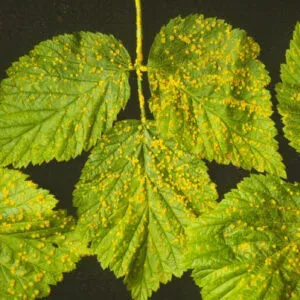
The primary symptoms of Raspberry yellow appear as distinct chlorotic spots on the leaves, which gradually develop a bright yellow hue.
Early in the season, these spots may be scattered, but as the virus progresses, the yellowing can cover large portions of the leaf surface.
Unlike fungal infections, the yellowing caused by this virus generally does not involve necrotic tissue or dead spots on the leaves.
Affected plants often show stunted growth and a general decline in vigor, with leaves appearing smaller or misshapen compared to healthy ones.
In later stages, the entire plant may show a pale, sickly appearance, indicating a systemic failure of the plant's metabolic functions.
Pathogen
The pathogen responsible for this disease is a viral complex that infects the plant's vascular system, hindering the transport of vital nutrients.
This is a systemic viral disease, meaning the infection spreads throughout all parts of the plant, including the roots, stems, and fruits.
As a viral pathogen, it cannot be cured with standard fungicides, making preventative measures the only viable strategy for management.
The virus persists within the tissues of the raspberry plant for its entire lifespan, acting as a constant reservoir for further infection.
Advanced molecular techniques are often required for precise identification, as initial symptoms can mimic nutrient deficiencies or environmental stress.
Conditions for development
The virus is primarily transmitted by insect vectors, particularly aphids, which feed on the sap of infected plants and move to healthy ones.
Environmental conditions that favor the rapid reproduction and movement of these aphids significantly increase the risk of disease transmission.
Overcrowded plantations with poor air circulation create a microclimate that allows insects to move easily between plants in a row.
Plants weakened by drought, improper nutrition, or poor soil conditions are much more susceptible to becoming hosts for the virus.
Mechanical transmission is also possible through contaminated gardening tools used for pruning or maintenance without proper disinfection.
Why it matters
The economic impact of Raspberry yellow is significant, as it leads to a consistent decline in yield and fruit quality over time.
Berries from infected plants are often small, tasteless, and fail to reach maturity, reducing the commercial value of the crop.
The plant's overall health declines, making it more prone to winter damage and secondary infections by other opportunistic pests.
Because the disease is systemic, the affected plants remain permanent sources of infection, eventually necessitating the removal of the entire planting.
Long-term exposure to the virus leads to the gradual degradation of the plantation, forcing growers to replace stock prematurely.
Protection
The most important control measure is to start with certified, virus-free planting material obtained from reputable nurseries.
Rigorous sanitation practices, including the prompt removal and destruction of infected bushes, are essential to stop the spread of the virus.
Implementing an effective pest management program to control aphid populations is crucial for preventing viral transmission between plants.
All gardening tools, especially pruning shears, must be disinfected regularly with appropriate solutions to prevent accidental spread.
- Regular scouting for early symptoms of chlorosis.
- Effective weed control to remove potential viral hosts.
- Maintaining proper spacing to ensure adequate aeration.
- Providing balanced fertilization to support plant immunity.
Pathogens and affected parts
Affects crops · 1
Discussion
No discussions yet — be the first.