
Stemphylium leaf spot
Stemphylium botryosum
Description
Symptoms
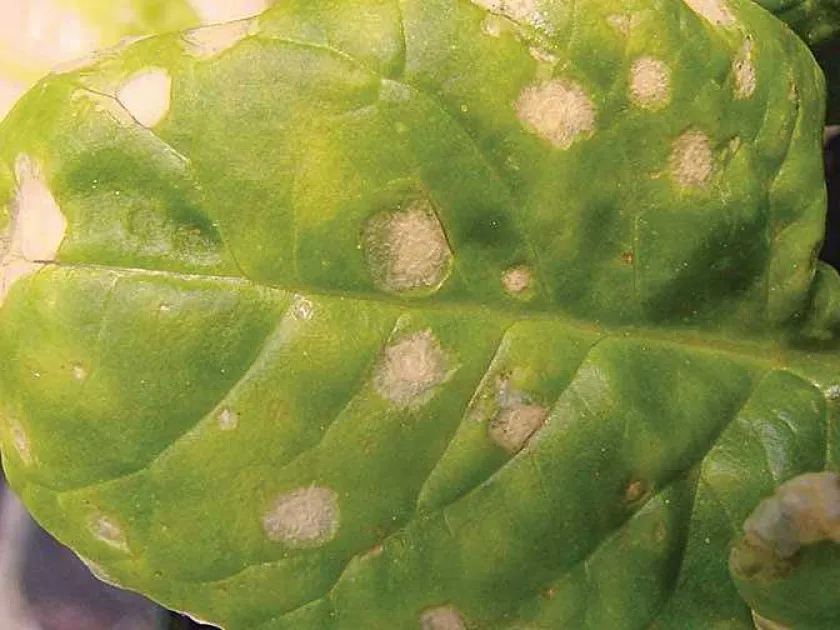
Initial symptoms of the disease appear as small, circular spots on the leaves, which gradually develop into brown or dark tan necrotic lesions.
As the infection progresses, these spots expand in size and may coalesce, forming large necrotic areas on the leaf surface, often surrounded by a distinct chlorotic halo.
Under conditions of high humidity, a dark, velvety mold consisting of conidiophores and conidia of the fungus forms in the center of the necrotic lesions.
Stems and petioles of infected plants also develop elongated brown streaks, which can eventually lead to stem breakage and premature wilting of the crop.
In the case of alfalfa, heavy infection leads to yellowing and premature leaf drop, which significantly reduces the quality and quantity of the forage harvest.
Pathogen
The causative agent of the disease is the imperfect fungus Stemphylium botryosum (the teleomorph stage is Pleospora herbarum). This pathogen belongs to the class of deuteromycetes and is capable of surviving for long periods in soil and plant debris.
The fungus is a facultative parasite known for its high ecological plasticity. Its mycelium and conidia exhibit remarkable resistance to unfavorable environmental conditions.
The spread of the infection occurs through conidia, which are easily disseminated by wind, splashing rain, or during routine agricultural operations in the field.
Stemphylium leaf spot affects a wide variety of agricultural crops, including:
- celery and garden spinach;
- lettuce;
- alfalfa;
- false Jerusalem cherry.
The biological life cycle of the fungus is strictly dependent on moisture availability and moderate temperatures, allowing it to produce several generations during a single growing season.
Conditions for development
Optimal conditions for the development of the disease include a combination of high relative humidity (above 80%) and moderate temperatures ranging from 18 to 25 degrees Celsius.
Frequent rainfall, fog, and heavy dew create an ideal environment for spore germination and rapid colonization of susceptible plant tissues.
High planting density, poor air circulation, and excessive nitrogen fertilization promote a conducive environment for the development and spread of the pathogen.
Failure to follow crop rotation practices, where susceptible families are planted repeatedly in the same field, leads to the accumulation of inoculum in the soil.
Plants weakened by nutrient deficiencies or mechanical damage by pests are significantly more vulnerable to infection by Stemphylium botryosum.
Why it matters
Stemphylium leaf spot causes significant economic losses by reducing the yield and marketability of leafy greens such as lettuce, spinach, and celery.
In alfalfa production, the disease reduces the nutritional value of the forage by lowering protein content and accumulating fungal metabolites.
Damage to the leaf canopy impairs photosynthesis, leading to stunted plant development and overall reduction in total biomass yield.
Infection of seed crops affects seed viability and germination rates, as the fungus can penetrate deep into the seed tissues, serving as a primary inoculum source.
In protected cultivation environments, the disease can spread rapidly, causing epiphytotics that may lead to substantial yield losses in a very short time.
Protection
The primary control measure is the implementation of a proper crop rotation plan, excluding susceptible species from the same field for at least 3-4 years.
Deep plowing of plant residues is an essential agronomic practice, as it removes the primary overwintering sites for the fungus.
Using certified, disease-free, and treated seeds is fundamental to preventing the establishment of the infection at early stages of crop development.
Chemical control involves the timely application of fungicides from the triazole, strobilurin, or copper-based groups, starting at the first sign of symptoms.
Managing irrigation practices and maintaining proper plant spacing improves air movement and reduces leaf wetness duration, effectively limiting fungal spread.
Pathogens and affected parts
Affects crops · 5
Discussion
No discussions yet — be the first.