
Description
Symptoms
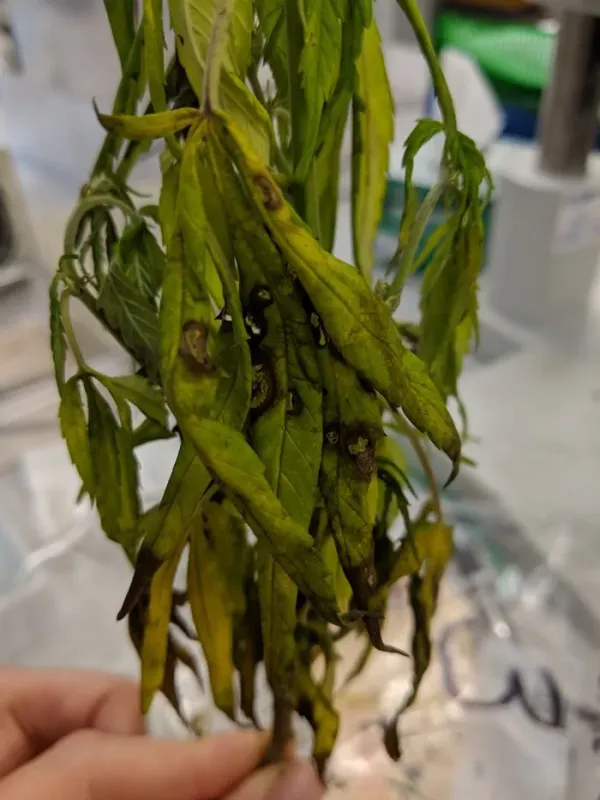
Symptoms initially appear on the lower leaves as small, water-soaked, elongated spots that gradually turn brown or dark grey.
The lesions typically develop into a spindle or elliptical shape, often surrounded by a light yellow halo as the disease progresses.
Under high humidity, an olive-grey fungal growth containing conidia and conidiophores becomes visible in the center of the necrotic lesions.
As the disease advances, the spots merge, causing large areas of the leaf to wither, dry out, and eventually die off prematurely.
In severe infections, the lesions may spread to the leaf sheaths and husk leaves, significantly reducing the plant's overall health and vigor.
Pathogen
The disease is caused by the fungus Exserohilum rostratum (formerly known as Helminthosporium rostratum), a necrotrophic pathogen.
The fungus propagates through conidia, which are easily disseminated by wind, rain splashes, and movement of insects throughout the crop field.
The pathogen persists in the soil and on crop debris, serving as the primary inoculum source for the subsequent growing season.
The fungus produces toxins that degrade plant cell walls, leading to the characteristic necrosis observed on the leaf surface.
Spore germination and infection are highly dependent on the availability of free moisture on the leaf surface for an extended period.
Conditions for development
Rostrate leaf spot thrives in warm and humid conditions, with optimal temperatures for fungal development ranging from 25 °C to 30 °C.
Frequent rainfall, persistent morning dew, and high atmospheric humidity provide the necessary environment for rapid infection cycles.
Monoculture cropping systems increase the risk of disease by allowing the inoculum to build up in the soil and crop residue over multiple years.
High planting density restricts airflow between plants, increasing humidity levels within the canopy and promoting fungal spread.
Plants under physiological stress, such as nutrient deficiencies or drought, are more susceptible to infection by the pathogen.
Why it matters
The primary impact of the disease is the destruction of leaf area, which severely restricts the plant's photosynthetic capacity.
This loss of photosynthetic efficiency leads to poor grain filling, reduced kernel weight, and lower overall crop yield.
Plants affected by the disease are often more susceptible to lodging and secondary infections, such as stalk rots, complicating the harvesting process.
Under favorable conditions for the pathogen, yield losses can be substantial, ranging from 15% to 30% depending on the hybrid's susceptibility.
The reduced quality of the crop and potential for mycotoxin presence may also negatively affect the marketability and feed value of the harvested grain.
Protection
The most effective strategy is the selection and planting of resistant or tolerant corn hybrids suitable for the local climate.
Crop rotation helps to break the life cycle of the fungus by reducing the amount of inoculum available from the previous season's residue.
Field sanitation, including deep plowing and the destruction of infected plant debris, is crucial for minimizing the initial disease pressure.
Fungicide application during the early stages of disease development can effectively curb the spread of the pathogen and preserve crop yield.
- Maintain balanced soil fertility to boost plant defense.
- Ensure adequate plant spacing to improve canopy ventilation.
- Use certified, high-quality seed treated with effective fungicides.
Pathogens and affected parts
Affects crops · 1
Discussion
No discussions yet — be the first.