
Description
Symptoms
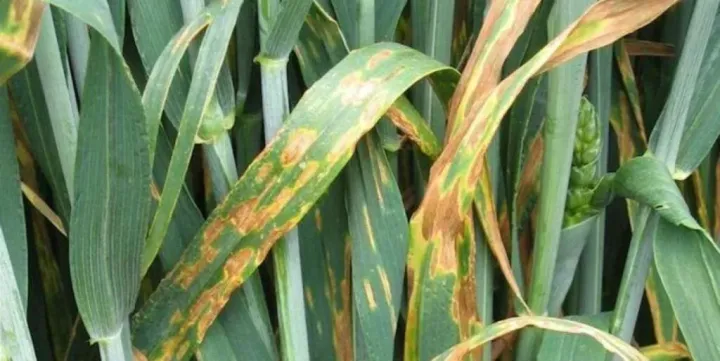
Symptoms typically begin as small, chlorotic flecks on lower leaves, which eventually expand into irregular, reddish-brown or grayish blotches.
A hallmark diagnostic feature of the disease is the presence of small, dark brown to black fruiting bodies called pycnidia scattered within the necrotic lesions.
The disease progresses upward through the canopy, and if the flag leaf is affected, the impact on grain filling is severe and often irreversible.
As the infection matures, the affected leaf areas become papery and brittle, leading to premature senescence of the foliage across the entire field.
Under humid conditions, the lesions may coalesce, covering large parts of the leaf surface and severely limiting the photosynthetic capacity of the plant.
Pathogen
The causal agent of this disease is the fungus Mycosphaerella graminicola (anamorph Zymoseptoria tritici). It is one of the most destructive foliar pathogens affecting winter wheat and rye worldwide.
The fungus reproduces both asexually, producing pycnidiospores in pycnidia, and sexually, forming pseudothecia on crop residues left on the soil surface.
Infection is primarily spread by rain-splash dispersal, where spores are splashed from lower leaves or soil debris onto the upper, developing leaves of the wheat plant.
The pathogen is known for its high genetic diversity and ability to adapt, which frequently leads to the emergence of strains resistant to various fungicides.
After penetration through stomata, the hyphae colonize the leaf tissue intercellularly, causing significant cellular damage before visible lesions appear.
Conditions for development
Septoria development is strongly favored by cool, wet weather, particularly during the stages of tillering and stem elongation in the spring.
Optimal temperatures for fungal growth and infection range between 15°C and 22°C, provided there is sufficient moisture (leaf wetness) to trigger spore germination.
Dense planting patterns and excessive nitrogen applications can create a humid microclimate within the crop, which is ideal for the rapid spread of the pathogen.
In fields with high levels of infested stubble, the disease can establish early in the season, particularly if a susceptible wheat variety is being grown.
Prolonged rainfall events throughout the growing season dramatically increase the risk of disease spread from the lower leaves to the upper canopy tiers.
Why it matters
The primary economic impact of Septoria leaf blotch is the reduction in leaf area, which directly decreases the plant's ability to produce grain mass.
Severe infestations on the flag leaf can result in significant yield losses, often ranging from 30% to 50% depending on the timing and environmental pressure.
Beyond yield reduction, the disease affects grain quality, including weight and protein content, potentially lowering the commercial grade of the harvest.
Weakened plants are more susceptible to secondary infections and environmental stress, which compromises the overall viability of the winter wheat crop.
Control costs often escalate due to the need for multiple fungicide applications to protect the crop during the most critical growth stages.
Protection
Effective management requires an integrated approach that combines genetic resistance, proper cultural practices, and strategic chemical intervention.
Selecting varieties with high genetic resistance is the most sustainable way to reduce the impact of the disease and lower the reliance on fungicides.
Cultural methods, such as burying crop residues through deep tillage and implementing strict crop rotation, help to reduce the primary inoculum load.
Fungicide programs should be timed carefully, focusing on protecting the upper leaves (flag leaf) during key developmental stages to maximize yield potential.
- monitoring of fields for early symptoms;
- avoiding excessive nitrogen fertilization;
- rotating crops to break the disease cycle;
- using mixed-mode-of-action fungicides to prevent resistance.
Pathogens and affected parts
Affects crops · 2
Discussion
No discussions yet — be the first.