
Septoria leaf blotch and glume blotch
Parastagonospora nodorum
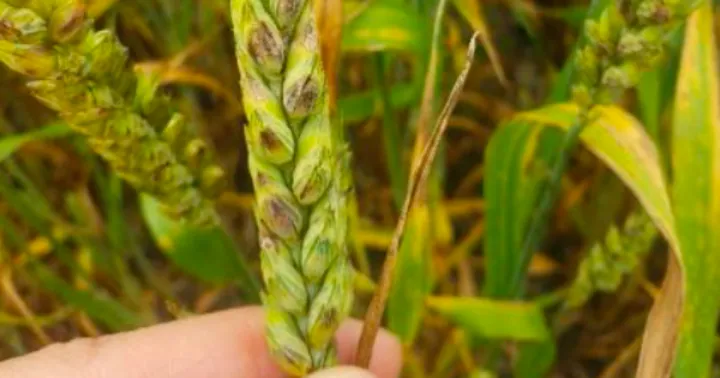
Description
Symptoms
Symptoms typically begin as small, pale-brown spots on the lower leaves, which eventually expand into irregular, lens-shaped lesions surrounded by yellow chlorotic halos.
The presence of tiny dark dots, known as pycnidia, within the necrotic lesions is the definitive diagnostic characteristic used to confirm the presence of the pathogen.
Glume blotch symptoms appear on the glumes as brown or dark-purplish blotches, which can lead to the discoloration and shriveling of the entire wheat head.
Under high-humidity conditions, a fine greyish mycelial mat may be observed on the surface of the lesions, representing the massive production of reproductive spores.
Severe infestations cause premature senescence of the foliage, starting from the base of the plant and progressing upwards, which drastically reduces photosynthetic capacity.
Pathogen
The fungus Parastagonospora nodorum (formerly Stagonospora nodorum) is the causative agent of Septoria leaf and glume blotch, a major disease affecting wheat production worldwide.
The pathogen completes its life cycle by producing both asexual spores (pycnidiospores) and sexual spores (ascospores), allowing it to survive in various conditions.
Pycnidia, which appear as small dark specks, are the primary sites where the asexual spores are generated to facilitate the rapid spread of the fungus during the growing season.
The pathogen persists on crop debris, in the soil, and can be introduced via infected seeds, making it a persistent challenge in agricultural fields.
Once the spores land on a host leaf, they germinate and penetrate the tissue, eventually developing mycelium that extracts nutrients from the plant cells.
Conditions for development
The disease development is heavily dependent on moisture; frequent rainfall and high relative humidity are essential for the dispersal and germination of spores.
Optimal temperatures for the fungus range between +15 and +25 degrees Celsius, allowing for rapid colonization of the wheat tissue during the spring and early summer.
Dense crop canopies contribute to high humidity and limited air circulation, creating an ideal microenvironment for the rapid spread of Septoria within the field.
Periods of prolonged wet weather during the flowering and grain-filling stages pose a high risk for the development of glume blotch as spores splash onto the heads.
Inadequate management of volunteer wheat and surface residues provides a continuous source of inoculum, perpetuating the disease cycle in consecutive planting years.
Why it matters
Septoria blotch causes significant damage by reducing the green leaf area, directly impacting the plant's ability to fill the grain and sustain biomass growth.
Infection of the glumes leads to shriveled, lightweight grains and, in extreme cases, total failure of the head to fill, resulting in substantial yield losses.
The disease diminishes grain quality, lowering protein and gluten content, which makes the harvest less suitable for industrial baking and processing purposes.
In years with high disease pressure, economic losses can reach up to 50% of the potential grain yield, making it one of the most destructive diseases in wheat cultivation.
Weakening of the stems due to infection can lead to lodging, which complicates harvesting operations and further exacerbates yield losses due to grain shattering.
Protection
Cultural practices, such as crop rotation, are essential for breaking the infection cycle, with a minimum of a two-year break recommended between wheat crops.
The use of resistant or tolerant wheat varieties is the most sustainable strategy to minimize the need for chemical intervention and reduce the impact of the disease.
Proper field management, including the deep incorporation of crop residues and the control of volunteer wheat, significantly reduces the initial inoculum load.
Fungicide application during critical growth stages, such as flag leaf emergence and head emergence, is necessary to keep the infection below economic damage thresholds.
Seed treatment with effective fungicides is a critical preventative measure, especially in areas where seed-borne infection is a common concern for seedling health.
Pathogens and affected parts
Affects crops · 1
Discussion
No discussions yet — be the first.