
Description
Symptoms
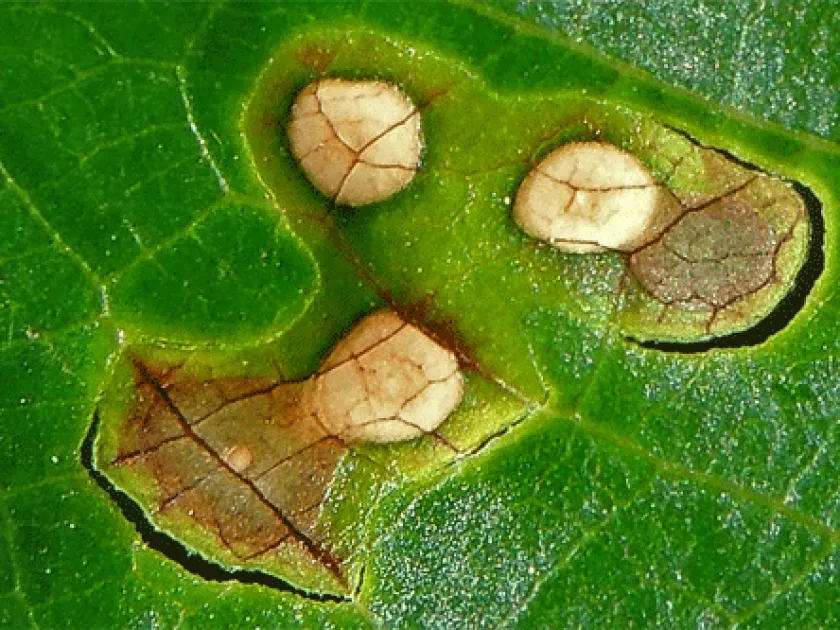
The primary symptom of the disease is the appearance of specific spots on leaves, shoots, and fruits. These lesions typically appear as small, slightly sunken necrotic points, often surrounded by a chlorotic halo.
In coconut palms, the infection manifests as spot-like necrosis on the leaf blades, which can eventually lead to premature wilting. In mango trees, the disease typically affects the fruit, causing dark, crusty lesions on the skin.
As the disease progresses, these individual lesions coalesce into larger, dead tissue areas. Within the center of these spots, an olive-green or dark grey fungal growth (conidial sporulation) is often visible.
In severe cases, the infection penetrates deeper into the plant tissue, resulting in leaf deformation and cracking on the surface of the fruit, which significantly diminishes the plant's overall vitality.
- Appearance of small, depressed necrotic spots.
- Color change of tissue to brown or black.
- Presence of dark, powdery spore growth on lesions.
- Curling and dropping of damaged leaves.
- Cracking of fruit skin and reduced market value.
Pathogen
Stigmina leaf spot is a fungal disease caused by various species of the genus Stigmina (Stigmina spp.). These fungi are members of the ascomycetes class and act as parasites, affecting both the foliage and fruit of susceptible host plants.
The life cycle of the pathogen involves the production of conidia within the plant tissues. The fungus penetrates the epidermis through natural openings like stomata or through mechanical wounds, establishing infection centers.
Biologically, Stigmina species are highly adapted to tropical and subtropical environments. The spread of the fungus is primarily driven by conidia dispersal, which is facilitated by wind, water splashes, and insect movement.
From a phytopathological perspective, this disease often occurs in localized clusters. It may remain inconspicuous for some time before manifesting as significant necrotic damage to the plant tissue.
It is important to note that many Stigmina species are host-specific, meaning their pathogenicity is restricted to certain botanical families, making identification crucial for targeted management.
Conditions for development
Stigmina thrives in conditions of high humidity and moderately warm temperatures, typically ranging from +22°C to +28°C. Tropical climates provide the perfect environment for rapid spore germination and tissue colonization.
Heavy rainfall and frequent fog are major contributors to the spread of the disease within plantations. Water droplets act as a vehicle for the conidia, moving them from infected areas to healthy plant parts.
High plant density is a major risk factor, as it restricts airflow and keeps foliage wet for longer periods, which is ideal for the fungus to establish itself. Poor garden management accelerates the spread.
Plants under stress, whether from poor soil nutrition or previous pest infestations, are significantly more susceptible to infection. Maintaining optimal agricultural practices is the first line of defense.
The temperature optimum shortens the incubation period of the fungus, allowing it to complete multiple life cycles within a single season, leading to rapid and widespread infection if left unchecked.
Why it matters
The primary economic harm of Stigmina leaf spot is the substantial reduction in the marketability of the produce. Mango fruits affected by the disease develop unsightly lesions, making them unsuitable for commercial trade.
The disease disrupts photosynthesis by damaging the foliage, leading to a loss of vigor and lower plant productivity. Chronic infections can severely weaken the tree over several growing seasons.
For coconut palms, the disease can result in reduced fruit weight and quantity. Damage to young foliage negatively impacts the overall development of the crown, leading to long-term yield loss.
The lesions caused by Stigmina act as entry points for secondary bacterial and fungal pathogens, which promote fruit rot during storage and transport, causing significant financial losses.
The requirement for frequent fungicide applications and extra maintenance labor increases the overall production costs, making the crop less profitable for growers.
Protection
Prevention starts with strict adherence to good agricultural practices. Ensuring proper air circulation within plantations through regular pruning and canopy management is essential to reduce humidity levels.
Sanitary disposal of infected plant material, including fallen leaves and diseased fruits, is a crucial step in lowering the inoculum levels in the field. These residues should be removed and destroyed.
The use of copper-based fungicides remains an effective method for controlling the disease. Applications should begin at the first sign of symptoms on young leaves or fruit to prevent widespread infection.
Selecting and planting resistant cultivars or hybrids is the most sustainable long-term strategy. Utilizing high-quality, disease-free planting material minimizes the risk of introducing the pathogen.
Regular monitoring during the rainy season allows for the early detection of infection clusters, enabling localized and timely treatment before the disease can reach epidemic proportions.
Pathogens and affected parts
Affects crops · 2
Discussion
No discussions yet — be the first.