
Tan spot of wheat
Pyrenophora tritici-repentis
Description
Symptoms
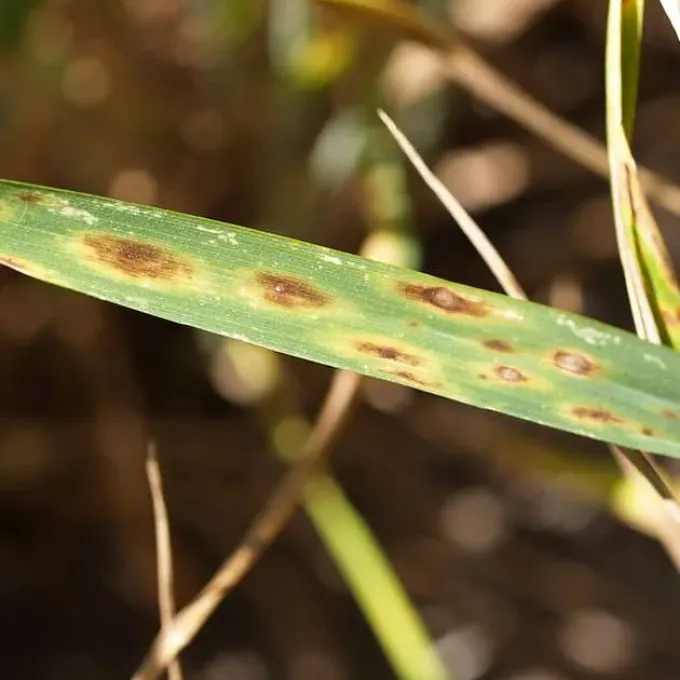
Early symptoms appear as small, tan-colored lesions that are surrounded by a distinct yellow halo, which is a classic diagnostic feature of this pathogen.
As the infection progresses, these individual spots expand and often coalesce to form larger, irregular necrotic blotches that cover significant leaf areas.
In mature lesions, dark fungal fruiting bodies may develop in the center of the tan spot, providing a rough or speckled appearance to the necrotic tissue.
The infection typically starts on lower, older leaves and gradually moves upward, eventually compromising the flag leaf and the developing grain head.
Severe infestations result in premature leaf senescence and death, giving the canopy a scorched or yellowed appearance before the grain is fully mature.
Pathogen
Tan spot is caused by the fungus Pyrenophora tritici-repentis, which is an ascomycete with both sexual and asexual reproductive stages.
The fungus overwinters as mycelium and pseudothecia within infected wheat stubble and other crop residues left on the soil surface.
The asexual stage, known as Drechslera tritici-repentis, produces conidia that serve as the primary means of spreading the disease during the growing season.
Sexual spores, or ascospores, are released from residues during wet, cool weather in the spring and can travel long distances via wind currents.
Both spore types play a crucial role in establishing the initial infection, which then rapidly spreads through the field under suitable weather conditions.
Conditions for development
Disease development is heavily dependent on the presence of prolonged leaf wetness, often caused by rain, heavy dew, or high humidity in the canopy.
Temperatures ranging from 15°C to 25°C are optimal for the rapid growth of the fungus and the production of infective conidia on the foliage.
Reduced tillage practices and continuous wheat cropping systems create a favorable environment for the accumulation of the fungus on crop residues.
Frequent rainfall events during the spring and early summer act as a catalyst for widespread infection across wheat fields.
Dense crop canopies that limit air circulation retain moisture longer, significantly increasing the probability of severe tan spot development.
Why it matters
Tan spot causes significant damage by reducing the photosynthetic capacity of the plant, which is critical during the grain-filling stage of wheat development.
This disruption leads to smaller, shriveled grains, significantly reducing the overall yield and the weight of the harvested crop.
Grain quality is often negatively impacted, with potential reductions in protein content, which can affect the market value of the harvested wheat.
If the flag leaf is heavily infected early in the season, yield losses can range from 30% to 50% depending on the specific susceptibility of the wheat variety.
The pathogen can also indirectly weaken the plant, making it more vulnerable to secondary infections and environmental stresses like drought.
Protection
Effective management begins with residue management, such as tillage, which buries infected stubble and accelerates the decomposition process by soil microbes.
Crop rotation remains a highly effective strategy to break the life cycle of the pathogen by removing the host plant for one or more seasons.
Fungicide applications are essential in high-risk areas, particularly when weather conditions are conducive to disease development during critical growth stages.
- Planting wheat varieties that have genetic resistance or high tolerance to tan spot.
- Using high-quality, treated seed to prevent the early introduction of the pathogen.
- Monitoring the field consistently to ensure timely application of chemical interventions.
An integrated approach combining resistant genetics, proper crop rotation, and strategic fungicide use provides the best protection for commercial wheat production.
Discussion
No discussions yet — be the first.