

Description
Symptoms
Initial visual symptoms of Phomopsis manifest as dark, brown, or gray lesions on stems, leaves, and petioles. As the disease progresses, these spots can expand to cover the entire stem, leading to deformation and brittleness.
Many affected crops exhibit chlorosis (yellowing) of the leaves, starting from the margins. This occurs due to the blockage of the vascular system by the fungal mycelium, which prevents the proper transport of water and nutrients from the roots to the leaves.
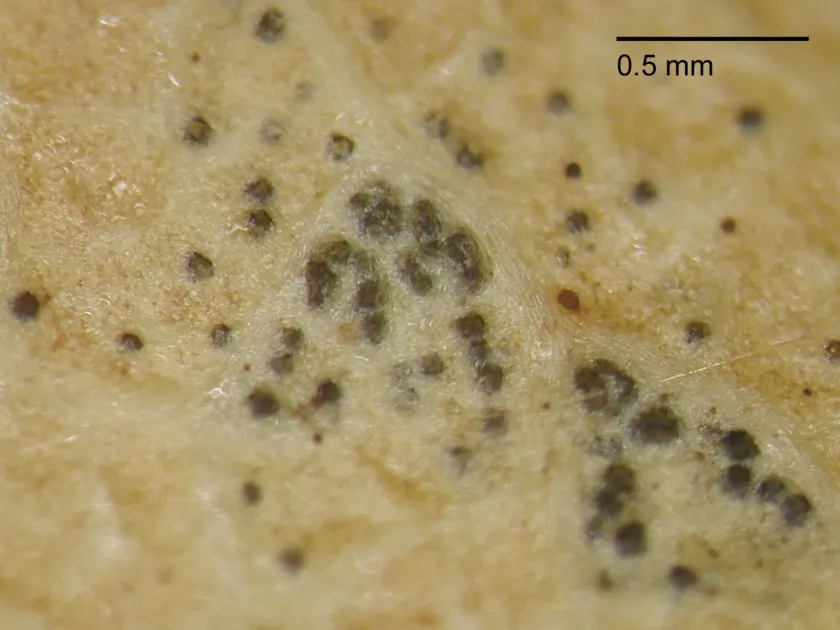
On the surface of dead tissues, one can often find small black dots known as pycnidia. They are frequently arranged in orderly rows along the stem's vascular bundles, which is a characteristic diagnostic feature for many Phomopsis species.
When the roots and crown area are infected, the plant wilts and fails to recover even with adequate watering. In severe cases, the affected plant parts die completely, leading to significant losses in total biomass.
In woody crops like hazelnuts or citrus, Phomopsis appears as bark necrosis, cracking of branches, and twig dieback. Fruits affected by the pathogen often develop brown spots, rot, or drop prematurely.
Pathogen
The disease is caused by fungi of the genus Phomopsis (teleomorph stage — Diaporthe). This pathogen belongs to the Ascomycota phylum and is known for its ability to persist in plant debris, soil, and seeds, making it highly resilient in field conditions.
The fungus affects a wide range of agricultural and ornamental crops, including sunflowers, peanuts, asparagus, hemp, citrus, coffee, and hazelnuts. The infection invades the plant through natural openings in the tissue or through micro-wounds caused by insects or mechanical farm equipment.
The biology of the pathogen allows it to switch from a saprotrophic phase to a parasitic one. During its lifecycle, the fungus secretes specific toxins that break down the cell walls of the host plant and disrupt essential metabolic processes.
The spread of the pathogen occurs primarily via conidia, which are dispersed by rain splashes, wind, or insect vectors. Inside the infected tissue, the fungus forms pycnidia — fruiting bodies where the infectious material accumulates for subsequent infection cycles.
The unique feature of this pathogen is its long latent period, during which the plant may appear healthy while already harboring fungal mycelium within its vascular system, which significantly complicates early diagnosis of the disease.
Conditions for development
The development of Phomopsis is favored by high air humidity and moderately warm temperatures. Optimal conditions for conidia germination occur within a range of 20–25°C, provided there is free moisture (liquid water) on the plant surface.
Frequent rainfall, fog, and dew during the critical stages of crop development significantly accelerate the spread of the infection. Under these conditions, the pathogen can cover a large portion of the field in a short period.
Poor agricultural practices, including dense planting, contribute to a microclimate with high humidity, which is an ideal environment for spore germination. Poor air circulation prevents the rapid drying of plant surfaces after rain.
The presence of large amounts of unharvested plant debris in the field serves as a reservoir for primary infection. The fungus survives well in stubble, fallen leaves, and weeds, overwintering in the soil in the form of mycelium or pycnidia.
Stress factors, such as hail damage, pest infestation, or unbalanced mineral nutrition, weaken the plant's immune system, making them more susceptible to Phomopsis fungal penetration.
Why it matters
The main damage caused by Phomopsis is a significant reduction in yield, resulting from premature plant senescence and the disruption of grain or fruit filling. In epidemic years, losses can reach 50% or more of the total production volume.
Crop quality is severely degraded upon infection. In oilseed crops, such as sunflowers, the oil content in the seeds decreases significantly, while in fruits and berries, marketability and shelf life are reduced.
The disease causes premature leaf drop, which limits the photosynthetic process. The plant becomes exhausted, less resistant to other diseases, and vulnerable to adverse weather conditions like drought or frost.
Damage to the vascular system results in the plant's inability to efficiently absorb micro- and macronutrients. Even with intensive fertilization, the effectiveness of nutrients drops sharply, making the crop economically unviable.
In the long term, the presence of Phomopsis in a field leads to the accumulation of inoculum in the soil. This prevents the cultivation of susceptible crops in the area for several years unless aggressive sanitation measures are taken.
Protection
The cornerstone of protection against Phomopsis is strict adherence to crop rotation. It is recommended to exclude susceptible crops from the field for at least 3–4 years, replacing them with resistant predecessors such as cereals or corn.
An important measure is the deep incorporation of plant residues into the soil. Using shredders and subsequent deep plowing promotes the rapid decay of infected stubble, which reduces the infectious load in the soil.
For disease control, it is critical to use high-quality, disease-free seed material. Seeds should be certified and treated with specialized fungicides that prevent fungal development during the early stages of growth.
The application of chemical plant protection products (fungicides) should be preventive or performed at the first signs of the disease. Products based on triazoles, strobilurins, and other systemic active ingredients are highly effective.
- Timely removal of weeds that can act as reservoirs for infection.
- Balanced application of potassium and phosphorus fertilizers to strengthen plant cell walls.
- Cultivation of genetically resistant varieties and hybrids that have improved breeding-based protection against the pathogen.
In brief
38
Affects crops
Biology
Pathogens and affected parts
Pathogens
Phomopsis· fungus
Phomopsis amygdali· fungus
Diaporthe tanakae· fungus
Phomopsis tanakae· fungus
Phomopsis mali· fungus
Diaporthe perniciosa· fungus
Phomopsis asparagi· fungus
Phomopsis asparagicola· fungus
Phomopsis javanica· fungus
Diaporthe phaseolorum· fungus
Phomopsis arnoldiae· fungus
Phomopsis elaeagni· fungus
Affected plant parts
fruitwhole plantstemseedrootleaf
Content graph
Affects crops · 38
AlmondAmerican cranberryAppleArabica coffeeAsparagusAvocadoBlack walnutCitrusCoffea canephoraCommon beanCommon hazelCommon sunflowerCranberryDouglas firElmGrapevineHempIvy-leaved pelargoniumJerusalem artichokeLingonberryMangoPapayaPassion fruitPeachPeanutPelargoniumPistacia veraPlatanusRhododendronRiceRoseScented geraniumSchlumbergeraSchlumbergera truncataSoybeanStrawberrySweet potatoWatermelon
Reference
Connections · Phomopsis
Most often together:
Marketplace
Products · 2634


























Community
Discussion
No discussions yet — be the first.