
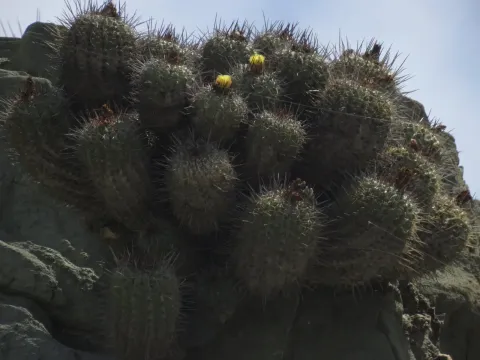
Copiapoa
Copiapoa
Copiapoa is a genus of slow-growing succulents belonging to the Cactaceae family. These plants are endemic to the coastal deserts of Northern Chile, where they uniquely thrive on moisture provided by thick ocean fogs.
What the section contains
 Copiapoa calderana
Copiapoa calderana
Copiapoa calderana
 Copiapoa cinerea
Copiapoa cinerea
Copiapoa cinerea
 Copiapoa coquimbana
Copiapoa coquimbana
Copiapoa coquimbana
 Copiapoa decorticans
Copiapoa decorticans
Copiapoa decorticans
 Copiapoa desertorum
Copiapoa desertorum
Copiapoa desertorum
 Copiapoa echinoides
Copiapoa echinoides
Copiapoa echinoides
 Copiapoa esmeraldana
Copiapoa esmeraldana
Copiapoa esmeraldana
 Copiapoa gigantea
Copiapoa gigantea
Copiapoa gigantea
 Copiapoa grandiflora
Copiapoa grandiflora
Copiapoa grandiflora
 Copiapoa humilis
Copiapoa humilis
Copiapoa humilis
 Copiapoa hypogaea
Copiapoa hypogaea
Copiapoa hypogaea
 Copiapoa krainziana
Copiapoa krainziana
Copiapoa krainziana
 Copiapoa malletiana
Copiapoa malletiana
Copiapoa malletiana
 Copiapoa marginata
Copiapoa marginata
Copiapoa marginata
 Copiapoa megarhiza
Copiapoa megarhiza
Copiapoa megarhiza
 Copiapoa mollicula
Copiapoa montana
Copiapoa montana
Copiapoa pendulina
Copiapoa pendulina
Copiapoa mollicula
Copiapoa mollicula
Copiapoa montana
Copiapoa montana
Copiapoa pendulina
Copiapoa pendulina
 Copiapoa schulziana
Copiapoa schulziana
Copiapoa schulziana
 Copiapoa solaris
Copiapoa solaris
Copiapoa solaris
 Copiapoa taltalensis
Copiapoa taltalensis
Copiapoa taltalensis
Copiapoa
For successful cultivation, these cacti require maximum sunlight exposure throughout the year. Intense light is crucial for maintaining the plant's characteristic waxy coating, which acts as a protective layer against harsh environmental conditions.
The growing medium must be highly inorganic and porous to prevent root rot. A mix consisting of grit, coarse sand, and perlite is recommended to ensure rapid water drainage and good air circulation around the root system.
Temperature requirements involve warm summer months for active growth and a cool winter period to induce dormancy. Proper rest during the winter is essential for the plant to bloom reliably in the following season.
Watering should be approached with extreme caution, mimicking the dry environment of their habitat. In the growing season, water only when the substrate is completely dry, and suspend watering entirely during the winter dormancy.
Root rot is the most significant threat to Copiapoa, typically caused by overwatering or using a soil mix that retains too much moisture for prolonged periods.
Mealybugs are common pests that tend to hide within the dense areoles or between the ribs of the cactus, often going unnoticed until the infestation becomes severe.
Spider mites can also cause damage, especially in dry and poorly ventilated greenhouse environments, leading to unsightly scarring on the epidermis of the cactus.
Maintaining a clean and well-ventilated space is the most effective preventative measure. Regularly inspecting the plants allows for early detection of potential pest or fungal issues.
When treating pests, it is advised to use localized applications of insecticides rather than drenching the plant, as these slow-growing species can be sensitive to chemical stress.