
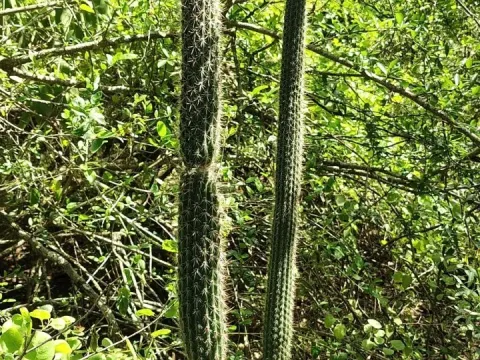
Cleistocactus
Cleistocactus
Cleistocactus is a genus of perennial succulents belonging to the Cactaceae family. Native to South America, these plants are primarily found in the rugged terrains of Bolivia, Argentina, and Peru, where they have evolved to thrive in arid and rocky environments.
What the section contains
 Cleistocactus baumannii
Cleistocactus baumannii
Cleistocactus baumannii
 Cleistocactus brookeae
Cleistocactus brookeae
Cleistocactus brookeae
 Cleistocactus candelilla
Cleistocactus candelilla
Cleistocactus candelilla
 Cleistocactus chrysocephalus
Cleistocactus chrysocephalus
Cleistocactus chrysocephalus
 Cleistocactus hyalacanthus
Cleistocactus hyalacanthus
Cleistocactus hyalacanthus
 Cleistocactus laniceps
Cleistocactus laniceps
Cleistocactus laniceps
 Cleistocactus morawetzianus
Cleistocactus morawetzianus
Cleistocactus morawetzianus
 Cleistocactus ritteri
Cleistocactus ritteri
Cleistocactus ritteri
 Cleistocactus samaipatanus
Cleistocactus samaipatanus
Cleistocactus samaipatanus
 Cleistocactus smaragdiflorus
Cleistocactus smaragdiflorus
Cleistocactus smaragdiflorus
 Cleistocactus winteri
Cleistocactus winteri
Cleistocactus winteri
 Silver Torch Cactus
Cleistocactus strausii
Silver Torch Cactus
Cleistocactus strausii
Cleistocactus
The genus is characterized by its columnar, branching stems covered in fine spines. The name "Cleistocactus" is derived from the Greek word for "closed," referring to the tubular flowers that rarely open fully, ensuring self-pollination or protection against harsh winds.
To cultivate these plants effectively, ensure the use of a highly porous soil mix. A combination of sandy loam, pumice, and perlite provides the necessary drainage to simulate their natural habitat and prevent root asphyxiation during the growth season.
Light intensity is critical for the healthy development of Cleistocactus. These plants require full sun exposure to maintain their compact structure and spine density; insufficient light often leads to etiolation, where the plant grows weak and pale.
Watering requirements follow a strict seasonal cycle. During the growing period, provide moderate water when the substrate is dry to the touch, while in winter, a dry rest period is essential to prevent rot and stimulate future blooming.
Common pests include spider mites and mealybugs, which are particularly attracted to the dense spines or the growth tips of the plant during periods of low humidity.
Root rot, induced by excessive moisture or cold temperatures, is the most significant threat. Preventive measures include ensuring good ventilation and using inorganic top-dressing to keep the stem neck dry.