
Coast prickly pear
Opuntia littoralis
Description
Growing requirements
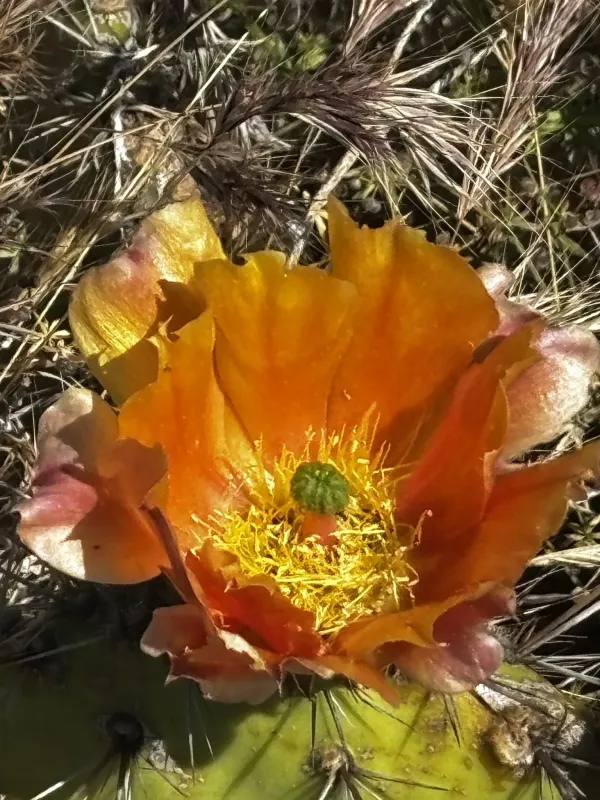
The Coast prickly pear (Opuntia littoralis) is a perennial succulent belonging to the Cactaceae family. It typically grows as a sprawling, large shrub characterized by thick, pad-like stems known as cladodes, which are heavily armed with spines.
Native to the coastal regions of Southern California and Baja California, this species is well-adapted to Mediterranean climates. It thrives in open, sunny locations where high solar radiation supports its metabolic processes and structural integrity.
This crop requires well-draining, sandy, or rocky soils. It is highly intolerant of waterlogged conditions, as poor drainage quickly leads to root rot and base decay. Sandy soils that allow for rapid moisture movement are ideal for its development.
The Coast prickly pear is known for its high tolerance to saline soils and constant sea spray, making it a robust choice for coastal agricultural land. While it can withstand light frosts, prolonged freezing temperatures can severely damage its succulent tissues.
Agrotechnical management focuses on spacing and pruning. Providing adequate air circulation between plants is crucial to prevent the accumulation of humidity, which is the primary catalyst for various physiological disorders and fungal attacks in mature plantations.
Yield
The economic value of this crop is derived primarily from its fruit, which is rich in vitamins and antioxidants. These fruits are consumed fresh or processed into jams, beverages, and natural food colorings, catering to both local and export markets.
In arid agricultural systems, the cladodes are harvested as emergency livestock fodder. After a process to remove or soften the spines—often through burning or mechanical chopping—they provide essential hydration and nutrients for ruminants during dry seasons.
The species serves as an effective soil stabilizer for erosion control on slopes. Its dense, shallow root system helps bind the soil together, making it a valuable crop for reclaiming degraded lands where other vegetation fails to establish.
There is also potential in the production of biomass for biofuel or organic soil amendments. Due to its CAM (Crassulacean Acid Metabolism) photosynthesis, the plant is remarkably efficient with water, maintaining productivity when standard crops fail.
Landscaping and perimeter fencing represent secondary uses. The plant creates impenetrable biological barriers, protecting commercial plots from intruders or wildlife while requiring minimal maintenance after the initial establishment phase.
Main diseases and pests
Fungal pathogens, particularly Fusarium wilt and various stem rots, are the most significant threats to plant health. These are most common in plantations where soil moisture management has been neglected, leading to root system compromise.
Scale insects and mealybugs are the most prevalent pests. These sap-sucking insects colonize the cladodes, leading to vigor loss and stunted growth. Biological control agents or targeted systemic insecticides are recommended for large-scale operations.
Weevil larvae can cause significant internal damage by tunneling through the succulent stems. This not only weakens the structure but also creates entry points for secondary bacterial infections that can cause rapid tissue collapse.
Small rodents pose a risk to young, tender plants by stripping the outer skin, which can lead to desiccation. Physical barriers or wire guards are standard practices during the first one to two years of a plant’s growth cycle.
Effective plantation management relies on regular sanitary inspections to identify early signs of infestation or decay. Maintaining optimal plant health through disciplined irrigation practices is the best defense against major outbreaks of pests and diseases.