
Copiapoa schulziana
Copiapoa schulziana
Description
Growing requirements
Copiapoa schulziana is a rare succulent species belonging to the Cactaceae family, native to the arid coastal regions of Chile. This cactus is highly specialized, having evolved to survive the extreme environmental conditions of the Atacama Desert, where moisture is primarily absorbed from coastal fogs.
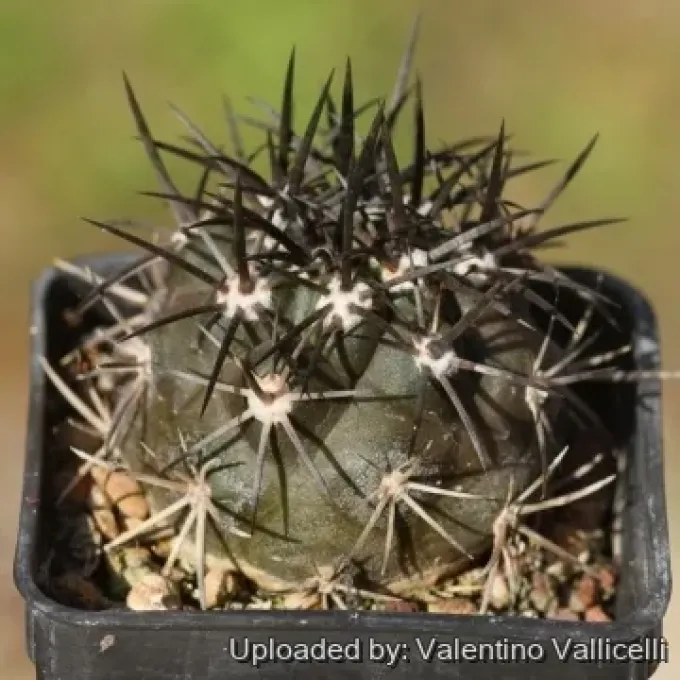
The botanical structure of the plant features a robust, ribbed stem covered with sharp spines, which provide defense and shade to the epidermis. The plant's morphology is designed to store water efficiently, allowing it to remain dormant during periods of prolonged drought in its native habitat.
Successful cultivation requires a highly porous, mineral-based substrate, such as a mix of pumice, coarse sand, and a minimal amount of organic potting soil. Proper drainage is the most critical factor in indoor or greenhouse cultivation to prevent root suffocation and subsequent decay.
Light requirements are very high; the plant needs several hours of direct sunlight to maintain its natural shape and coloration. Without adequate light, the plant will etiolate, losing its characteristic compact form and potentially becoming more susceptible to various physiological stressors.
In terms of хозяйственное (economic) utility, this species is primarily significant within the botanical and enthusiast community. It is a prized specimen for specialized collections, contributing to the ex-situ conservation of desert flora through careful greenhouse propagation and sustainable seed distribution.
Main diseases and pests
The primary threats to this cactus are pathogens associated with moisture-retentive soils, such as Pythium and Phytophthora, which cause rapid tissue rot. Maintaining a strict dry cycle is the most effective preventative measure against these dangerous soil-borne pathogens.
Pest threats include root mealybugs, which are notoriously difficult to detect until the plant shows visible decline, and spider mites that target the epidermis during dry periods. Regular monitoring and, if necessary, the application of systemic pesticides, are required to ensure the health of the specimens.