
Copiapoa solaris
Copiapoa solaris
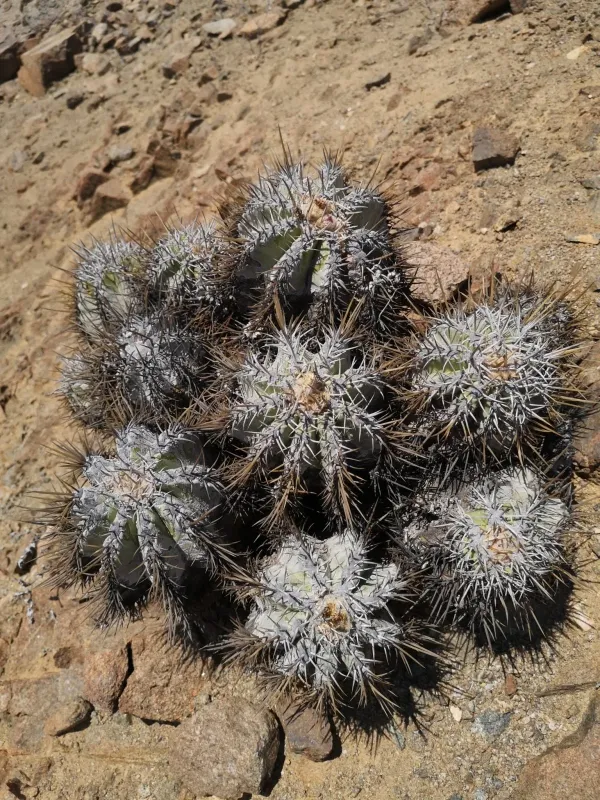
Description
Growing requirements
Copiapoa solaris is a slow-growing succulent belonging to the Cactaceae family. Native to the harsh, fog-swept coastal deserts of northern Chile, this plant has evolved to survive with minimal rainfall, relying on coastal mist for hydration.
In cultivation, this species demands intense light exposure. Providing adequate solar radiation is vital for the development of its dense, protective spines and for maintaining the characteristic coloration of the stem. Insufficient light leads to etiolation and structural weakness.
The substrate must be highly inorganic and porous. A mixture of pumice, lava rock, and coarse sand provides the necessary drainage to prevent root suffocation. The root system is extremely sensitive to moisture retention, which makes the choice of pot material—preferably terracotta—essential.
Watering requirements follow a strict seasonal pattern. During the growing season, water sparingly, ensuring the substrate dries out completely between cycles. In winter, the plant enters a period of dormancy and should be kept dry to survive lower temperatures without tissue damage.
Good air circulation is the secret to successful cultivation. The plants thrive when placed in well-ventilated areas where the air temperature is regulated, preventing the buildup of humidity around the cactus epidermis and reducing the risk of overheating during peak summer temperatures.
Main diseases and pests
The primary threats to Copiapoa solaris are fungal infections, particularly root rot, which occurs when the substrate remains damp for too long. Damage to the root system is often irreversible, emphasizing the need for prophylactic drainage measures.
Pests such as mealybugs represent a significant risk. These insects often hide deep within the spine clusters, making manual removal difficult. Their presence can be identified by the characteristic white, cotton-like masses and the decline in plant vigor.
Spider mites are another common concern, especially in environments with low humidity and poor ventilation. They damage the epidermis, causing unsightly scarring that can permanently affect the aesthetic value of the specimen.
To maintain plant health, regular inspections of the apical meristem and spine base are recommended. Preventive treatments with mild systemic insecticides or fungicides should be applied only during the dormant season to avoid disturbing the growth cycle.
Finally, avoid the use of heavy chemical fertilizers. Copiapoa solaris prefers mineral-rich soil over high-nutrient regimes. Excessive fertilization often leads to succulent, fast growth that is more susceptible to both environmental stress and pest infestations.