
Copiapoa megarhiza
Copiapoa megarhiza
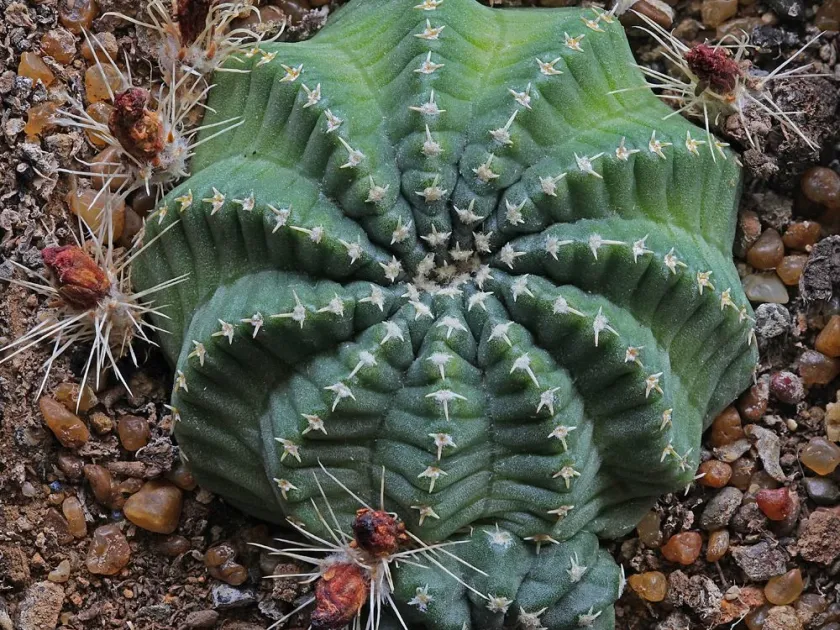
Description
Growing requirements
Copiapoa megarhiza is a unique species of the Cactaceae family, native to the arid regions of the Atacama Desert in Chile. This cactus is primarily recognized for its large, tuberous root system, which acts as a vital storage organ for moisture and nutrients in harsh environments.
Botanically, the plant features a flattened, globe-shaped body with distinct ribs and sharp, robust spines. The epidermis is often greyish-green to brownish, providing excellent protection against high ultraviolet radiation and intense heat typical of its natural habitat.
To successfully cultivate this species, it is essential to provide a highly porous mineral substrate. A mixture consisting primarily of coarse sand, volcanic rock, and minimal organic matter is necessary to facilitate rapid drainage and prevent water logging, which is fatal to the roots.
Climate requirements include high solar irradiance and significant daily temperature fluctuations. The plant thrives when exposed to direct sunlight, which is necessary to maintain its compact growth form and promote the development of its defensive, hardened spines.
Watering should be strictly regulated, occurring only during the active growing season once the soil has completely dried out. During the winter dormancy period, the plant requires cool, dry conditions with minimal to no water to ensure it rests properly before the next cycle.
Main diseases and pests
Spider mites represent a major threat to Copiapoa species kept in greenhouse environments, particularly in low humidity conditions. They target the soft tissue and epidermis, causing scarring and loss of vigor if not treated with appropriate acaricides.
Mealybugs are another common pest that tends to hide in the deep areoles and gaps between the ribs. Manual removal or the use of targeted systemic insecticides is recommended to manage infestations without damaging the delicate skin of the cactus.
Fungal pathogens, especially those causing root rot, are the primary killers of Copiapoa in cultivation. These usually result from poor drainage, overwatering, or insufficient airflow, which allows moisture to linger around the base of the plant.
Bacterial soft rot can occur if the plant is wounded or kept in overly humid conditions during hot weather. This condition spreads rapidly and is often difficult to treat, making prevention through strict hygiene and optimal drainage systems paramount.
Environmental stress, such as light shock, can occur if the plant is moved from a shaded area to direct sun too abruptly. This leads to sunburn on the epidermis, which, while not a disease, permanently damages the tissue and serves as an entry point for secondary infections.