
Copiapoa echinoides
Copiapoa echinoides
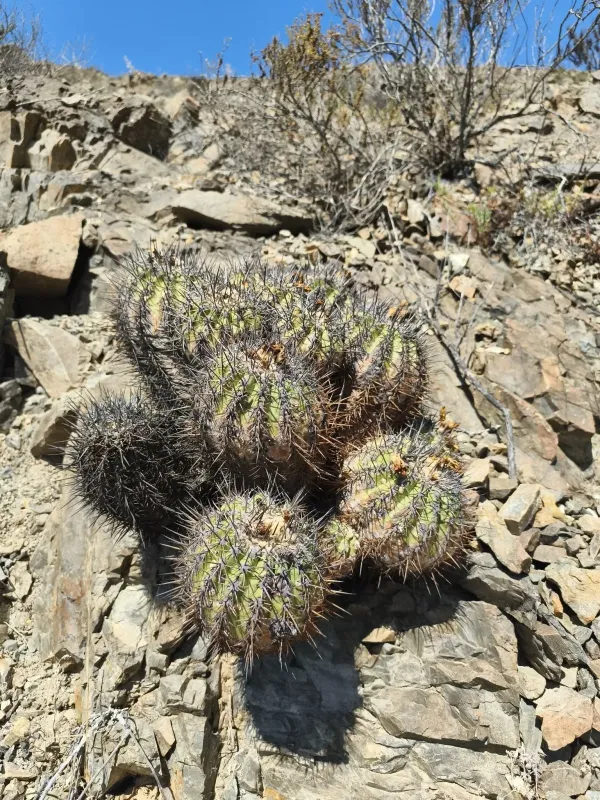
Description
Sowing dates
Sowing Copiapoa echinoides seeds is best done in early spring when light levels increase. The ideal temperature for germination ranges between +20°C and +25°C.
Use a highly porous, sterile substrate consisting of coarse sand, perlite, and grit. A well-draining medium is essential to prevent seed rot during the critical germination phase.
Seeds should be sown on the surface of the damp soil without covering them deeply. Keep the container covered with clear plastic to maintain high humidity levels until germination.
Consistent moisture is required during the first month, but ensure good air circulation to avoid fungal issues. Remove the cover gradually once the seedlings emerge.
Seedlings develop very slowly and typically require repotting only after they have reached a sufficient size and developed mature spines, often after one or two years.
Growing requirements
Copiapoa echinoides is a member of the Cactaceae family, native to the arid coastal regions of the Atacama Desert in Chile, where it thrives in extreme environments.
The plant requires full sun exposure throughout the year to maintain its compact shape and develop the thick, waxy, and bluish-grey epidermis characteristic of the species.
Soil requirements are strict: a mineral-based, inorganic potting mix is necessary. Avoid standard potting soil, which retains too much moisture and encourages root rot.
Watering should be performed carefully, allowing the soil to dry out completely between sessions. During the winter dormancy, water should be withheld almost entirely.
To bloom, the cactus needs a distinct winter rest period with cool temperatures (around +8°C to +12°C) and dry conditions to simulate its natural habitat cycles.
Main diseases and pests
Root rot is the most significant threat to Copiapoa echinoides, usually caused by overwatering or poor drainage in the potting container, leading to irreversible damage.
Mealybugs are the most common pests, often hiding deep within the tubercles or spines. Regular inspection of the plant's body is vital for early detection and treatment.
Spider mites can become a problem in environments with low humidity and poor ventilation, causing unsightly scarring on the cactus skin that never fades.
Treatment involves the use of systemic insecticides or miticides. Avoid using heavy oils, as they can dissolve the natural epicuticular wax that protects the cactus.
Effective prevention involves maintaining excellent airflow, avoiding stagnant humidity, and ensuring the cactus is not exposed to sudden temperature drops when the soil is wet.