
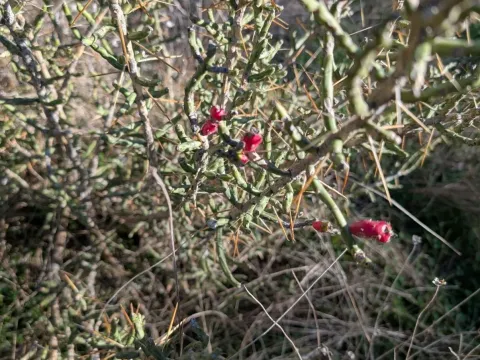
Cylindropuntia
Cylindropuntia
Cylindropuntia is a genus within the Cactaceae family, known for its distinctive cylindrical stem segments. These segments are structurally segmented and often detached easily, serving as a biological strategy for vegetative propagation in harsh desert environments.
What the section contains
 California cholla
Cylindropuntia californica
California cholla
Cylindropuntia californica
 Cane cactus
Cylindropuntia imbricata
Cane cactus
Cylindropuntia imbricata
 Cane cactus
Cylindropuntia spinosior
Cane cactus
Cylindropuntia spinosior
 Cane cactus
Cylindropuntia versicolor
Cane cactus
Cylindropuntia versicolor
 Cylindropuntia acanthocarpa
Cylindropuntia acanthocarpa
Cylindropuntia acanthocarpa
 Cylindropuntia davisii
Cylindropuntia davisii
Cylindropuntia davisii
 Cylindropuntia echinocarpa
Cylindropuntia echinocarpa
Cylindropuntia echinocarpa
 Cylindropuntia fulgida
Cylindropuntia fulgida
Cylindropuntia fulgida
 Cylindropuntia hystrix
Cylindropuntia hystrix
Cylindropuntia hystrix
 Cylindropuntia leptocaulis
Cylindropuntia leptocaulis
Cylindropuntia leptocaulis
 Cylindropuntia ramosissima
Cylindropuntia ramosissima
Cylindropuntia ramosissima
 Cylindropuntia tunicata
Cylindropuntia tunicata
Cylindropuntia tunicata
 Cylindropuntia viridiflora
Cylindropuntia viridiflora
Cylindropuntia viridiflora
 Rose cactus
Cylindropuntia rosea
Rose cactus
Cylindropuntia rosea
 Teddy bear cholla
Cylindropuntia bigelovii
Teddy bear cholla
Cylindropuntia bigelovii
 Whipple cholla
Cylindropuntia whipplei
Whipple cholla
Cylindropuntia whipplei
Cylindropuntia
Native to the arid regions of North and South America, these plants are highly specialized for survival in extreme heat and prolonged moisture deficit. They typically occupy open, rocky, or sandy terrains where competitive vegetation is scarce.
Cultivation requirements dictate that the plant must be placed in a location with full, direct sunlight. Proper soil aeration is mandatory, as the root systems are prone to hypoxia and fungal decay when exposed to water-logged conditions.
The agrotechnical management involves a cycle of active growth during warm months followed by a winter dormancy period. Irrigation should be applied only during the growth phase, allowing the soil to dry out completely between watering sessions.
Industrially, Cylindropuntia is valued for xeriscaping and sustainable landscaping in dry climates. Its formidable spines and structural density also make it effective as a natural living hedge to manage wildlife movement or restrict access.
The most common pests include scale insects and mealybugs that congregate in the crevices between stem segments. Effective management involves mechanical removal or the targeted application of horticultural oils during the early stages of infestation.
Root rot, primarily caused by Pythium or Phytophthora species, remains the most significant threat to the crop. Preventive measures include the use of well-draining mineral-based potting mixes and ensuring adequate spacing between individual plants to promote airflow.