
Copiapoa mollicula
Copiapoa mollicula
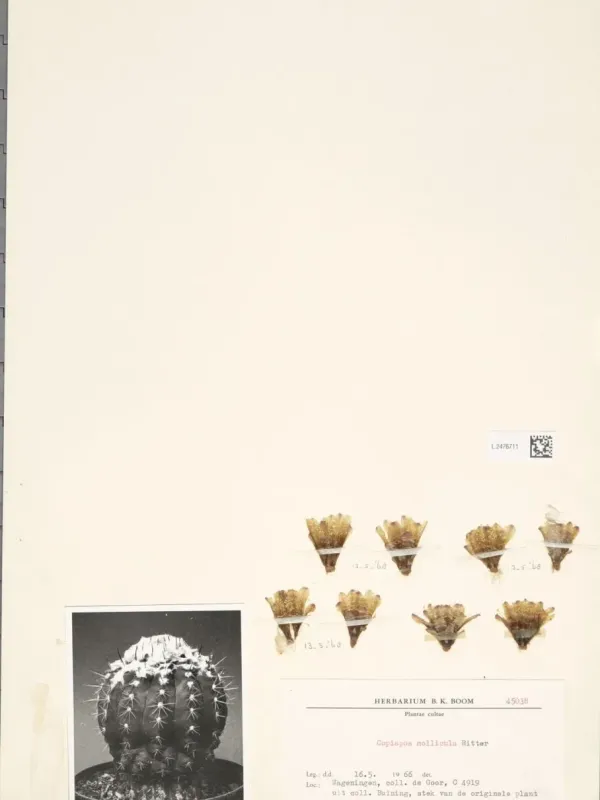
Description
Growing requirements
Copiapoa mollicula is a species of the Cactaceae family native to the arid coastal regions of the Atacama Desert in Chile. This slow-growing, globose cactus is highly valued by collectors for its unique morphological structure and dense, low-growing habit.
The plant requires full, intense sunlight to maintain its natural appearance and prevent etiolation. In home cultivation, a south-facing window or greenhouse conditions with supplemental light are necessary to replicate its natural arid habitat.
The growing medium must be highly porous and inorganic. A professional cactus mix composed of coarse sand, perlite, and small gravel is recommended to ensure rapid drainage, as the root system is extremely sensitive to waterlogging.
Temperature control is crucial for success, with warm days and cool nights being ideal during the active growth period. A distinct winter dormancy period at cooler temperatures is essential to stimulate future flowering and preserve the plant's metabolic health.
Irrigation should be strictly controlled, allowing the soil to dry out completely between watering sessions. During the winter rest, the plant should remain almost completely dry to mimic the conditions of the natural winter drought in its native region.
Main diseases and pests
Root rot is the most common threat to this species, primarily triggered by overwatering or the use of heavy, water-retaining substrates that inhibit proper aeration of the root system.
Root mealybugs can infest the plant, hiding in the soil around the roots and weakening the cactus by sucking its juices, which necessitates the use of systemic insecticides as a preventive measure.
Red spider mites pose a constant risk in low-humidity environments, potentially damaging the delicate skin of the cactus and leaving unsightly scars that can lead to deeper tissue infections.
Fungal diseases like Fusarium can develop if the plant is exposed to high humidity and low temperatures simultaneously, leading to rapid decay of the stem tissues.
Maintaining proper hygiene by keeping the soil surface clean and ensuring excellent airflow around the plant are the best defensive strategies against both pests and pathogenic fungal outbreaks.