
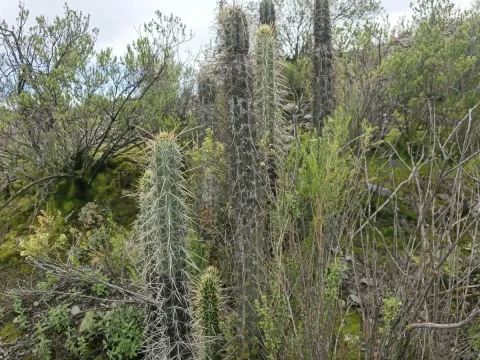
Corryocactus
Corryocactus
Corryocactus is a genus belonging to the Cactaceae family. These are tree-like or shrubby succulents native to the arid regions of South America, primarily Peru, Chile, and Bolivia.
What the section contains

Corryocactus
This crop prefers stony, well-drained soils with a neutral or slightly acidic pH. In their natural habitat, these plants grow in open, well-lit areas, capable of withstanding intense solar radiation.
The plant exhibits high resistance to drought due to its ability to store water in its fleshy stems. For optimal development in cultivation, it is necessary to provide a moderate watering regime during the growing season and complete dryness during the winter dormancy period.
The temperature regime should be stable, avoiding sharp fluctuations during active growth. Corryocactus species are adapted to high-altitude conditions and can withstand short-term temperature drops, making them relatively hardy in specialized plant production.
Agrotechnical maintenance includes regular monitoring of the root system, which is extremely sensitive to water stagnation that triggers decay processes in the substrate.
The agricultural use of Corryocactus is largely associated with its fruits, which are highly valued by the local population for their specific taste and nutritional value. The fruits of many species, such as Corryocactus brevistylus, are consumed fresh or after heat treatment.
Harvesting requires caution due to the spines on the fruit, which must be removed before consumption. The fruits ripen unevenly, necessitating selective manual harvesting throughout the fruiting season.
Beyond their nutritional value, these cacti are used in ornamental gardening as collector's items. Their architectural stem structure attracts the attention of landscape designers specializing in dry gardens.
In the traditional medicine of some Andean regions, parts of the plant are used to prepare medicinal infusions. However, scientific research on the bioactive compounds of Corryocactus is still in the early stages of investigation.
A promising direction is the use of Corryocactus as a rootstock for more demanding cactus species, which significantly accelerates their growth and promotes abundant flowering in commercial greenhouses.
The primary threat to the plant's health is root and stem rot caused by fungal pathogens under conditions of high humidity and poor ventilation.
Pests, such as spider mites and mealybugs, frequently attack the stem epidermis, sucking plant juices and creating conditions for secondary infections.
An improperly balanced soil mixture containing too much organic matter quickly attracts harmful soil insects that damage the roots.
To combat diseases, the application of systemic fungicides is recommended, along with strict adherence to ventilation protocols in greenhouses.
Prevention consists of regular inspection of the plant's apex and monitoring for the presence of pests in the stem folds, where they can hide.