

Disease
Especially harmful
Downy mildew of lettuce
Bremia lactucae
Description
Symptoms
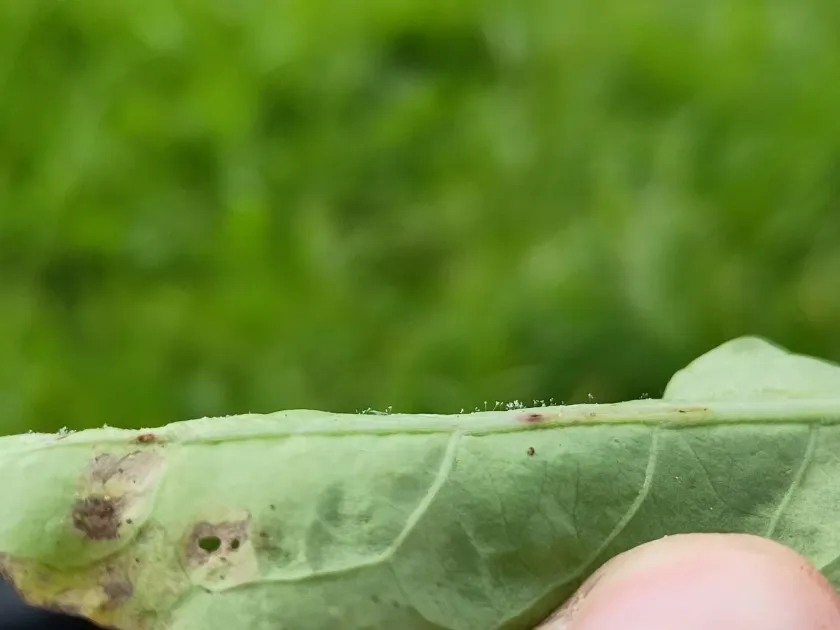
The first symptoms appear as chlorotic, pale green or yellow angular spots on the upper leaf surface, clearly defined by the leaf veins.
On the underside of the leaf, a fluffy, white to grayish fungal growth develops directly beneath these chlorotic lesions, representing the sporulation of the pathogen.
As the infection progresses, the chlorotic spots become necrotic, turning brown and brittle, eventually causing the entire leaf to wither and die.
In head lettuce, the disease can spread inward, causing rot that ruins the quality and marketability of the entire head.
Early identification is crucial, as the white spores can spread rapidly under favorable conditions, quickly covering large portions of the leaf area.
Pathogen
The causative agent of this disease is the oomycete Bremia lactucae, which acts as an obligate parasite and poses a significant threat to lettuce production globally.
The pathogen completes its life cycle by producing sporangia that are dispersed by wind and splashing water, allowing it to move rapidly through a field or greenhouse.
Bremia lactucae is characterized by high genetic variability, leading to the constant emergence of new physiological races that can overcome host plant resistance.
The organism overwinters in soil or on infected plant debris, acting as a primary source of inoculum for the next crop cycle.
It infects lettuce by entering through the stomata, where it establishes its mycelium within the leaf tissue before emerging to reproduce on the surface.
Conditions for development
Downy mildew thrives in cool, humid conditions, with optimal development occurring at temperatures between 15°C and 20°C and high relative humidity.
Free moisture, such as dew, fog, or overhead irrigation, is essential for the germination of spores and the subsequent infection of leaf tissue.
In greenhouse settings, poor ventilation creates stagnant air conditions, which significantly increases the risk of rapid disease spread.
Crowded plantings that restrict airflow promote prolonged leaf wetness, providing the perfect environment for the pathogen to establish itself.
While the pathogen prefers cooler weather, it can persist throughout the growing season if moisture levels remain consistently high.
Why it matters
Downy mildew causes significant economic losses by destroying the aesthetic quality of lettuce, making it unsellable for fresh market consumption.
The disease reduces photosynthetic capacity by damaging leaf tissue, which inhibits growth and decreases overall crop yields.
Infected tissues become prone to secondary colonization by soft rot bacteria, leading to a rapid breakdown of the harvest during storage and transport.
If not managed correctly, a single outbreak can result in a total loss of the crop in a very short period of time.
The disease poses a persistent threat to commercial growers, requiring continuous monitoring and intensive management efforts to protect the yield.
Protection
The primary strategy for managing downy mildew is the cultivation of resistant or tolerant lettuce varieties specifically bred to combat local pathogen races.
Effective management includes implementing a strict crop rotation and ensuring the removal and destruction of crop residues to reduce the initial inoculum load.
Good cultural practices such as optimizing plant spacing, providing proper ventilation, and using drip irrigation help maintain a dry leaf canopy.
Regular monitoring of fields allows for early detection, which is critical for the success of any chemical or biological intervention strategy.
- Application of targeted fungicides when environmental conditions are conducive to infection.
- Sanitation protocols to prevent the spread of spores between field sections.
- Greenhouse environmental control to prevent high humidity and condensation.
Content graph
Connections · Downy mildew of lettuce
Most often together:
Marketplace
Products · 230









Community
Discussion
No discussions yet — be the first.