

Disease · fungal · affects American cranberry, Apple, Apricot
Especially harmful
Cladosporiosis
Cladosporium
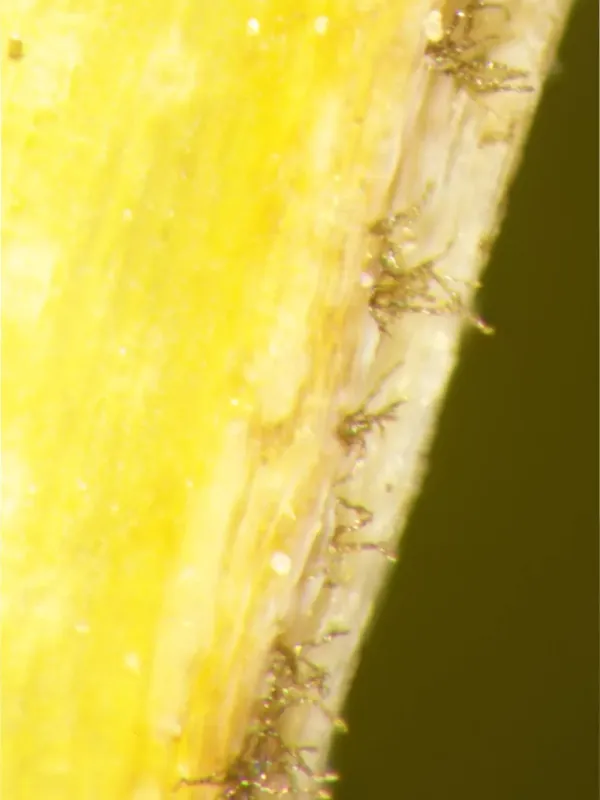
Description
Symptoms
The key sign of infection is the appearance of spots of various shapes and colors — ranging from light to dark brown or velvety olive-colored coatings on the underside of the leaves.
As the infection progresses, the affected tissues begin to yellow, dry out, and die prematurely. Necrosis covers significant areas of the leaf blade, leading to defoliation.
When fruits are infected, such as in watermelon or papaya, sunken spots form on the surface, which may eventually rot. A characteristic spore coating of the pathogen is often visible on the fruits.
In root and bulb crops, the disease can manifest on the plant neck or outer scales, causing specific necrotic lesions that reduce commercial quality.
- Yellowing of lower leaves.
- Olive-brown velvety coating.
- Sunken necrotic spots.
- Premature leaf drop.
- Fruit and root rot.
Pathogen
Cladosporiosis is a fungal disease caused by imperfect fungi of the genus Cladosporium. Pathogenic species of this fungus are capable of parasitizing a wide variety of flora, including vegetable, oilseed, and ornamental crops.
The mycelium of the fungus is characterized by an olive-brown or greenish-brown color. It reproduces via conidia, which are easily transported by air currents, water droplets, or contaminated tools.
The pathogen's life cycle is closely linked to plant debris, where it can persist for a long time. In the soil, the fungus can also survive in the form of resting structures, making it highly resilient in agrocenoses.
Various Cladosporium species can infect specific crops, such as bulb onions, garlic, winter rapeseed, turnips, hemp, papaya, watermelon, and carnations. The symptoms may vary slightly depending on the host plant species.
The disease is widespread, especially in temperate regions and greenhouses. The high plasticity of the pathogen allows it to adapt quickly to changing environmental conditions.
Conditions for development
The main factor for the activation of the fungus is high humidity, exceeding 70-80%. It is in conditions of stagnant moisture that the pathogen's spores germinate most actively and penetrate plant tissues.
The temperature optimum for the development of most species of the Cladosporium genus is in the range of +18 to +25 degrees Celsius. However, the fungus can also be active at lower temperatures.
Violation of ventilation regimes in greenhouses creates an ideal microclimate for disease outbreaks. Condensation on leaves serves as an entry point for the infection.
Crowded plantings promote moisture retention and prevent ventilation, which critically increases the risk of infection. A lack of sunlight also weakens plant immunity.
Watering errors, especially overhead irrigation in the evening, significantly accelerate the spread of conidia across the field. High crop rotation density with susceptible crops promotes the accumulation of the infectious background.
Why it matters
The harmfulness of cladosporiosis lies in the drastic reduction of the photosynthetic leaf area, which leads to stunted growth and development of the entire plant.
Severe infection leads to yield loss as nutrient accumulation processes are disrupted. Fruits lose their taste and commercial appeal, reducing their market value.
In the case of technical crops, such as hemp or rapeseed, the infection can negatively affect fiber quality or oil yield. The infection can make the produce unsuitable for long-term storage.
Infected plants become more vulnerable to secondary infections, as necrotic tissues are an excellent environment for saprotrophic bacteria and fungi.
In large-scale agrocenoses, economic losses from cladosporiosis can reach 30-50% in the absence of proper control measures and weather conditions favorable for the fungus.
Protection
The basis of protection is strict adherence to crop rotation, returning susceptible crops to the same field no earlier than after 3-4 years. Timely destruction of plant debris that serves as an infection reservoir is necessary.
An important practice is maintaining an optimal humidity regime in greenhouses. The use of drip irrigation and regular ventilation of greenhouses allow minimizing the risk of infection.
The use of fungicides remains a necessary tool upon detection of the first symptoms. Copper-based preparations, as well as systemic fungicides from the triazole and strobilurin groups, are considered effective.
Breeding and the use of resistant crop varieties and hybrids are the most ecological and long-term methods for combating cladosporiosis, minimizing chemical load on the soil.
Preventive seed treatment and disinfection of soil substrates before planting significantly reduce the likelihood of primary infection of young plants at the beginning of the growing season.
In brief
30
Affects crops
Biology
Pathogens and affected parts
Pathogens
Cladosporium· fungus
Cladosporium musae· fungus
Cladosporium echinulatum· fungus
Cladosporium cladosporioides· fungus
Cladosporium herbarum· fungus
Cladosporium oxycocci· fungus
Cladosporium cucumerinum· fungus
Cladosporium oxysporium· fungus
Cladosporium viticola· fungus
Cladosporium fumago· fungus
Cladosporum· fungus
Cladosporium allii-cepae· fungus
Affected plant parts
fruitwhole plantleafstemear
Content graph
Affects crops · 30
Content graph
Connections · Cladosporiosis
Most often together:
Marketplace
Products · 2074













Community
Discussion
No discussions yet — be the first.