
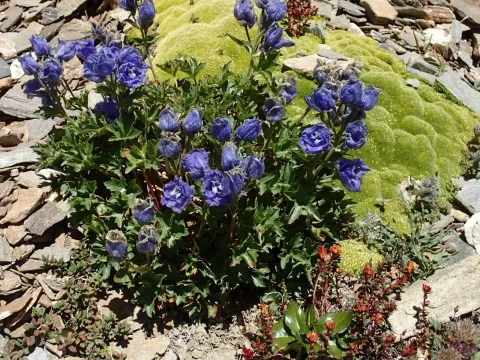
Saussurea
Saussurea
Saussurea seeds generally require stratification to break dormancy and ensure uniform germination. Sowing is best performed in late autumn or early spring in a well-prepared seedbed.
What the section contains
 Alpine saussurea
Saussurea alpina
Dandelion-leaved saussurea
Saussurea taraxacifolia
Alpine saussurea
Saussurea alpina
Dandelion-leaved saussurea
Saussurea taraxacifolia
 Dwarf saussurea
Saussurea pygmaea
Dwarf saussurea
Saussurea pygmaea
 Large-leaved saussurea
Saussurea grandifolia
Mongolian Saussurea
Saussurea mongolica
Large-leaved saussurea
Saussurea grandifolia
Mongolian Saussurea
Saussurea mongolica
 Saussurea amara
Saussurea amara
Saussurea amara
 Saussurea amurensis
Saussurea bracteata
Saussurea bracteata
Saussurea amurensis
Saussurea amurensis
Saussurea bracteata
Saussurea bracteata
 Saussurea candicans
Saussurea chinnampoensis
Saussurea chinnampoensis
Saussurea candicans
Saussurea candicans
Saussurea chinnampoensis
Saussurea chinnampoensis
 Saussurea depressa
Saussurea depressa
Saussurea depressa
 Saussurea discolor
Saussurea fastuosa
Saussurea fastuosa
Saussurea firma
Saussurea firma
Saussurea discolor
Saussurea discolor
Saussurea fastuosa
Saussurea fastuosa
Saussurea firma
Saussurea firma
 Saussurea glomerata
Saussurea glomerata
Saussurea glomerata
 Saussurea gnaphalodes
Saussurea gnaphalodes
Saussurea gnaphalodes
 Saussurea gracilis
Saussurea jacea
Saussurea jacea
Saussurea gracilis
Saussurea gracilis
Saussurea jacea
Saussurea jacea
 Saussurea japonica
Saussurea japonica
Saussurea japonica
 Saussurea lappa
Saussurea manshurica
Saussurea manshurica
Saussurea lappa
Saussurea lappa
Saussurea manshurica
Saussurea manshurica
 Saussurea maximowiczii
Saussurea maximowiczii
Saussurea maximowiczii
 Saussurea neoserrata
Saussurea nikoensis
Saussurea nikoensis
Saussurea neoserrata
Saussurea neoserrata
Saussurea nikoensis
Saussurea nikoensis
 Saussurea nipponica
Saussurea nipponica
Saussurea nipponica
 Saussurea obvallata
Saussurea obvallata
Saussurea obvallata
 Saussurea odontolepis
Saussurea odontolepis
Saussurea odontolepis
 Saussurea piptathera
Saussurea piptathera
Saussurea piptathera
 Saussurea porcii
Saussurea porcii
Saussurea porcii
 Saussurea pulchella
Saussurea pulchella
Saussurea pulchella
 Saussurea recurvata
Saussurea recurvata
Saussurea recurvata
 Saussurea riederi
Saussurea riederi
Saussurea riederi
 Saussurea salsa
Saussurea salsa
Saussurea salsa
 Saussurea simpsoniana
Saussurea sinuata
Saussurea sinuata
Saussurea simpsoniana
Saussurea simpsoniana
Saussurea sinuata
Saussurea sinuata
 Saussurea subtriangulata
Saussurea subtriangulata
Saussurea subtriangulata
 Saussurea tanakae
Saussurea tomentosa
Saussurea tomentosa
Saussurea triangulata
Saussurea triangulata
Saussurea tanakae
Saussurea tanakae
Saussurea tomentosa
Saussurea tomentosa
Saussurea triangulata
Saussurea triangulata
 Saussurea triptera
Saussurea triptera
Saussurea triptera
 Saussurea umbrosa
Saussurea ussuriensis
Saussurea ussuriensis
Saussurea umbrosa
Saussurea umbrosa
Saussurea ussuriensis
Saussurea ussuriensis
 Saussurea yanagisawae
Saussurea yanagisawae
Saussurea yanagisawae
Saussurea
Seeds should be planted at a shallow depth of approximately 1 to 2 centimeters. Maintaining adequate spacing between rows is essential for optimal air circulation and light exposure.
During the first year, Saussurea establishes its root system and forms a basal rosette. Weed management is crucial during this phase, as the young plants are slow-growing and can be easily outcompeted.
For higher success rates in commercial settings, transplanting seedlings grown in nurseries is a common practice. This allows plants to be established under controlled conditions before moving them to the field.
Ensure the soil is moist at the time of sowing, but avoid waterlogging, which can cause seed rot before germination occurs.
Saussurea thrives in cool, well-drained environments, mimicking its native mountainous habitats. It requires full sunlight to develop high-quality secondary metabolites.
The soil should be light, sandy, or loamy with a neutral to slightly alkaline pH. Drainage is the most important factor, as the roots are sensitive to anaerobic conditions caused by standing water.
This crop is highly resilient to temperature fluctuations and cold winters. It can adapt to high-altitude farming conditions where other crops might struggle.
Fertilization should be moderate, focusing on potassium and phosphorus to support root health. High nitrogen levels should be avoided to prevent excessive leafy growth that lacks medicinal concentration.
Irrigation should be consistent but sparse; the plant is relatively drought-tolerant once it has fully matured and established its deep root system.
Fungal diseases, including root rot and powdery mildew, are the primary threats to Saussurea. These are typically associated with high humidity and poor field drainage.
Pests such as aphids and spider mites can infest the foliage, particularly in hot and dry climates. Integrated pest management (IPM) practices are recommended to mitigate these issues.
Preventative measures include crop rotation and ensuring sufficient distance between plants to promote rapid drying of foliage after rain or irrigation.
Slugs and snails can cause damage to young leaf rosettes. Physical barriers or organic molluscicides can be used if infestation levels become significant.
Early detection through frequent field monitoring is the best strategy to prevent localized infections from spreading throughout the entire plot.
The aerial parts of Saussurea should be harvested during the peak flowering stage. This is when the plant's phytochemical concentration is at its highest level for medicinal purposes.
Harvesting should occur in the morning once the dew has evaporated. Stems are cut carefully to avoid damaging the crown of the plant, especially if perennial harvest is intended.
Drying must take place in a shaded, well-ventilated area to preserve volatile compounds. Avoid high-heat sources, as they can degrade the plant's beneficial properties.
If harvesting roots, the best timing is autumn after the aerial parts have withered. Roots should be washed thoroughly and dried in thin layers to ensure even dehydration.
Finished raw material should be stored in cool, dark, and dry conditions to maintain its potency and shelf life over several months.