
Dwarf saussurea
Saussurea pygmaea
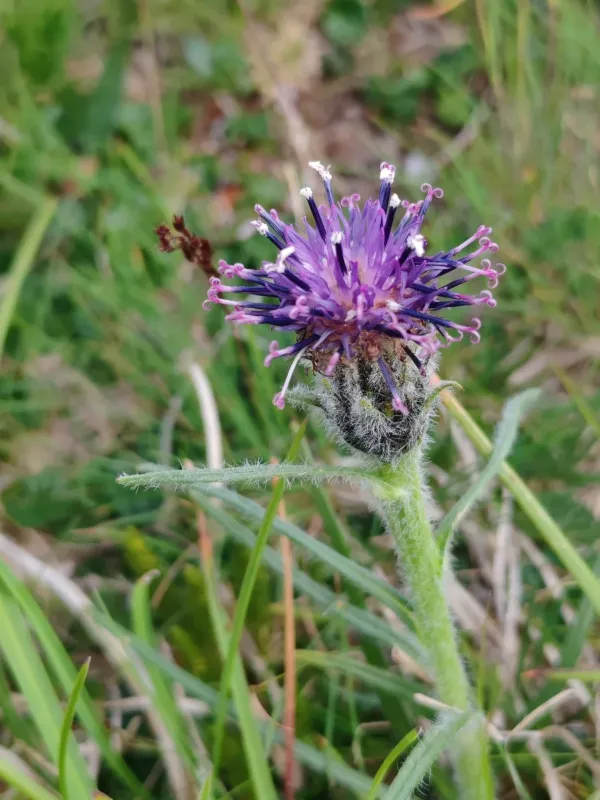
Description
Growing requirements
Dwarf saussurea (Saussurea pygmaea) is a perennial herbaceous plant belonging to the Asteraceae family. It is a specialized species native to high-altitude mountain regions, where it has evolved to thrive under extreme environmental pressures and significant temperature fluctuations.
The natural distribution of this species includes the mountainous areas of Central Asia and Siberia. It is primarily found in alpine and subalpine zones, preferring stony slopes and rocky debris where competition from taller vegetation is minimal due to harsh soil conditions.
Agricultural cultivation requires mimicking these specific environmental conditions. Successful growth depends on selecting a site with full sun exposure, as the species is highly sensitive to shading, which leads to etiolation and a loss of the characteristic compact rosette habit.
Regarding soil requirements, the plant demands excellent drainage. Loamy or sandy soils with a neutral pH are preferred to prevent waterlogging, which is lethal to the root system of this alpine species. Incorporating crushed stone or gravel into the planting medium is highly recommended.
The agricultural management of Saussurea pygmaea is relatively low-intensity, focusing primarily on weed control. Due to its slow growth rate, the plant is easily overwhelmed by invasive species, necessitating manual weeding to ensure its development during the early growth stages.
Main diseases and pests
Root and crown rot are the primary threats to Saussurea pygmaea. These conditions are usually triggered by poor soil aeration or excessive moisture during the dormant season, making the prevention of water stagnation the most critical cultural practice.
Pests such as aphids may occasionally colonize the flower heads. While usually not fatal to established plants, significant infestations can reduce the quality of the raw material, which is often harvested for medicinal purposes, thus requiring careful management.